Medical school interview prep involves researching each school, learning its interview format, reviewing your application, and practicing your answers out loud through mock interviews.
We recommend starting your preparation at least 4-6 weeks before your interview. This gives you enough time to become familiar with your application, practice your responses, and complete mock interviews without cramming everything into the final few days.
MedSchoolCoach Physician Advisors have served on medical school admissions committees and helped hundreds of med school hopefuls just like you. Below, we offer interview prep pro tips from our collective experience.
Our Physician Advisors have helped over 15,000 students stand out in interviews. Learn how 1-on-1 interview prep from MedSchoolCoach can help you secure the acceptances you deserve.
If You Receive a Medical School Interview
Interview invitations are sent only after both your primary and secondary applications are complete. Schools begin sending invitations as early as July and continue through January, with most invitations sent between September and December.
Getting an interview invitation means:
- You’ve met the requirements for admission to that medical school.
- The AdComs want to determine whether you’re a good fit for their program.
- Your application caught the eye of admissions officers.
Most medical schools operate on a rolling admissions basis, meaning they review early applications before later ones are submitted. You may get an interview invite in July if you submitted right when AMCAS opened up in mid-May!
Getting a med school interview is a good sign, but it’s not a guarantee of acceptance.
What Admissions Committees Evaluate
Admissions committees use medical school interviews to evaluate your abilities as a potential student and future physician. Many of the qualities they assess align with the AAMC premed competencies, which provide a framework for the skills and behaviors expected of future physicians.
Here are some of the primary qualities admissions committees may assess during your medical school interview, along with how they can show up in your answers:
- Communication skills: Your answers should be clear, well-organized, and detailed, and demonstrate that you can listen and respond directly to the question.
- Critical thinking and reasoning: Questions about ethical dilemmas, healthcare topics, or hypothetical situations allow you to show how you evaluate information.
- Confidence and professionalism: Strong answers demonstrate preparation and self-awareness without sounding arrogant, dismissive, or overly rehearsed.
- Compassion and service orientation: Examples can show how you understand other people's perspectives and have acted to support patients, peers, or your community.
- Resilience and adaptability: When discussing challenges or setbacks, explain what you learned and how you adjusted your approach.
- Interpersonal skills: Your responses should show that you can collaborate with others, navigate differences, and communicate respectfully.
- Interests and experiences beyond medicine: Discussing meaningful hobbies, activities, and personal interests can help interviewers understand who you are beyond your GPA, MCAT scores, and other academic credentials.
What to Expect on Medical School Interview Day
Wondering how med school interviews work? Medical school interview days can vary by program, but most include a combination of an orientation or welcome session, one or more interviews, opportunities to speak with current medical students, and a campus tour or other program activities.
Plan to spend several hours interviewing and participating in scheduled activities. A traditional interview itself may take approximately 30-60 minutes, while an MMI typically consists of several short interview stations completed over the course of roughly two hours. The full interview day may be longer because it can also include presentations, student panels, and other activities.
A typical interview day may include:
- Welcome session: The admissions team may introduce the school, explain the day's schedule, and provide an overview of the program.
- Medical school interviews: You may complete a traditional interview, an MMI circuit, a group interview, a one-on-one interview, or a combination of formats.
- Student lunch or panel: Many schools give applicants an opportunity to meet current medical students and ask questions about their experiences.
- Campus or facilities tour: An in-person interview day may include a tour of the medical school, affiliated hospitals, classrooms, laboratories, or student spaces.
- (Pro tip: Touring facilities is a fantastic opportunity to come up with relevant questions to ask your interviewer(s). Did anything catch your eye? Confuse you? Was something important missing?)
- Additional presentations or activities: Some programs include sessions on the curriculum, financial aid, research opportunities, or other aspects of life at the school.
Your interview invitation or pre-interview information should provide a detailed schedule. Review it ahead of time so you know when and where you need to be, whether you need to prepare anything in advance, and how much time to allow between activities.
Virtual vs. In-Person Medical School Interviews
Medical schools may conduct interviews virtually, in person, or through a combination of both. Virtual medical school interviews became more common during the COVID-19 pandemic, and many schools continue to offer them alongside in-person interviews.
Dr. Christopher Long, a MedSchoolCoach Physician Advisor, explains that most schools moved to virtual interviews during COVID, and most stayed virtual after things settled down. Some now offer limited in-person options.
“When they do, I always encourage applicants to take advantage,” he says. “I know travel adds real cost, and schools will tell you both formats are weighed equally. But think about how much easier it is to connect with someone when you’re actually in the room with them.”
The interview format can affect how you prepare. For a virtual interview, focus on your technology and environment — dressing properly and having a well-lit area with a minimal background will set you up for success.
For an in-person interview, review the school's location and instructions so you know what to expect on the day. Factors like parking, traffic on your drive, and the campus layout can make a big difference in arriving on time and being ready for each step of the interview day.
Some schools also offer a second-look or revisit day after the interview. These visits can give applicants another opportunity to explore the campus, meet students and faculty, and learn more about the program.
Types of Medical School Interviews
There are four basic types of medical school interviews:
- Panel or “traditional” interviews
- Multiple mini interviews (MMIs)
- Group interviews
- One-on-one interviews
In-person interviews have regained some popularity in recent years, but virtual interviews are still very common. In some cases, a virtual interview is followed by an in-person visit (called a “second look” or revisit day).
Traditional (Panel)
During a traditional interview, you’ll speak with a panel of one to three people on the school’s admissions committee, often including faculty members and occasionally a current student. This type of interview typically takes 30-60 minutes.
As in a job interview, the committee members will ask you questions to understand your personality, your drive to practice medicine, and any potential weaknesses they should know about.
More and more schools are moving away from the traditional interview format, opting for MMIs instead.
Multiple Mini Interviews (MMI)
In MMIs, you’ll visit six to 10 structured stations over the course of two hours, where one or two admissions interviewers stay at each station. MMIs use a combination of acting and non-acting interview questions.
- You’ll answer some questions just as in any traditional interview. (For example, “What are your greatest strengths and weaknesses?”)
- You’ll role-play your responses in other scenarios. (For example, “You just learned that your patient must be given a terminal diagnosis. Enter the room and speak with her.”)
MMI format interviews and traditional panels are sometimes used together, but most medical programs use one or the other.
Group Interviews
In a group interview, you’ll be assigned to a small group of other premeds being interviewed to complete tasks, solve problems, or answer questions together.
This format may be combined with MMIs or traditional interviews to assess how you demonstrate your interpersonal competencies, collaborative abilities, and teamwork under pressure.
One-on-One Interviews
This is exactly what you might expect from the name. A one-on-one interview puts you in conversation with a single admissions officer, faculty member, or physician connected to the program to discuss your application.
In general, these are almost always used as one part of a larger interview process. Some schools might have you do multiple one-on-one interviews with different evaluators. Others might have you also participate in other formats, like MMIs or group interviews.
How to Prepare for Your Medical School Interview
Medical school interview preparation doesn’t require weeks of memorizing scripted answers. Focus on understanding the school, reviewing your application, becoming comfortable with the interview format, and practicing your responses out loud.
The goal is to know your experiences well enough to discuss them naturally and thoughtfully, even when an interviewer asks a question you didn’t expect.
1. Learn About the Program and School
Research each medical school before your interview so you can demonstrate genuine interest and ask informed questions. Start with the school's website and review information about:
- Curriculum
- Teaching methods
- Student body
- Facilities
- Hospitals for clinical rotations
- Mission
- Reputation
- Resident placements
- Student initiatives
- Recent developments
Identify the aspects of the program that are most relevant to your goals and experiences. Be prepared to explain why you are interested in the school and how its opportunities align with what you hope to gain from medical school.
Don’t just rely on the school’s website, though. You can often find additional information (including potential red flags or things that might bring up questions) by looking at subreddits or other social media groups and pages related to the school you’re researching. Take the time to search for medical school/physician influencers who attended where you’ll be interviewing.
2. Understand the Interview Format
Find out exactly what type of interview you’ll have and what the day will involve, since the format will significantly impact how you get ready.
If you’re not sure of the interview format, check the school’s profile in the Medical School Admission Requirements (MSAR) guide from the AAMC. The MSAR provides school-specific information to help you understand each program’s interview process, including interview formats and other interview policies.
Here are some questions to answer before interview day:
- Is this an in-person or virtual interview?
- How many interviewers will be present?
- Have the interviewers already reviewed your application? (Is it an open-file interview or a blind interview?)
- Will you participate in a traditional interview, an MMI, a group interview, a one-on-one interview, or a combination of formats?
- Who will be interviewing you? (If this information is provided.)
- Will you have the opportunity to ask questions during the interview?
3. Review Your Application
Your application is one of the most useful resources for interview preparation. Review your AACOMAS, TMDSAS, or AMCAS application, along with the secondary application you submitted to the school.
Pay particular attention to:
- Clinical experience
- Shadowing
- Research
- Other work and extracurricular activities
- Your personal statement
- Your secondary application essays
Refresh your memory on what you did, what you learned, and why each experience was meaningful. If you are a non-traditional medical student, be prepared to discuss how your previous education, career, or life experiences have shaped your decision to pursue medicine.
Your GPA, MCAT, and Casper scores are unlikely to be the focus of your interview. However, if you have a lower GPA or MCAT score that requires context, be prepared to explain it honestly and briefly, focusing on what you learned and how you’ve addressed any challenges.
On that note, consider any potential red flags or questions that might arise after a review of your application.
Did you have a gap between your undergraduate study and now that isn’t explained or described? Do you have a relatively low number of shadowing or research hours? Do you have weak ties to the school or region? Do you have withdrawals (W) or repeats on courses you need to get into medical school? Any institutional actions by your undergraduate school?
Be prepared to honestly answer these questions if they come up.
For reapplicants in particular: Be sure to have a thorough response prepared when asked what has changed since your last application. If you didn’t get in the first time you applied to medical school, AdComs will want to understand how you’ve grown and become a more attractive candidate since that time.
You should also review your public social media profiles before your interview. Admissions committees may consider information they encounter about applicants online, so make sure your public-facing accounts reflect the professionalism you want to convey.
4. Stay Informed About Current Events in Medicine
As a prospective medical student, you should be up-to-date with any current research and discoveries that pertain to the field of medicine. Reading medical journals and blogs or even talking to researchers and resident doctors you meet while working or volunteering are all great sources for current medical events.
You do not need to become an expert on every healthcare issue. Instead, practice forming thoughtful, informed opinions. Medical ethics topics may also come up, so review key concepts in biomedical ethics before your interview. Focus on demonstrating your ability to listen, consider different perspectives, and explain your reasoning clearly.
5. Practice With Mock Interviews
Mock interviews are one of the most effective ways to prepare for medical school interviews. Practicing out loud helps you become more comfortable discussing your experiences, organize your thoughts, and identify areas where you need more preparation.
According to Dr. Long, the most common mistake in a first mock interview is being over-rehearsed. “I know the feeling of wanting to crush it and practicing every answer over and over to get it perfect. But there’s a fine line, and once you cross it you start sounding robotic,” he shared. “Interviewers can tell when they’re hearing a script, so it’s better to know your key points well and let the actual wording come naturally in the moment.”
To get the most out of your practice sessions during med school interview prep:
- Practice with a timer. Set a fixed amount of time to answer each question so you can practice giving complete responses without rambling or rushing.
- Record yourself. Watching or listening to your responses can help you identify filler words, awkward pauses, distracting habits, and areas where your delivery could be more natural.
- Try it without a script. Prepare key points and examples rather than memorizing word-for-word answers. Your responses should sound conversational and allow you to adapt to the specific question.
- Practice MMI-style stations. If your school uses MMIs, practice responding to timed scenarios, ethical questions, and role-playing exercises. Give yourself only a short amount of time to review each prompt before responding.
- Practice with another person. A premed student, physician advisor, professor, mentor, friend, or family member can act as your interviewer as you practice for your medical school interview. Choose someone who can give you feedback on your answers.
- Introduce questions you have not seen in advance. This helps you become comfortable thinking on your feet rather than relying on rehearsed responses.
The goal of mock interviews is to identify patterns, strengthen weaker answers, and become more comfortable responding to unexpected questions.
How Long to Prepare for a Medical School Interview
Ideally, give yourself four to six weeks when you’re preparing for a medical school interview. That gives you enough time to research the school, review your application, practice your answers, and complete multiple mock interviews without getting overwhelmed.
If your interview invitation arrives several weeks or months in advance, use the following timeline:
- Four to six weeks before the interview: Learn about the school and interview format, review your application, and make a list of topics and experiences you want to be ready to discuss.
- Two to three weeks before the interview: Begin regular practice sessions. Work on answering common questions naturally, complete mock interviews, and practice MMI stations if applicable.
- One week before the interview: Complete another full mock interview and focus on the areas where you still need practice. Confirm the interview schedule, location or virtual setup, and any materials the school requires.
- The day before the interview: Review your notes, revisit the school's mission and program details, prep your interview day outfit, and make sure you know when and where you need to be.
If your interview is less than four weeks away, prioritize medical school interview tips around understanding the interview format, reviewing your application, researching the school, and practicing out loud. Even a shorter preparation period can be productive when you focus on the areas most important to a successful interview.
Common Medical School Interview Questions
You can expect questions about your background, experiences, goals, and interest in medicine, as well as program-specific questions such as “Why us?” Some common traditional medical school interview questions include:
- Tell me about yourself.
- What is your greatest strength?
- What is your greatest weakness?
- Why do you want to be a doctor?
- Why do you want to attend this school?
- How have your clinical, volunteer, work, or extracurricular experiences prepared you for medical school?
- Describe an ethical dilemma you faced and how you handled it.
- What do you do for fun?
MMI prompts work differently from traditional interview questions. Rather than simply answering questions about your background, you may be asked to respond to scenarios related to medical ethics, analyze a situation, or role-play an interaction.
Questions to Ask Your Interviewers
It reflects poorly on you if interviewers ask, “Do you have any questions?” and you shrug. A “no” when given the chance to ask your own questions communicates that you may not have done your due diligence beforehand to understand the program and how it aligns with your own goals.
Below are examples of great questions to ask your interviewers:
- What makes this school unique?
- How has the school evolved in recent years?
- Can you tell me about any research opportunities available for students?
- What mental health resources do you offer for students?
- Do you offer study resources for USMLE or COMLEX?
- Are there a lot of financial aid or scholarship opportunities here?
- What are the best clubs on campus?
- Does this school work within the local community?
- What is something about this school that people don’t really know about?
- In your eyes, what would a successful student look like after one year at this school?
If you know who your interviewers will be before the interview, do some online research on them beforehand to get an idea of their background and interests. If it feels appropriate, you can ask them questions about their research, specialty, or involvement on campus.
The questions you ask your interviewers should show genuine curiosity, school fit, and maturity, but your own answers still carry the most weight. As you prepare for both sides of the conversation, use our Medical School Interview Premium Question Bank to see how strong applicants approach common, difficult, ethical, and school-specific interview questions.
Handling Inappropriate Questions
Although interviewers may ask tough questions to gauge your communication skills under pressure, they do not have the right to ask inappropriate questions. The AAMC encourages interviewees to report inappropriate situations to an admissions officer.
According to the AAMC, it is inappropriate to ask about your age, race, ethnicity, religion, sexual orientation, political affiliation, marital status, income, home value, and credit score.
Inappropriate questions may include:
- What’s your opinion on abortion?
- Where’s your accent from?
- Do you observe any religious holidays that may interfere with your studies?
- Did you vote for [political leader]?
- Do you have any children, or do you plan to have children while in medical school?
- How do you plan to pay for medical school?
- Do you have any disabilities we should know about?
- Have you ever been arrested for drug use?
- Can you show me your social media?
You can answer a question by stating you are uncomfortable answering or by clarifying what they are asking that is relevant to your candidacy.
Read Next: Applying to Medical School When Your Parents Are Doctors
Presenting Your Best Self on Interview Day
Professionalism and positivity are an absolute must for prospective medical students. Put your best foot forward on interview day!
When meeting with students as a member of an admissions committee, I was most compelled by those who carried themselves with a high degree of professionalism and presented themselves as someone I’d personally enjoy working with.
- Physician Founder, MedSchoolCoach
Below, I’ve compiled a few key pieces of advice to help you present your best self on the day of your medical school interview.
Dress Professionally
Choose professional, comfortable clothing that lets you focus on the interview rather than on your appearance. Keep these tips in mind:
- Choose professional attire. A suit, blazer, or other business-professional clothing is appropriate for most medical school interviews. Dark or neutral colors are a safe choice.
- Keep your clothing neat. Make sure your clothing is clean, wrinkle-free, and comfortable enough to wear for several hours.
- Dress appropriately for the setting. Avoid clothing that is overly casual or distracting. The goal is to look polished while still feeling like yourself.
- Dress in layers. Interview rooms can vary in temperature, so layers can help you stay comfortable throughout the day.
- Keep accessories simple. Avoid anything that could be distracting during the interview, and choose accessories that complement your professional attire.
- Pay attention to grooming. Make sure your hair is clean and styled, and keep makeup, jewelry, and facial hair neat and professional if you choose to wear them.
- Prioritize comfort. Try on your interview outfit ahead of time and make sure you can sit, walk, and move comfortably in it.
Let Your Personality Shine
Don’t let the interview setting detract from your personality. If you are a funny person, feel free to insert some humor (in good taste) as you address the interview questions. Smile, relax, make eye contact, and enjoy the moment.
After all, you’ve made it to the interview! Your application already demonstrated that you possess the skills to succeed in that particular program. Much of the interview is actually about finding a good personality fit. Do not underestimate the power of your personality.
Be Professional With Everyone
If a school incorporates a current medical student interviewer, count yourself lucky! Sometimes this sort of interview is in a formal one-on-one setting. In other cases, it’s more casual, over lunch or a campus tour.
Anyone could put in a bad word, so be kind, courteous, and professional with everyone you encounter. Be on your best interview behavior with everyone, especially medical student interviewers. This isn’t the moment to vent about a professor you didn’t like or a personal issue.
One of the best ways to stand out is to ask questions and take notes in real time during the day when appropriate. Don’t pull your phone out mid-interview, but don’t be afraid to jot down notes during the tour or other more casual moments.
Here are some insights I recommend you gather during your time with current medical students:
- What do they have to say about the professors and physicians who teach them?
- Are the instructors reliably available by email and sensitive to student concerns?
- Are there plenty of volunteer and research opportunities?
- How do the students feel about the program’s grading system?
- Is there a community atmosphere? Even if it’s a competitive environment, do students support one another?
- Try to picture yourself with the current students. Would you fit in?
For Virtual Interviews: Prepare Your Environment
If you’re participating in a live or asynchronous virtual interview, prepare your space in advance to create a professional-looking environment without distractions.
Here are a few ways to prepare:
- Prevent interruptions. Let family members, roommates, or anyone else in your household know when you cannot be interrupted, and ask them to keep noise levels low during your interview.
- Make arrangements for pets and children. If you have a pet who may bark, make noise, or interrupt your interview, consider having someone else care for them during your interview. The same goes for young children — ensure that your scheduled interview time is unlikely to be disrupted so that you can put your full attention towards it.
- Choose a professional workspace. Find a quiet, private table or desk where you can sit comfortably. Avoid interviewing from your bed or another casual setting.
- Choose an appropriate background. A clean, tidy space is preferable to a virtual background, which can sometimes be unreliable. Bookshelves, photos, and artwork can be fine, but avoid anything distracting, controversial, or inappropriate in the camera frame.
- Find an alternative location if needed. If you do not have a suitable space at home, consider reserving a quiet study room at a local library or another appropriate location.
- Test your camera and lighting. Make sure your face is clearly visible and well lit, and check what appears in the camera frame before interview day. Testing your setup in advance can also help you identify and resolve technical problems before the interview.
- Test your technology. Check your internet connection, microphone, speakers, and interview platform ahead of time. Close unnecessary applications and silence notifications on your computer and phone.
For more tips, see How to Stand Out During a Virtual Interview.
After the Interview
After the interview, you need to send follow-up thank-you notes and watch for acceptance offers. The faculty members who serve on the interview committee have volunteered their time. It is essential to send a thank-you note to each interviewer you meet. They will be among your strongest advocates for communicating directly with admissions officers.
A thank-you letter for a med school interview should contain a few key elements:
- Expression of gratitude for the opportunity to interview and for the interviewer’s time.
- A professional and sincere tone.
- Specific aspects of the interview that you enjoyed or found particularly valuable.
- Any additional highlights, including recent experiences or qualifications that were not discussed at the interview.
Here is an example medical school interview thank-you email:
Dear Dr. Smith and Dr. Jones, I wanted to express my sincere gratitude for the opportunity to interview at ABC Medical School. It was a pleasure to meet both of you and learn more about the program. I particularly enjoyed the discussion we had about the clinical experiences available to students at ABC Medical School. It is clear to me that the program places a strong emphasis on hands-on learning, which is exactly the type of medical education I am looking for. I also wanted to take this opportunity to clarify a point I made during the interview about my involvement in research. I mentioned that I have participated in several research projects, but I neglected to mention that I have also presented my work at two national conferences. I hope this additional information will be helpful in your decision-making process. Again, thank you for the opportunity to interview and for your time. I am extremely interested in attending ABC Medical School and hope to hear from you soon. Sincerely, [Your Name]
Try the Thank You Note Generator from MedSchoolCoach for a foolproof way to communicate with your medical school interviewer.
If you have meaningful new information to share after your interview, you may consider sending an update letter. Check the medical school's policies first, as some schools do not accept updates or have specific instructions for submitting them.
While you wait for a decision, continue your academic, clinical, research, and service commitments, and follow any timeline or communication guidance provided by the school.
Read Next: How to Write a Letter of Intent for Medical School
FAQs
The strongest interview responses are authentic, specific, and thoughtful. Rather than trying to give the answer you think an admissions committee wants to hear, use specific examples from your experiences to demonstrate interpersonal qualities such as communication, empathy, and self-awareness.
Show that you have researched the school and can explain why its program aligns with your goals. Most importantly, listen carefully to each question, answer it directly, and let your personality come through naturally.
Dr. Long told me that the applicants who stood out to his interview team could point to clear skills they had developed across their experiences and explain why those skills matter for being a doctor.
“They didn’t just list what they’d done, they connected it to what they’d be able to do as a physician,” he says. “The ones who fell flat spent the whole interview giving high-level commentary on what makes a good doctor. That might sound thoughtful, but it never shows the interviewer that you’re that person.”
Boost Your Chances of Acceptance
We’ve helped hundreds of students just like you ace their med school interviews during the medical school application process. If you’re looking for med school interview help or support getting into your dream school, consider MedSchoolCoach to boost your chances of success.
96% of clients who do three or more mock interviews with MedSchoolCoach get accepted to medical school. Sign up for 1-on-1 practice sessions with a Physician Advisor and unlock a 96% acceptance rate.
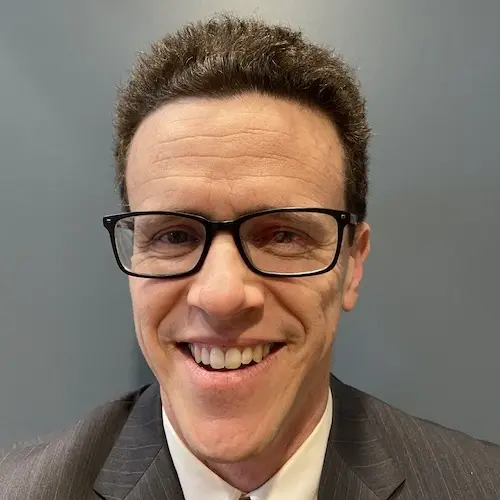 Luke Voytas, MD
Dr. Voytas, a dedicated pediatrician with an passion for nurturing future medical leaders, inspires every student and resident he mentors to reach their fullest potential. Leveraging his rich background in writing, he crafts narrative-driven application essays that uniquely capture each client’s journey and set them apart in the competitive world of medicine.