
The Chemical and Physical Foundations of Biological Systems (Chem/Phys) section of the MCAT tests your ability to apply chemistry and physics to biological systems. You’ll need to draw from general chemistry, physics, and organic chemistry to understand everything from fluid flow and electrical circuits to molecular interactions and the physical processes that keep the human body functioning.
For many students, Chem/Phys is one of the most challenging sections of the MCAT, and is the section where students often spend the most time studying. It contains more math than any other section, but knowing formulas alone won’t get you to your target score. You also need to recognize which equation applies, work through calculations efficiently, connect concepts across different science subjects, and interpret experiments and data under time pressure. Because the section covers such a broad range of material, the exact mix of topics can also vary from one exam to another, which makes well-rounded preparation especially important.
In this guide, I’ll walk you through what MCAT Chem/Phys covers, which topics to prioritize, and how to approach the section more effectively.
Get a Guaranteed Score Increase when you sign up for Silver, Gold, or Platinum MCAT tutoring.
What Is the Chemical and Physical Foundations of Biological Systems Section?
The Chem/Phys section is the first section of the MCAT. You’ll have 95 minutes to answer 59 questions, including 44 passage-based and 15 discrete questions. The AAMC describes the section as a test of how well you can combine chemical and physical concepts with scientific reasoning and apply them to living systems.
| MCAT Chem/Phys | |
| Order on the MCAT | First section |
| Number of questions | 59 |
| Time | 95 minutes |
| Question format | Passage-based and discrete questions |
| Main subject areas | General chemistry, physics, and organic chemistry |
| Score range | 118–132 |
What Does MCAT Chem/Phys Actually Test?
MCAT Chem/Phys is ultimately about understanding how chemical and physical principles explain the way different systems work. The AAMC expects you to connect concepts from chemistry, physics, and organic chemistry to explain how and why processes occur under different conditions.
One reason Chem/Phys can feel especially difficult is that the MCAT doesn’t keep those subjects neatly separated. College courses often teach general chemistry, organic chemistry, and physics as distinct classes, while the MCAT expects you to connect them. A question might combine acid-base chemistry with molecular structure, or physics with a biological system, so knowing the individual subjects is only part of the challenge.
Chem/Phys is also the most calculation-heavy section of the exam. You won’t have a calculator, so you need to be comfortable working with equations, scientific notation, proportions, and basic arithmetic efficiently under time pressure. I often see many students know the formulas but struggle with recognizing when and how to use them, which is why practice matters just as much as memorization.
What Topics Are Tested on MCAT Chem/Phys?
The AAMC organizes the Chem/Phys section around two foundational concepts and 10 content categories. Foundational Concept 4 focuses primarily on the physical principles that govern living systems, while Foundational Concept 5 covers the chemical interactions and reactions that underlie molecular and cellular processes.
Here’s how much of the section each foundational concept accounts for:
| Foundational concept | What it covers | Approx. share of Chem/Phys |
| 4. Physical Principles of Living Systems | Motion, forces, fluids, electricity, light and sound, atomic structure, and nuclear processes | 40% |
| 5. Chemical Interactions and Reactions | Water and solutions, molecular interactions, separation techniques, biologically relevant molecules, thermodynamics, and kinetics | 60% |
These percentages are approximate and can vary between test forms, but they’re useful for understanding the overall emphasis of the section. Foundational Concept 5 accounts for the larger share of Chem/Phys, although both concepts cover a broad range of material that you’ll need to be prepared to apply in passages and discrete questions on test day.
Foundational Concept 4: Physical Processes in Living Systems
Foundational Concept 4 focuses on the physical principles that govern how living systems move materials, sense their environment, transmit signals, and respond to change. The AAMC divides this concept into five content categories covering mechanics, fluids, electricity, light and sound, and atomic and nuclear processes.
4A. Translational Motion, Forces, Work, Energy, and Equilibrium in Living Systems
Content Category 4A covers the mechanics principles used to describe motion, forces, energy, and equilibrium.
Important topics include:
- Units and dimensional analysis
- Vectors and vector components
- Speed, velocity, and acceleration
- Newton’s laws of motion
- Friction
- Center of mass
- Equilibrium
- Torque and lever arms
- Work
- Mechanical advantage
- Kinetic and potential energy
- Conservation of energy
- Power
- Periodic motion
- Frequency, wavelength, and wave speed
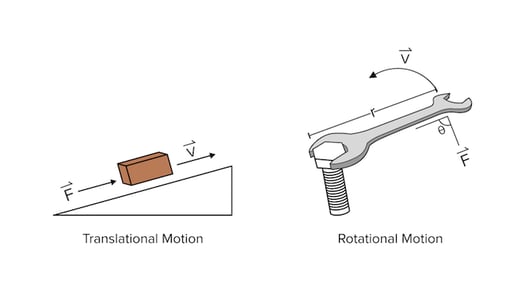
These topics often show up through relationships between forces, motion, energy, and equilibrium rather than as isolated definitions. Be prepared to interpret how a system changes when one variable changes, compare different physical scenarios, and apply basic mechanics concepts to unfamiliar setups.
4B. Importance of Fluids for the Circulation of Blood, Gas Movement, and Gas Exchange
Content Category 4B focuses on fluid behavior and how those principles apply to systems such as circulation and respiration. The AAMC specifically connects this material to the pulmonary and cardiovascular systems.
Key topics include:
- Density and specific gravity
- Pressure
- Hydrostatic pressure
- Pascal’s principle
- Archimedes’ principle and buoyancy
- Fluid flow
- Continuity equation
- Bernoulli’s equation
- Viscosity
- Poiseuille’s law
- Surface tension
- Gas laws
- Partial pressure
- Gas exchange
This is a good example of how Chem/Phys combines physics with biology. Instead of asking about fluids in an abstract pipe, the MCAT may ask you to apply pressure, resistance, or flow principles to blood vessels or gas exchange in the lungs.
4C. Electrochemistry and Electrical Circuits and Their Elements
Content Category 4C covers electrical charge, current, voltage, circuits, and electrochemical processes. The AAMC also connects these principles to biological signaling and chemical transformations.
You should be comfortable with:
- Electric charge
- Coulomb’s law
- Electric fields and electric potential
- Current
- Voltage
- Resistance
- Ohm’s law
- Series and parallel circuits
- Electrical power
- Capacitors
- Conductivity
- Electrochemical cells
- Galvanic and electrolytic cells
- Reduction and oxidation
- Electrode potentials
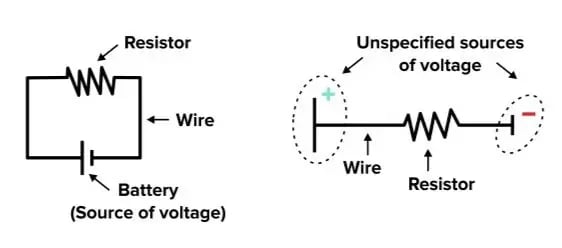
On the MCAT, these concepts may appear in a conventional circuit problem or in a biological context involving membrane potentials, ion movement, or electrochemical gradients.
4D. How Light and Sound Interact With Matter
Content Category 4D focuses on the properties of light and sound and how organisms use them to sense their environment. These principles are also relevant to techniques used to study molecules and produce medical images.
Important topics include:
- Sound waves
- Frequency, wavelength, and intensity
- Doppler effect
- Electromagnetic waves
- Reflection and refraction
- Snell’s law
- Diffraction
- Polarization
- Mirrors
- Thin lenses
- Focal length
- Real and virtual images
- Vision and optics
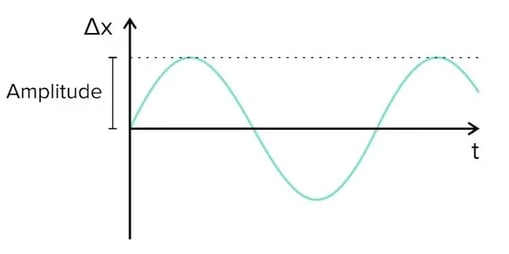
This is an area where quick recall can save time. Concepts such as myopia, hyperopia, and the lenses used to correct them are worth knowing well enough that you don’t have to reason them out from scratch during the exam.
Watch Next: Our MCAT Physics Crash Course reviews geometric optics, refraction, reflection, and diffraction.
4E. Atoms, Nuclear Decay, Electronic Structure, and Atomic Chemical Behavior
Content Category 4E moves from macroscopic physics to the structure and behavior of atoms. It covers subatomic particles, nuclear processes, electronic structure, and the ways atomic configuration affects chemical behavior.
Key topics include:
- Protons, neutrons, and electrons
- Atomic number and mass number
- Isotopes
- Nuclear binding energy
- Radioactive decay
- Alpha, beta, and gamma decay
- Half-life
- Electron configuration
- Quantum numbers
- Orbital structure
- Periodic trends
- Ionization energy
- Electron affinity
- Electronegativity
For this category, focus on the relationships between atomic structure and chemical behavior. You may need to predict how an atom behaves based on its electron configuration or reason through a nuclear-decay problem using information provided in the question.
Foundational Concept 5: Chemical Interactions and Reactions in Living Systems
Foundational Concept 5 focuses on the chemical principles that explain the molecular behavior of living systems. The AAMC divides it into five content categories covering aqueous solutions, molecular interactions, laboratory separation techniques, biologically important molecules, and thermodynamics and kinetics.
5A. Unique Nature of Water and Its Solutions
Content Category 5A focuses on the properties of water and the behavior of substances dissolved in aqueous solutions. The AAMC specifically includes solutions, solubility, acids and bases, buffers, and titrations in this category.
Important topics include:
- Acid-base equilibria
- Brønsted-Lowry acids and bases
- Strong vs. weak acids and bases
- Conjugate acids and bases
- pH and pOH
- Ka, Kb, pKa, and pKb
- Buffers
- Henderson-Hasselbalch relationships
- Ions and hydration
- Molarity and concentration
- Solubility
- The common-ion effect
- Titrations
- Neutralization
- Titration curves and indicators
Acid-base chemistry is especially important because it can connect general chemistry with biochemistry and organic chemistry. The MCAT may take a concept you first learned in general chemistry, such as acidity, and ask you to predict how molecular structure changes that acidity.
5B. Nature of Molecules and Intermolecular Interactions
Content Category 5B focuses on how molecular structure determines interactions between molecules. This includes covalent bonding, molecular geometry, stereochemistry, and intermolecular forces.
You should be comfortable with:
- Lewis structures
- Formal charge
- Resonance
- Lewis acids and bases
- Electronegativity and bond polarity
- Dipole moments
- Sigma and pi bonds
- Hybridization
- Molecular geometry and VSEPR theory
- Structural isomers
- Stereoisomers
- Enantiomers and diastereomers
- R/S configuration
- E/Z configuration
- Cis-trans isomerism
- Hydrogen bonding
- Dipole-dipole interactions
- London dispersion forces
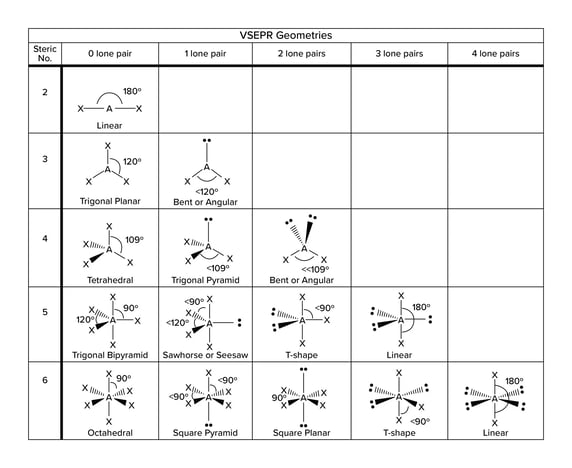
For the MCAT, focus on the connection between structure and behavior. A change in molecular geometry, polarity, or stereochemistry can affect properties such as solubility, intermolecular attraction, or biological activity.
5C. Separation and Purification Methods
Content Category 5C covers the laboratory techniques used to separate and analyze mixtures, including many methods commonly used with biological molecules. The AAMC emphasizes that these techniques work by exploiting differences in physical or chemical properties between substances.
Important topics include:
- Extraction
- Distillation
- Column chromatography
- Gas chromatography
- High-performance liquid chromatography (HPLC)
- Paper chromatography
- Thin-layer chromatography (TLC)
- Size-exclusion chromatography
- Ion-exchange chromatography
- Affinity chromatography
- Electrophoresis
- Separation of proteins and peptides
- Separation of racemic mixtures and enantiomers
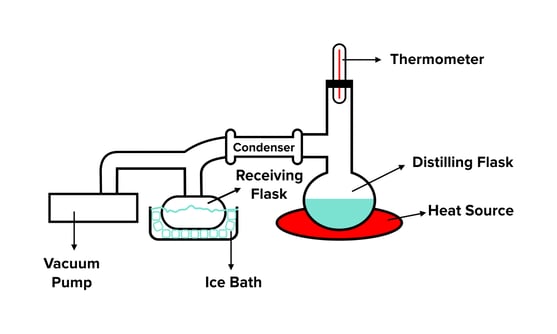
Rather than memorizing technique names in isolation, make sure you understand what property each method separates by. For example, one method may separate compounds based on size, another on charge, and another on affinity for a particular molecule. That makes it much easier to reason through an unfamiliar experimental setup.
5D. Structure, Function, and Reactivity of Biologically Relevant Molecules
Content Category 5D brings organic chemistry and biochemistry together by focusing on the structures and reactions of molecules important to living systems. It includes nucleic acids, amino acids and proteins, lipids, carbohydrates, and several major organic functional groups and reaction types.
Key topics include:
- Nucleotides and nucleic acids
- DNA and RNA structure
- Amino acid structure and classification
- Peptide bonds
- Protein structure and folding
- Isoelectric point
- Lipids and phospholipids
- Fatty acids
- Carbohydrates
- Monosaccharides and polysaccharides
- Aldehydes and ketones
- Alcohols
- Carboxylic acids
- Carboxylic acid derivatives
- Phenols
- Nucleophilic substitution and addition
- Oxidation and reduction
- Hydrolysis
- Esterification and transesterification
- Biologically relevant aromatic compounds
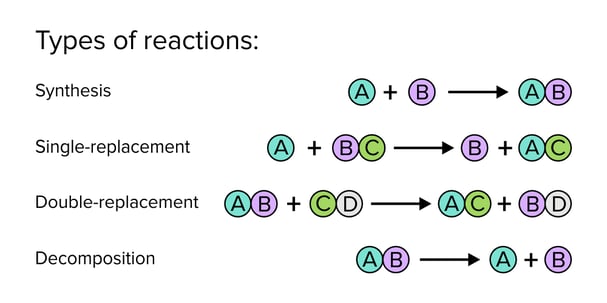
This category is a good example of why you shouldn’t treat organic chemistry and biochemistry as completely separate subjects. The AAMC may ask you to recognize both the structure of a biological molecule and the chemistry that explains how it reacts. For example, one official AAMC sample question asks students to recognize that forming a peptide bond between amino acids creates an amide functional group.
5E. Principles of Chemical Thermodynamics and Kinetics
Content Category 5E focuses on why chemical reactions occur, how quickly they occur, and how biological systems regulate them. It brings together thermodynamics, equilibrium, reaction kinetics, bioenergetics, and enzyme function.
Important topics include:
- Enzyme function and specificity
- Active-site and induced-fit models
- Cofactors and coenzymes
- Michaelis-Menten kinetics
- Enzyme inhibition
- Allosteric regulation
- ATP and biological energy transfer
- Oxidation-reduction reactions
- Gibbs free energy
- Enthalpy and entropy
- Spontaneous vs. nonspontaneous reactions
- Thermodynamic equilibrium
- Equilibrium constants
- Le Châtelier’s principle
- Reaction rates
- Rate laws and reaction order
- Activation energy
- Transition states
- Catalysts
- Arrhenius equation
- Kinetic vs. thermodynamic control
- Calorimetry and heat transfer
One of the most important distinctions here is between thermodynamics and kinetics. Thermodynamics tells you whether a process is energetically favorable and where equilibrium lies; kinetics tells you how quickly the reaction proceeds. Enzymes can speed up a reaction by lowering its activation energy, but they don’t change the reaction’s equilibrium or overall free-energy difference.
For Chem/Phys, you should be prepared to connect these ideas to both chemical reactions and biological processes rather than treating enzyme kinetics, equilibrium, and thermodynamics as completely separate topics.
Watch next: How to Beat the Chem/Phys Section of the MCAT with Dr. Ken Tao for practical strategies on calculations, equations, pacing, and passage-based problem-solving.
What Are the Highest-Yield MCAT Chem/Phys Topics?
The AAMC doesn’t publish an official ranking of individual Chem/Phys topics by frequency. However, the section’s discipline breakdown can help you understand where the greatest emphasis falls: about 30% comes from general chemistry, 25% from biochemistry, 25% from physics, 15% from organic chemistry, and 5% from biology.
If you’re prioritizing your review, I’d make sure you’re especially comfortable with:
| High-yield area | What to know |
| Math, units, and scientific notation | Scientific notation, dimensional analysis, unit conversions, estimation, logarithms, and basic arithmetic without a calculator |
| Equations and proportional reasoning | Recognizing the correct equation, rearranging formulas, identifying constants and variables, and predicting how changing one quantity affects another |
| Acids, bases, and solutions | pH and pOH, Ka and pKa, buffers, Henderson-Hasselbalch, titrations, solubility, and equilibrium |
| Mechanics and energy | Newton’s laws, forces, work, energy, power, torque, and equilibrium |
| Fluids | Pressure, buoyancy, continuity, Bernoulli’s equation, viscosity, and applications to blood flow and respiration |
| Electricity and electrochemistry | Charge, voltage, current, resistance, circuits, capacitors, redox reactions, and electrochemical cells |
| Light, sound, and optics | Waves, Doppler effect, reflection, refraction, lenses, mirrors, and vision |
| Molecular structure and intermolecular forces | Bonding, polarity, resonance, hybridization, molecular geometry, stereochemistry, and intermolecular interactions |
| Thermodynamics and kinetics | Gibbs free energy, enthalpy, entropy, equilibrium, reaction rates, activation energy, and Le Châtelier’s principle |
| Biologically relevant molecules and enzymes | Amino acids, proteins, nucleic acids, functional groups, enzyme kinetics, and inhibition |
| Experimental methods and data | Chromatography, electrophoresis, experimental design, graphs, tables, and interpreting trends |
Some of these areas are especially important because they support questions across multiple topics. Scientific notation and proportional reasoning, for example, can appear in calculations involving fluids, circuits, gases, kinetics, or mechanics. Scientific notation comes up frequently in MCAT calculations and is also an easy place to lose points through simple arithmetic mistakes.
The same is true for equations. Memorizing a formula is only the first step; you also need to recognize when it applies and understand the relationships between its variables. I recommend becoming comfortable with proportional reasoning because many Chem/Phys questions ask you to determine how one quantity changes when another changes.
Finally, don’t let “high-yield” become an excuse to ignore weaker topics. Chem/Phys draws from a broad range of general chemistry, physics, biochemistry, and organic chemistry material, and only a limited number of questions from each area can appear on a given test. That means the topics emphasized on one exam may not be the same ones emphasized on another.
Get access to our half-length MCAT Practice Exam for FREE. Test your MCAT knowledge in a hyper-realistic exam interface with passages/questions built to mimic the AAMC.
How MCAT Chem/Phys Questions Test You
Knowing the science content is only part of doing well on MCAT Chem/Phys. The section also tests whether you can apply chemical and physical principles to unfamiliar situations, choose the right equation or relationship, interpret experiments, and reason from data.
Here’s how the section is divided by Scientific Inquiry and Reasoning Skill:
| Skill | Approx. share of Chem/Phys | What it means for you |
| Knowledge of Scientific Concepts and Principles | 35% | Recognize, recall, and apply chemistry, physics, biochemistry, and biology concepts |
| Scientific Reasoning and Problem-Solving | 45% | Use scientific principles and evidence to make predictions and solve unfamiliar problems |
| Reasoning About the Design and Execution of Research | 10% | Evaluate hypotheses, variables, controls, methods, and experimental design |
| Data-Based and Statistical Reasoning | 10% | Interpret graphs, tables, trends, calculations, and statistical information |
About 45% of Chem/Phys questions fall under scientific reasoning and problem-solving, which is why this section can feel very different from a traditional science exam. You may know the underlying concept but still need to decide which relationship applies, identify what information is relevant, or predict how a system will respond when one variable changes.
An MCAT Chem/Phys equation sheet can help you organize the formulas you need to know, but the harder skill is learning how to use them efficiently. Use a question bank to practice applying these concepts rather than reviewing them only in isolation. Practice questions force you to recognize the topic being tested, determine which variables matter, and manipulate those variables to arrive at an answer.
Chem/Phys also puts a lot of weight on experimental and quantitative information. You may be asked to interpret a graph, compare conditions in an experiment, identify a trend in a table, or decide whether the data support a proposed explanation. Being able to simplify that information and focus on the relationship the question is testing is just as important as knowing the science behind it.
How to Approach MCAT Chem/Phys Passages
Chem/Phys passages can look intimidating because they often combine unfamiliar experiments, technical language, equations, and data. The goal isn’t to understand or memorize every detail on your first read. In fact, some Chem/Phys passages are intentionally dense or unfamiliar, partly to test whether you can separate the information that matters from background detail and focus on what the questions actually require.
What Are MCAT Chem/Phys Passages Like?
Many Chem/Phys passages are adapted from scientific or experimental contexts. They may describe:
- A laboratory experiment
- A biological system explained using chemical or physical principles
- An unfamiliar molecule, reaction, or device
- An equation or relationship between variables
- A graph, table, or figure
- A comparison between experimental conditions
- A technique such as chromatography or electrophoresis
- A calculation involving information provided in the passage
A Chem/Phys passage will often describe a scientific experiment or process across several paragraphs and may include a figure, graph, or table. You may also encounter terminology or experimental details you’ve never seen before. Rather than trying to memorize every step, first identify the main topic and what each part of the passage is doing. Remember that the passage will still be there when you answer the questions, so you can return to specific details as you need them.
Timing is one of the biggest challenges of Chem/Phys. Passage sets generally include several questions, and you have only about a minute and a half per question on average across the section. Frequent, timed practice can help you get faster at identifying what matters and returning to the passage efficiently when you need more information.
How to Read an MCAT Chem/Phys Passage
When working through a Chem/Phys passage, try to separate the information you need from the details that are there primarily to provide context.
- Identify the main scientific concept. Is the passage primarily about fluids, acid-base chemistry, kinetics, circuits, molecular structure, or another topic?
- Track the purpose of each paragraph. You don’t need to memorize every detail. Know where the passage introduces the system, describes the experiment, and presents the results so you can return to the relevant section later.
- Note the important variables and relationships. Pay attention to what changes, what stays constant, and which quantities are connected by an equation or scientific principle.
- Treat figures and tables one piece at a time. If a graph has several lines or a table contains multiple rows and columns, start with one line, row, or column and identify its trend before comparing it with the others. Ken recommends this approach to avoid becoming overwhelmed by dense data.
- Return to the passage when the question requires detail. Once you know where information is located, you can reread the relevant sentence, figure, or experimental result rather than trying to retain everything from the beginning. Highlighting can help you mark especially important information, but use it selectively. Highlighting too much can make key details harder to find and take time away from answering questions.
- Use outside knowledge. Some questions can be answered by interpreting the passage alone, but many require you to combine passage information with something you’ve learned during your MCAT prep, such as a formula, scientific principle, or relevant fact.
The goal is to build a mental map of the passage, not memorize it. If you understand what each part is doing and where the important information lives, you can spend more of your time solving the question instead of rereading the entire passage. The more you practice with full-length MCAT exams and practice questions, the easier it becomes to build that mental map quickly and focus on the information that actually matters.
MCAT Study Resources
Different parts of the MCAT may require different approaches to prep. Whether you need to strengthen your content knowledge, build endurance, or fit more review into your schedule, MedSchoolCoach offers resources to help:
- MCAT Practice Exams: Take full-length practice tests and track your progress over time.
- MCAT Masterclass: Review key MCAT concepts with free articles, videos, and practice questions.
- MCAT Chem/Phys Equation Sheet: Review the equations and constants you need to know for the Chem/Phys section.
- MCAT CARS Mastery: Build your approach to the CARS section with focused video lessons and practice.
- MCAT Go: Review high-yield MCAT content with audio lessons you can use while commuting, exercising, or away from your desk.
- MCAT Prep App: Practice MCAT questions and review content from your phone when you have a few minutes to study.
- MCAT Practice Runner Game: Turn practice questions into a quick, interactive challenge covering biology, chemistry, organic chemistry, and psychology/sociology.
You don’t need to use every study resource available. Focus on the tools that address the areas making the MCAT most challenging for you and that fit naturally into your study plan.
Boost Your MCAT Score With Personalized, One-on-One Tutoring
If after seeing this guide, you still feel overwhelmed, and would appreciate a guiding hand to help you through the rough patches of your MCAT journey, tutoring may be for you. Personalized one-on-one tutoring can help you to master each section, build test-day endurance and create individual strategies best suited to your preferences.
Work with a 99th-percentile tutor, and get a Guaranteed Score Increase when you sign up for a Silver, Gold, or Platinum MCAT tutoring package.
 Alex Starks
Alex scored in the 99th percentile on his MCAT and has over 13 years of teaching experience. He joined MedSchoolCoach to help lead our content division, focused on creating the most realistic practice questions and highest quality video content available anywhere.