



1. William Carey University College of Osteopathic Medicine

- Average MCAT Score: 498.1
- Average GPA of Incoming Med Students: 3.5
- MedSchoolCoach Competitiveness Rating: 0/100
- Tuition: $50,500
- Location: Hattiesburg, Mississippi
- Student Enrollment (2025): 741
William Carey University College of Osteopathic Medicine (WCUCOM) uses an integrated curriculum and community-based training model, with an emphasis on primary care and serving medically underserved communities. Students can pursue Global Health, Rural Health, and Population Health tracks, as well as distinctive training in Child Advocacy Studies.
WCUCOM is the first osteopathic medical school in the country to offer the nationally recognized CAST curriculum, which includes required first-year instruction. WCUCOM's focus on primary care is reflected in its 2026 U.S. News rankings. It is No. 1 nationally in the percentage of graduates practicing in primary care and No. 3 in the percentage of graduates practicing in rural areas.
Use our free Med School Chance Predictor to calculate your odds of acceptance at MD and DO programs nationwide. Enter your GPA, MCAT, and other metrics to see your odds at each school.
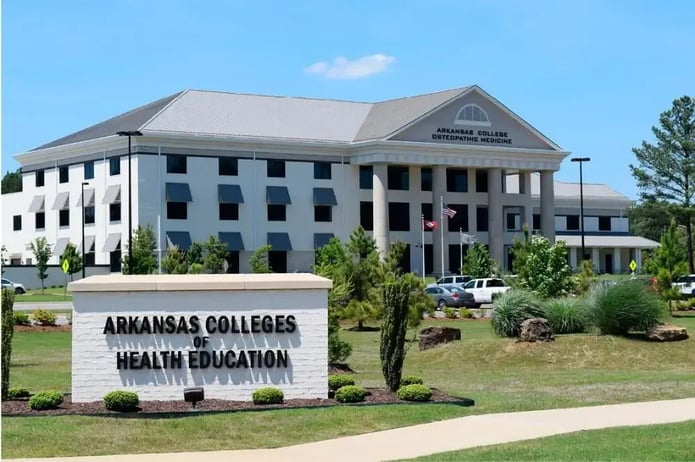
2. Arkansas College of Osteopathic Medicine
- Average MCAT Score: 498.7
- Average GPA of Incoming Med Students: 3.56
- MedSchoolCoach Competitiveness Rating: 1/100
- Tuition: $60,500
- Location: Fort Smith, Arkansas
- Student Enrollment (2025): 632
Arkansas College of Osteopathic Medicine (ARCOM) uses an innovative “helix” curriculum that revisits biomedical concepts throughout the first two years with active, hands-on learning. The school places a strong emphasis on primary care and service to underserved communities, including a required month-long rotation in an underserved practice setting.
ARCOM uses a holistic review process without set minimum GPA or MCAT requirements. Preference is given to applicants from rural and underserved communities, particularly those from Arkansas and the Southcentral United States.
Read Next: 20 Top Medical Schools in the United States (2026)
3. Kentucky College of Osteopathic Medicine (KYCOM)

- Average MCAT Score: 498.6
- Average GPA of Incoming Med Students: 3.51
- MedSchoolCoach Competitiveness Rating: 1/100
- Tuition: $59,750
- Location: Pikeville, Kentucky
- Student Enrollment (2025): 581
Kentucky College of Osteopathic Medicine (KYCOM) emphasizes primary care and service to rural and underserved communities. In the 2026 U.S. News rankings, KYCOM ranked No. 7 nationally for graduates practicing in primary care and No. 6 for graduates practicing in rural areas.
The university is also among the top five most affordable private osteopathic and allopathic medical schools. Its KYCOM Advantage provides students with educational resources and other expenses at no additional cost.
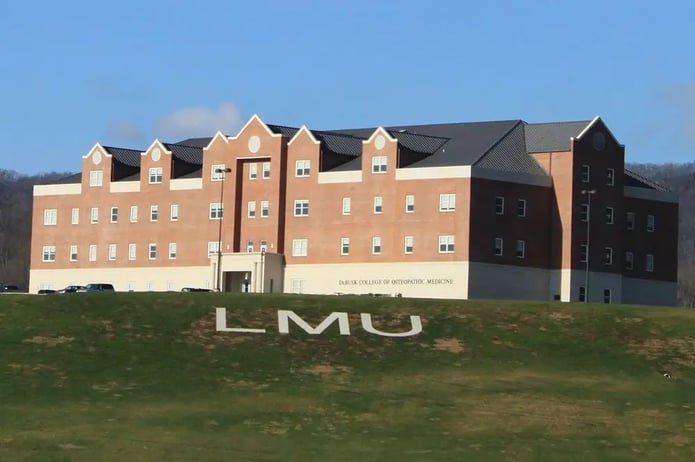
4. Lincoln Memorial University-DeBusk College of Osteopathic Medicine
- Average MCAT Score: 497
- Average GPA of Incoming Med Students: 3.6
- MedSchoolCoach Competitiveness Rating: 2/100
- Tuition: $59,550
- Location: Harrogate, Tennessee; Knoxville, Tennessee; Orange Park, Florida
- Student Enrollment (2025): 1,748
Lincoln Memorial University-DeBusk College of Osteopathic Medicine (LMU-DCOM) offers a unique DO/MBA Combined Degree Completion Pathway, allowing medical students to earn both degrees while pursuing their medical education. The program is designed to give future physicians training in business, leadership, practice management, and healthcare administration.
LMU-DCOM also prepares physicians to serve rural and underserved communities, particularly in Appalachia. The school reports that 99.5% of its eligible graduates were placed into residency training programs over the past four years.
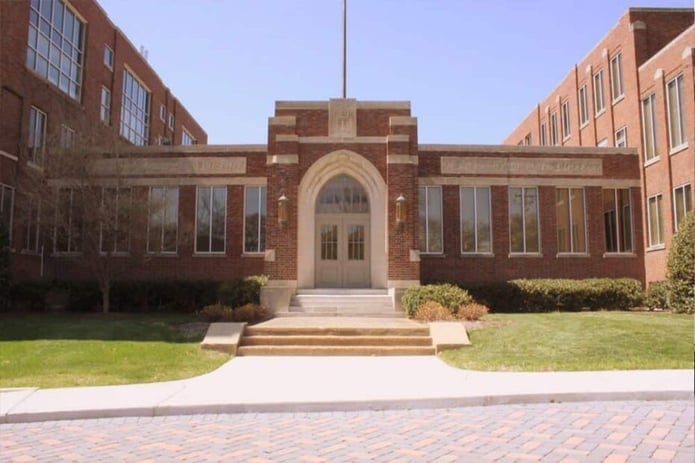
5. Meharry Medical College
- Average MCAT Score: 506
- Average GPA of Incoming Med Students: 3.64
- MedSchoolCoach Competitiveness Rating: 5/100
- Tuition: $59,250
- Location: Nashville, Tennessee
- Student Enrollment (2025): 521
Meharry Medical College is one of the nation's leading historically Black medical schools. It has a longstanding mission of training physicians to serve underserved communities and address health disparities. The school’s holistic admissions process considers applicants' experiences, attributes, and academic preparation.
Meharry also received a historic $175 million gift from Bloomberg Philanthropies in 2024 as part of a broader commitment to the nation’s four historically Black medical schools. It will help strengthen Meharry’s financial foundation and support its mission of training future physicians.
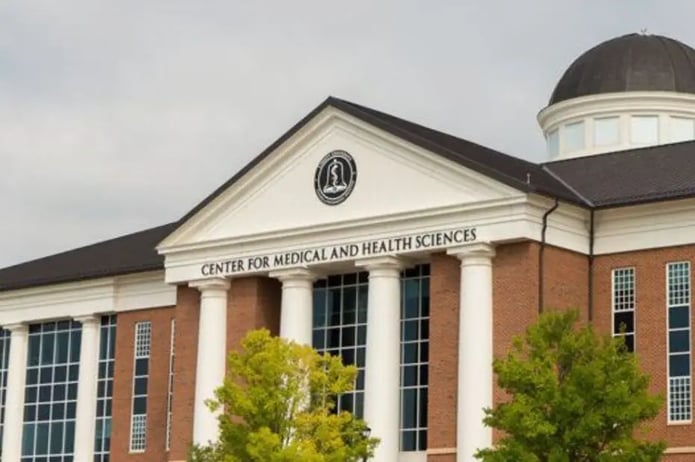
6. Liberty University College of Osteopathic Medicine
- Average MCAT Score: 503.3
- Average GPA of Incoming Med Students: 3.63
- MedSchoolCoach Competitiveness Rating: 6/100
- Tuition: $51,170
- Location: Lynchburg, Virginia
- Student Enrollment (2025): 639
Liberty University College of Osteopathic Medicine (LUCOM) educates osteopathic physicians from a Christian perspective. The school offers the LU MED 3+1 Accelerated Pathway, which allows eligible students to earn a bachelor's degree in Biomedical Sciences from Liberty University, begin medical school one year early, and have the MCAT requirement waived.
Students must maintain a minimum 3.7 science GPA to remain eligible for the program. LUCOM also offers additional partner pathways that can waive the MCAT requirement for qualified students from participating undergraduate institutions.
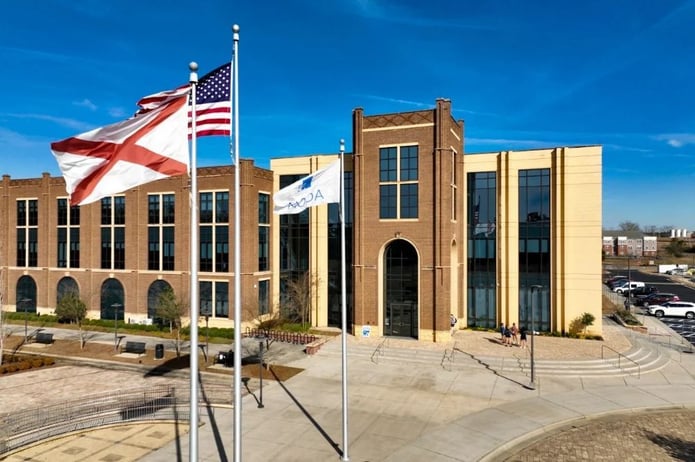
7. Alabama College of Osteopathic Medicine
- Average MCAT Score: 503.6
- Average GPA of Incoming Med Students: 3.58
- MedSchoolCoach Competitiveness Rating: 7/100
- Tuition: $61,788
- Location: Dothan, Alabama
- Student Enrollment (2025): 793
Alabama College of Osteopathic Medicine (ACOM) uses a hybrid, discipline- and system-based curriculum that integrates foundational sciences with clinical applications, osteopathic principles, team-based learning, and standardized patient encounters.
Its third- and fourth-year clinical training takes place through a network of community-based hospitals and clinics across the region. ACOM also offers scholarships for students interested in underserved medicine, including a full-tuition scholarship for eligible students who commit to practicing primary care or behavioral health in underserved areas of Alabama.
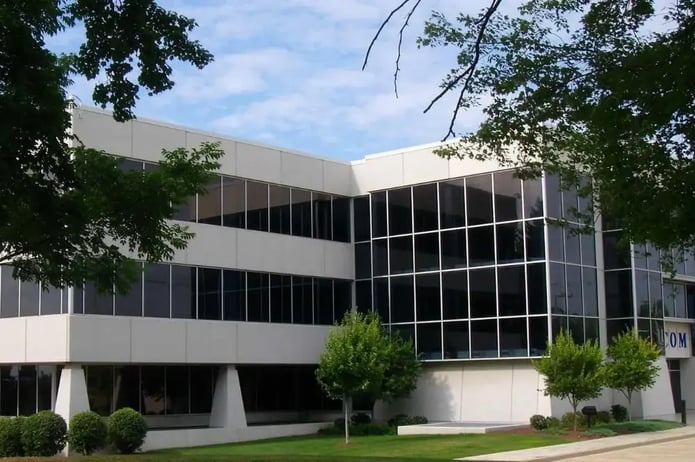
8. Lake Erie College of Osteopathic Medicine
- Average MCAT Score: 502.3
- Average GPA of Incoming Med Students: 3.64
- MedSchoolCoach Competitiveness Rating: 7/100
- Tuition: $41,825
- Location: Erie, Pennsylvania (main campus)
- Student Enrollment (2025): 1,059
Lake Erie College of Osteopathic Medicine (LECOM) is LECOM’s original and main campus. The university offers four learning pathways for the first two years of the D.O. program: Lecture-Discussion, Problem-Based Learning, Directed Study, and the accelerated three-year Primary Care Scholars Pathway. The PCSP condenses the traditional four-year curriculum into three years and is designed for students committed to primary care.
LECOM also offers an Accelerated Physician Assistant Pathway, which allows certified physician assistants to earn a D.O. degree in three years. This pathway is currently offered at LECOM’s Seton Hill campus in Greensburg, Pennsylvania.
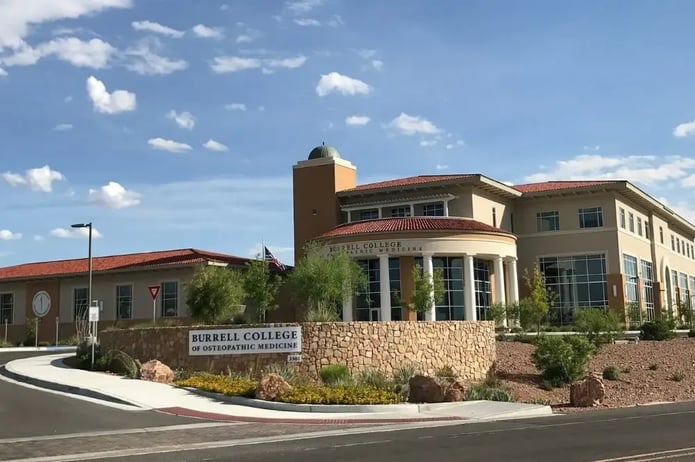
9. Burrell College of Health Sciences
- Average MCAT Score: 500
- Average GPA of Incoming Med Students: 3.46
- MedSchoolCoach Competitiveness Rating: 10/100
- Tuition: $70,622
- Location: Las Cruces, New Mexico, and Melbourne, Florida
- Student Enrollment (2025): 734 (Melbourne campus figures TBA)
Burrell College of Health Sciences, formerly Burrell College of Osteopathic Medicine, operates its School of Osteopathic Medicine at two campuses: Las Cruces, New Mexico, and Melbourne, Florida. The school uses a holistic, rolling admissions process that considers both the academic and non-academic qualities of applicants.
Its Community-Based Learning approach emphasizes preparing students to serve rural, border, and other underserved communities.
10. Edward Via College of Osteopathic Medicine

- Average MCAT Score: 503.2
- Average GPA of Incoming Med Students: 3.68
- MedSchoolCoach Competitiveness Rating: 10/100
- Tuition: $52,500
- Location: Blacksburg, Virginia (main campus)
- Student Enrollment (2025): 722
Edward Via College of Osteopathic Medicine (VCOM) has four campuses in Virginia, South Carolina, Alabama, and Louisiana, all centered on a mission to address physician shortages and improve health outcomes in rural and medically underserved communities.
The school uses a block-style curriculum based on a whole-patient osteopathic philosophy, with hands-on clinical experiences beginning in the first year. VCOM also partners with universities and hospital systems at each campus, giving students access to research opportunities and diverse clinical settings. The school reported a 99.8% final residency placement rate in 2025.
Build your application alongside a physician with AdCom experience.
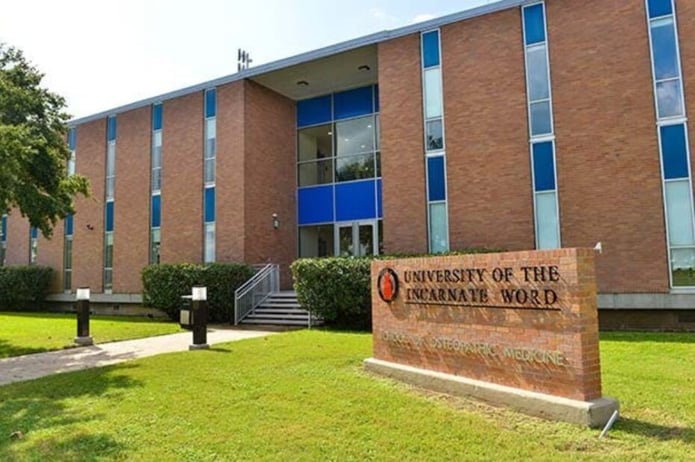
11. University of the Incarnate Word School of Osteopathic Medicine
- Average MCAT Score: 504.8
- Average GPA of Incoming Med Students: 3.6
- MedSchoolCoach Competitiveness Rating: 6/100
- Tuition: $64,875
- Location: San Antonio, Texas
- Student Enrollment (2025): 622
University of the Incarnate Word School of Osteopathic Medicine (UIWSOM) uses a holistic admissions process that considers applicants' academic achievement, life experiences, commitment to service, and alignment with the school's mission.
Its integrated curriculum emphasizes self-directed learning, critical thinking, and clinical reasoning. Students learn through Small Group Interactive Sessions (SIGS) and Large Group Sessions (LGS), with small groups typically consisting of eight or nine students and a faculty facilitator.
12. Ponce Health Sciences University School of Medicine

- Average MCAT Score: 500
- Average GPA of Incoming Med Students: 3.7
- MedSchoolCoach Competitiveness Rating: 7/100
- Tuition: $51,102 (in-state); $77,464 (out-of-state)
- Location: Ponce, Puerto Rico
- Student Enrollment (2025): 796
Ponce Health Sciences University School of Medicine (PHSU-SOM) has its main campus in Ponce, Puerto Rico, and a second full four-year MD campus in St. Louis, Missouri.
The school’s mission emphasizes educating bilingual, ethical physicians who provide culturally competent healthcare. The MD curriculum is designed around this mission and focuses on primary care, preventive and community medicine, and culturally competent care.
13. University of Puerto Rico School of Medicine

- Average MCAT Score: 504
- Average GPA of Incoming Med Students: 3.85
- MedSchoolCoach Competitiveness Rating: 20/100
- Tuition: $18,200 (in-state); $35,700 (out-of-state)
- Location: San Juan, Puerto Rico
- Student Enrollment (2025): 436
University of Puerto Rico School of Medicine has a mission centered on training physicians who can serve underserved communities in Puerto Rico. The four-year MD curriculum combines two years of basic sciences with two years of clinical training and includes early clinical experiences.
The school also requires students to be able to communicate in both Spanish and English, making bilingualism an important part of its medical education and patient care
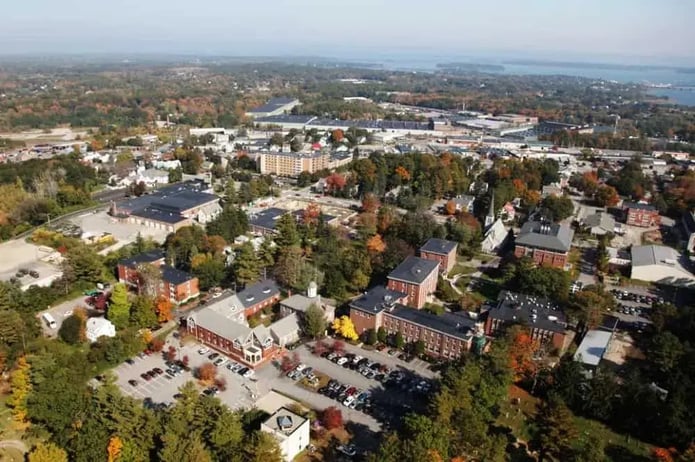
14. University of New England College of Osteopathic Medicine
- Average MCAT Score: 503
- Average GPA of Incoming Med Students: 3.58
- MedSchoolCoach Competitiveness Rating: 8/100
- Tuition: $69,220
- Location: Biddeford, Maine
- Student Enrollment (2025): 703
University of New England College of Osteopathic Medicine (UNE COM) is Maine’s only medical school and New England’s only osteopathic medical school. Its innovative curriculum includes a Longitudinal Integrated Clerkship (LIC), an alternative to traditional block rotations that allows selected third-year students to spend a year embedded in a rural primary care clinic.
UNE also offers an online Post-Baccalaureate Pre-Health Certificate Program that allows students to work with an academic advisor to create an individualized course plan based on their health-professions goals. Eligible students may also receive a committee letter upon successful completion of the post-bacc.
15. Pacific Northwest University of Health Sciences College of Osteopathic Medicine

- Average MCAT Score: 502.8
- Average GPA of Incoming Med Students: 3.55
- MedSchoolCoach Competitiveness Rating: 9/100
- Tuition: $69,795
- Location: Yakima, Washington
- Student Enrollment (2025): 552
Pacific Northwest University of Health Sciences College of Osteopathic Medicine (PNWU-COM) delivers its four-year DO program in a setting that emphasizes small-group interaction and hands-on learning. The school focuses on preparing physicians to serve rural and medically underserved communities throughout the Pacific Northwest.
The college also offers a one-year Master of Science in Biomedical Sciences (MBS) program designed to prepare students for graduate-level health sciences programs. About 90% of students in the master's program have historically graduated and been accepted into medical or other graduate health-professional programs.
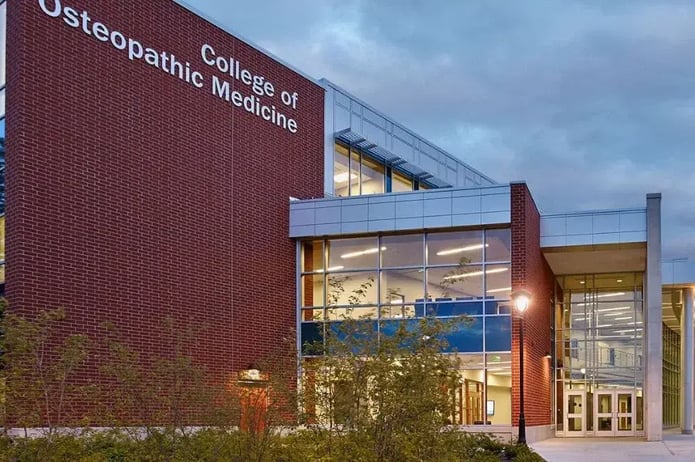
16. Marian University College of Osteopathic Medicine
- Average MCAT Score: 500.8
- Average GPA of Incoming Med Students: 3.77
- MedSchoolCoach Competitiveness Rating: 12/100
- Tuition: $63,600
- Location: Indianapolis, Indiana
- Student Enrollment (2025): 624
Marian University Tom and Julie Wood College of Osteopathic Medicine (MU-WCOM) uses holistic admissions, seeking students whose interests and qualities align with its mission and vision. As a Catholic medical school grounded in Franciscan values, the school emphasizes the osteopathic approach to whole-person care and the health of the body, mind, and spirit.
The curriculum also incorporates service-learning alongside clinical skills, with clinical rotations at community-based sites and an emphasis on caring for medically underserved populations.
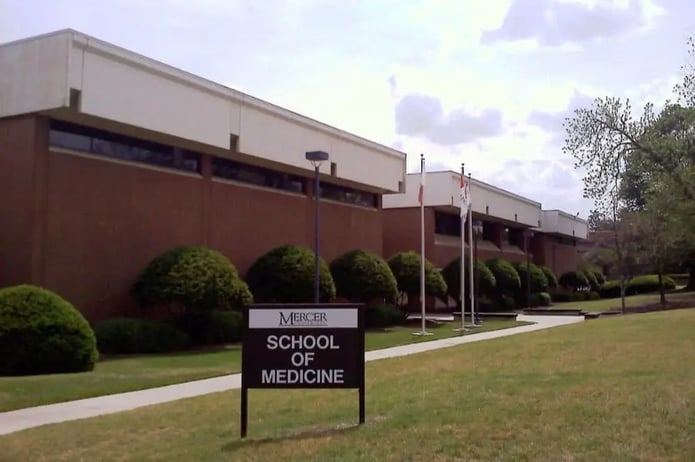
17. Mercer University School of Medicine
- Average MCAT Score: 504
- Average GPA of Incoming Med Students: 3.77
- MedSchoolCoach Competitiveness Rating: 14/100
- Tuition: $45,763
- Location: Macon, Georgia
- Student Enrollment (2025): 689
Mercer University School of Medicine focuses on training physicians to meet the primary care needs of rural and medically underserved communities in Georgia. The school gives preference to Georgia residents and applicants with backgrounds and experiences that align with its mission to improve health care throughout the state.
Mercer uses a problem-based curriculum that requires students to apply basic science knowledge to clinical problems rather than relying primarily on lecture-based instruction. With one of the highest medical school acceptance rates in the country, Mercer is also frequently included among the easiest med schools to get into, particularly for qualified Georgia residents.
18. Howard University College of Medicine

- Average MCAT Score: 507
- Average GPA of Incoming Med Students: 3.73
- MedSchoolCoach Competitiveness Rating: 16/100
- Tuition: $60,924
- Location: Washington, District of Columbia
- Student Enrollment (2025): 548
Howard University College of Medicine (HUCM) is a historically Black medical school with a mission centered on training physicians to serve medically vulnerable communities. The school uses a holistic admissions process that considers applicants' academic preparation, experiences, and personal qualities.
HUCM also offers an MD-PhD program for students interested in combining clinical medicine with biomedical research, as well as limited opportunities for international applicants.
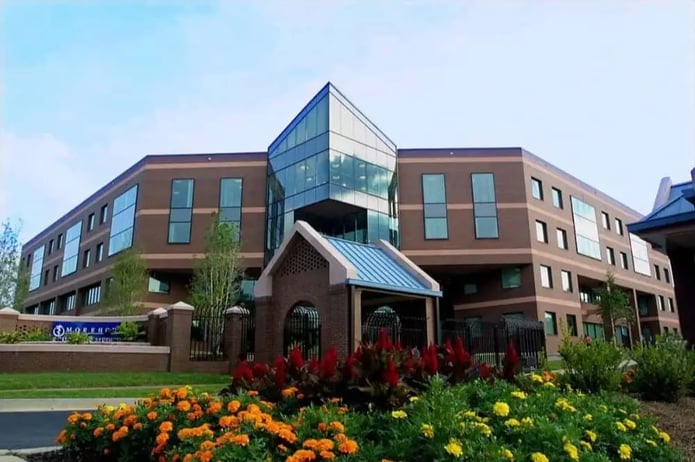
19. Morehouse School of Medicine
- Average MCAT Score: 508
- Average GPA of Incoming Med Students: 3.77
- MedSchoolCoach Competitiveness Rating: 16/100
- Tuition: $57,238
- Location: Atlanta, Georgia
- Student Enrollment (2025): 540
Morehouse School of Medicine is a historically Black medical school focused on increasing diversity in the health professions and addressing health disparities in underserved communities. Its MD curriculum introduces students to clinical experiences during the first year and includes a required Family Medicine & Rural Health clerkship.
Morehouse boasts a low student-faculty ratio and reports that nearly 70% of its graduates consistently match into primary care specialties. The school also offers an MD-PhD program in Biomedical Sciences for students interested in combining their training with research.
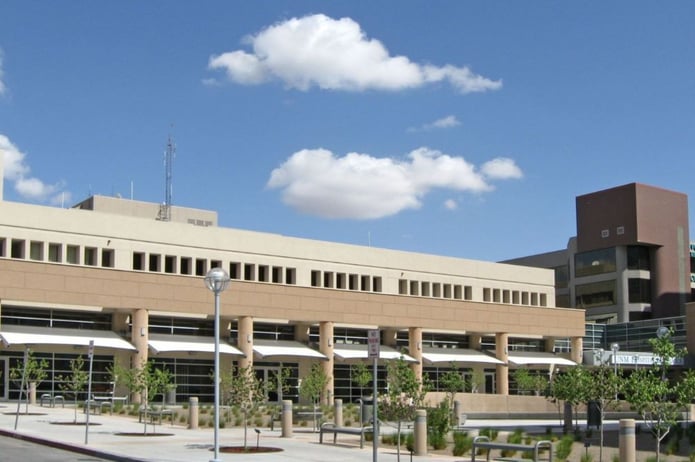
20. University of New Mexico School of Medicine
- Average MCAT Score: 509
- Average GPA of Incoming Med Students: 3.85
- MedSchoolCoach Competitiveness Rating: 23/100
- Tuition: $20,176 (in-state); $48,412 (out-of-state)
- Location: Albuquerque, New Mexico
- Student Enrollment (2025): 445
The University of New Mexico School of Medicine has a strong mission of preparing physicians to meet the healthcare needs of New Mexico, with an emphasis on rural communities. Its curriculum provides early clinical exposure, including a first-year Practical Immersion Experience in a rural clinical setting.
The school also offers a Premedical Enrichment Program (PrEP) for applicants who are educationally and/or economically disadvantaged and were not selected for direct admission. Students who successfully complete the program can matriculate into the MD program.
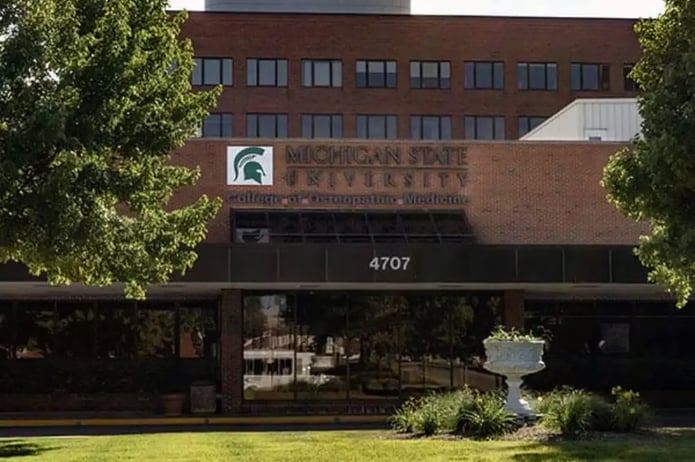
21. Michigan State University College of Human Medicine
- Average MCAT Score: 508
- Average GPA of Incoming Med Students: 3.84
- MedSchoolCoach Competitiveness Rating: 16/100
- Tuition: $33,752 (in-state); $61,576 (out-of-state)
- Location: East Lansing, Michigan
- Student Enrollment (2025): 822
Michigan State University College of Human Medicine offers the Advanced Baccalaureate Learning Experience (ABLE). This one-year postbaccalaureate pathway targets applicants from disadvantaged backgrounds, including non-traditional students, who would benefit from additional academic preparation. Students who successfully complete the program are admitted to the following year’s MD class.
In 2026, MSU began unifying its College of Human Medicine and College of Osteopathic Medicine under a shared MSU Medicine structure. It will retain separate MD and DO degree pathways once that is complete.
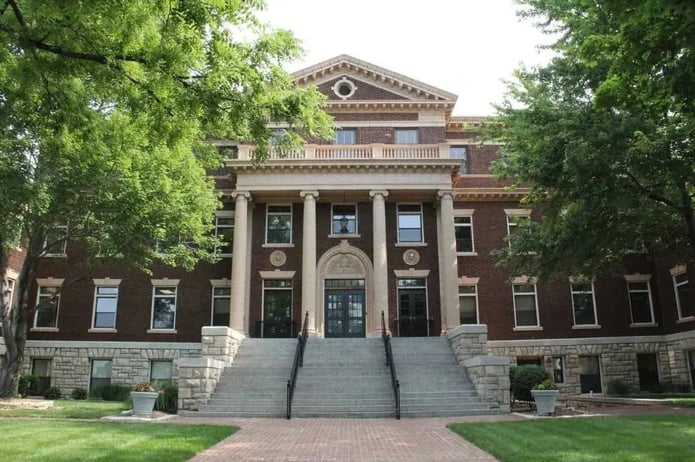
22. Kansas City University College of Osteopathic Medicine
- Average MCAT Score: 504.5
- Average GPA of Incoming Med Students: 3.68
- MedSchoolCoach Competitiveness Rating: 17/100
- Tuition: $59,030
- Location: Kansas City, Missouri (main campus)
- Student Enrollment (2025): 1,104
Kansas City University College of Osteopathic Medicine (KCU-COM) offers three concurrent degree programs: a DO/MA in Bioethics, DO/MBA in Health Care Leadership, and DO/MPH. Students can also pursue specialty tracks in Global Health, Military Medicine, Behavioral Medicine, and Leadership.
The curriculum incorporates early clinical experiences, including standardized patient encounters, simulation, and community health screenings. KCU also accepts a select number of international students each year.
23. Washington State University Elson S. Floyd College of Medicine
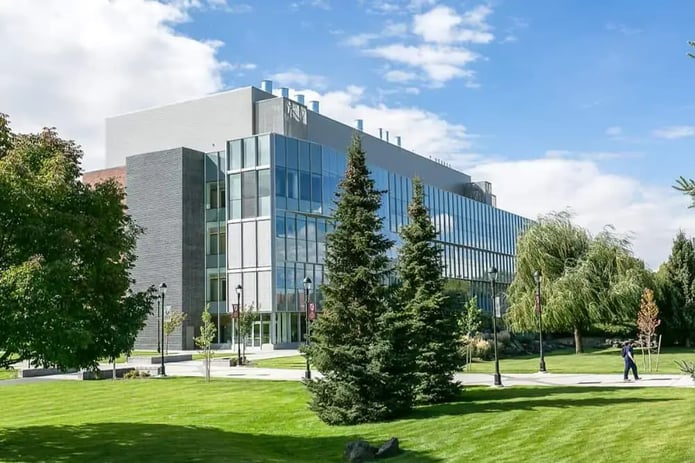
- Average MCAT Score: 508
- Average GPA of Incoming Med Students: 3.74
- MedSchoolCoach Competitiveness Rating: 18/100
- Tuition: $44,622
- Location: Spokane, Washington
- Student Enrollment (2025): 353
Elson S. Floyd College of Medicine is a state school through Washington State University that uses a holistic admissions process with a strong focus on Washington residents. The school seeks students committed to serving rural, underserved, historically marginalized, and vulnerable communities.
Its clinical training takes place across multiple Washington communities, giving students experience caring for diverse patient populations and practicing in underserved settings.
24. Louisiana State University School of Medicine in Shreveport
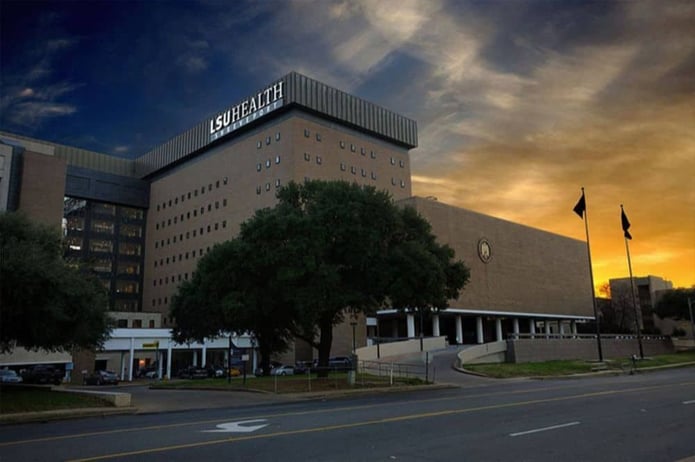
- Average MCAT Score: 511
- Average GPA of Incoming Med Students: 3.89
- MedSchoolCoach Competitiveness Rating: 19/100
- Tuition: $32,937 (in-state); $61,115 (out-of-state)
- Location: Shreveport, Louisiana
- Student Enrollment (2025): 840
Louisiana State University Health Shreveport School of Medicine (LSU Health Shreveport) is a state-supported medical school that emphasizes serving Louisiana. The majority of each entering class consists of in-state students. The school also welcomes non-traditional applicants and considers applicants' individual experiences and circumstances during admissions.
Its four-year MD curriculum uses a system-based approach, with students beginning patient interactions in their first year. Institutional scholarships and tuition waivers, combined with Shreveport’s relatively low cost of living, can make this a more affordable option for students.
Learn More: How to Successfully Reapply to Medical School and Get a “Yes!”
25. Brody School of Medicine at East Carolina University
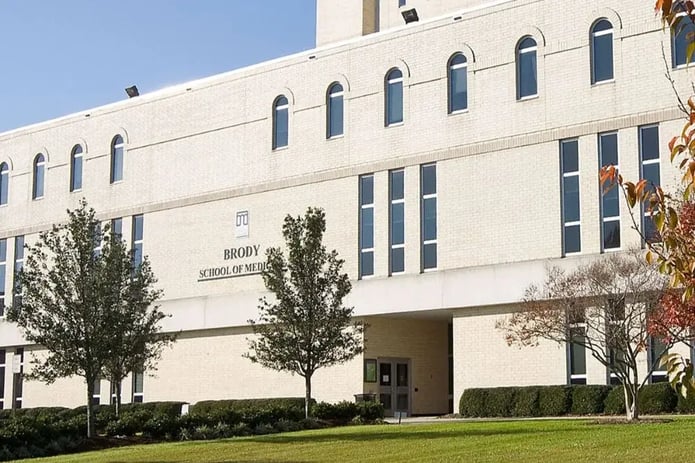
- Average MCAT Score: 513
- Average GPA of Incoming Med Students: 3.87
- MedSchoolCoach Competitiveness Rating: 19/100
- Tuition: $25,432 (in-state); $56,872 (out-of-state)
- Location: Greenville, North Carolina
- Student Enrollment (2025): 363
Brody School of Medicine at East Carolina University has a strong mission of training physicians to serve North Carolina, particularly in primary care and underserved communities. The school ranks among the top U.S. medical schools for the percentage of graduates who practice in primary care, serve underserved communities, and remain in North Carolina.
Brody also offers the Brody Scholars Program, a full-tuition scholarship covering all four years of medical school for selected incoming students. Scholarships also cover summer enrichment opportunities and/or potential service projects that selected students are interested in.
26. University of Mississippi School of Medicine
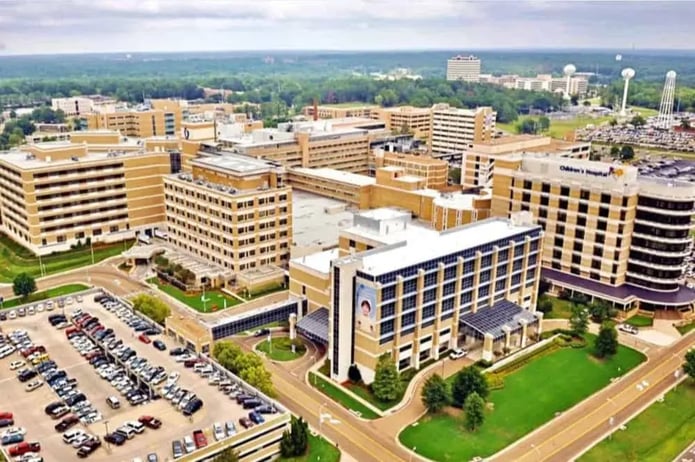
- Average MCAT Score: 504
- Average GPA of Incoming Med Students: 3.85
- MedSchoolCoach Competitiveness Rating: 20/100
- Tuition: $37,375
- Location: Jackson, Mississippi
- Student Enrollment (2025): 679
The University of Mississippi School of Medicine offers both a traditional MD program and an MD-PhD program for students interested in combining clinical medicine with biomedical research. The school has a strong focus on keeping medical education affordable for Mississippi residents, with a tuition structure that provides a significant in-state advantage.
About 90% of first-year medical students receive some form of financial aid, including scholarships, grants, loans, and work-study opportunities.
Expert note: While there isn't one state that's universally easiest to get into for medical school, Mississippi, North Dakota, and Louisiana can be among the more accessible states for in-state applicants. Each has public medical schools with a strong focus on serving state residents, which can give qualified in-state applicants an advantage.
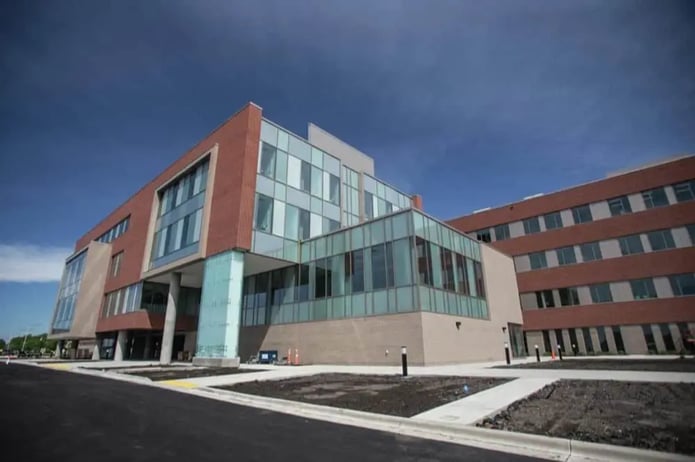
27. University of North Dakota School of Medicine and Health Sciences
- Average MCAT Score: 509
- Average GPA of Incoming Med Students: 3.89
- MedSchoolCoach Competitiveness Rating: 26/100
- Tuition: $37,846 (in-state); $68,439
- Location: Grand Forks, North Dakota
- Student Enrollment (2025): 295
The University of North Dakota School of Medicine and Health Sciences is the only medical school in North Dakota, with a strong emphasis on training physicians for rural and Native American communities. The school gives preference to North Dakota residents with strong ties to the state over out-of-state students.
Students can choose from traditional clinical rotations or more immersive rural options, including a 20- to 28-week Rural Opportunities in Medical Education (ROME) pathway. UND also offers RuralMed, a state-sponsored program that covers tuition for students who commit to practicing in rural North Dakota for five years after residency.
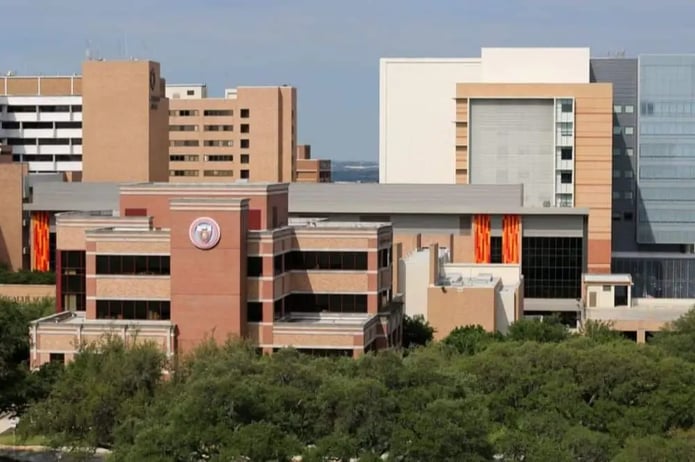
28. University of Texas Rio Grande Valley School of Medicine
- Average MCAT Score: 511
- Average GPA of Incoming Med Students: 3.92
- MedSchoolCoach Competitiveness Rating: 20/100
- Tuition: $21,532 (in-state); $34,632
- Location: Edinburg, Texas
- Student Enrollment (2025): 227
The University of Texas Rio Grande Valley School of Medicine (UTRGV) has a 21-month pre-clerkship curriculum built around problem-based, self-directed, and team-based learning. Students work in small groups with a faculty facilitator, and the shortened pre-clerkship phase leaves time for research, electives, community service, and Step 1 preparation.
UTRGV participates in the Joint Admission Medical Program (JAMP), a Texas program that provides financial support and mentorship to students from disadvantaged backgrounds. The school also offers the Vaqueros MD Early Assurance Program, which gives qualifying South Texas high school students a conditional seat in a future UTRGV medical school class.
29. Florida State University College of Medicine

- Average MCAT Score: 509
- Average GPA of Incoming Med Students: 3.9
- MedSchoolCoach Competitiveness Rating: 20/100
- Tuition: $27,262 (in-state); $65,269 (out-of-state)
- Location: Tallahassee, Florida
- Student Enrollment (2025): 496
Florida State University College of Medicine uses a community-based model in which students complete their first two years in Tallahassee before moving to one of six regional campuses for their third and fourth years. Students can also train at rural clinical sites, with more than 90 medical facilities across Florida providing opportunities for hands-on clinical education.
FSU takes a holistic approach to admissions and encourages medical school applications from non-traditional students. The school offers a unique Bridge to Clinical Medicine program for selected applicants who aren't admitted directly, allowing them to complete a three-semester master's program and earn admission to the MD program if they meet the requirements.
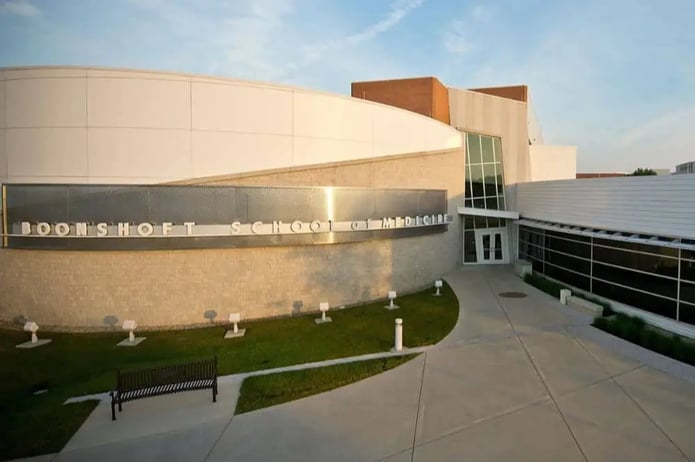
30. Wright State University Boonshoft School of Medicine
- Average MCAT Score: 510
- Average GPA of Incoming Med Students: 3.89
- MedSchoolCoach Competitiveness Rating: 22/100
- Tuition: $48,671 (in-state); $75,833 (out-of-state)
- Location: Dayton, Ohio
- Student Enrollment (2025): 534
Wright State University Boonshoft School of Medicine (WSU Boonshoft) uses the WrightCurriculum, which integrates biomedical and clinical sciences. Its Advanced Doctoring year gives students elective time to explore specialties. The school also offers an accelerated M.D. in Three curriculum for students who want to complete medical school in three years.
As one of the smaller medical schools on this list, Boonshoft has a close-knit learning environment with small class sizes. Students have access to clinical training across eight diverse teaching hospitals and more than 25 additional health care institutions.
Caribbean Medical Schools: An Alternative Pathway
If you’re concerned about getting into medical school in the U.S., accredited Caribbean medical schools can provide an alternative pathway.
These programs are generally less competitive than U.S. medical schools, and some accept students with lower-than-average median GPAs and MCAT scores. However, choosing the right program is important, as accreditation, residency eligibility, clinical training, and match rates can vary significantly among Caribbean medical schools.
Some of the top Caribbean medical schools include:
- St. George’s University
- Saba University School of Medicine
- Ross University School of Medicine
- American University of the Caribbean School of Medicine
- American University of Antigua (AUA)
- Medical University of the Americas
Find detailed information for each one in our guide to Caribbean medical schools.
FAQs
Double Your Chances of Medical School Acceptance
Finding the right medical schools to apply to is only part of a successful application strategy, whether you’re applying through AMCAS to MD schools or AACOMAS to DO programs. You also need to present an application that shows admissions committees why you would be a strong addition to their incoming class.
Whether you’re working to raise your MCAT score, strengthen your shadowing or clinical experiences, or make your personal statement stand out, the right guidance can help you put your best application forward. At MedSchoolCoach, our admissions experts can help you build a strategic school list and prepare an application that highlights your strengths.
Build your application alongside a doctor with admissions experience, and join the 95% of clients who get into medical school.
 Luke Voytas, MD
Dr. Voytas, a dedicated pediatrician with an passion for nurturing future medical leaders, inspires every student and resident he mentors to reach their fullest potential. Leveraging his rich background in writing, he crafts narrative-driven application essays that uniquely capture each client’s journey and set them apart in the competitive world of medicine.