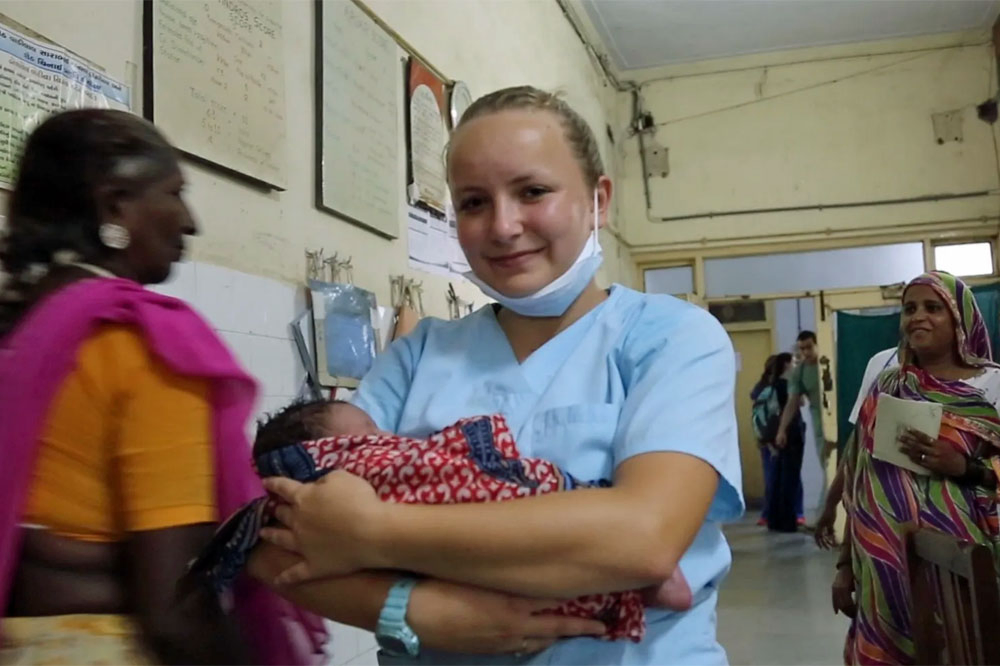




We rounded up a list of the 19 highest-paying pre-med jobs that offer students clinical experience and a solid financial footing before medical school.
Here are the benefits of working in healthcare as a pre-medical student:
- Clinical hours and extracurriculars for your med school application
- Hands-on experience to better understand the healthcare system and patient care
- Figuring out your career path and your preferred specialties
- Networking opportunities and connections with professionals in the medical field
- More financial security during a costly time in your life
- Flexible schedules, making it easier to balance work and school
- Getting to make a positive difference in people’s lives
Below are the best opportunities for undergrad pre-meds or med school applicants to gain clinical experience while also making some much-needed cash.
Get the pre-med guidance you need with 24/7 access to a physician with admissions experience.
1. Medical Assistant
Average Salary (2025): $39,623
Credentials Required: High school diploma or equivalent, completion of a medical assistant training program, and a certification (e.g., Certified Medical Assistant, CMA) may be preferred.
Medical assistants work with physicians and other healthcare professionals to provide patient care. They may take medical histories, measure vital signs, and assist with medical procedures.
2. Occupational Therapy Assistant
Average Salary (2025): $65,144
Credentials Required: Completion of an associate degree program from an accredited occupational therapy assistant program, certification from the National Board for Certification in Occupational Therapy (NBCOT), and state licensure may be required.
Certified occupational therapy assistants work under the supervision of occupational therapists (OTs) to provide patient care and rehabilitation. They help patients with everyday tasks and activities, such as dressing and eating, and may help OTs develop treatment plans.
3. Certified Nursing Assistant (CNA)
Average Salary (2025): $34,614
Credentials Required: High school diploma or equivalent, completion of a state-approved nursing assistant program, and a competency exam.
Certified Nursing Assistants (CNAs) are healthcare professionals who provide basic care to patients in hospitals, nursing homes, and other healthcare settings. Their duties may include bathing and dressing patients, helping with meals, and taking vital signs.
4. Emergency Medical Technician (EMT)
Average Salary (2025): $39,990 for EMTs
Credentials Required: Completion of a postsecondary certificate program, CPR certification, and state licensure.
Emergency medical technicians (EMTs) provide emergency medical care to patients at the scene of an accident or during transport to a hospital.
They may perform basic life support procedures, communicate with other medical care team members, and administer certain medications at certain levels.
Lorem ipsum dolor sit amet
5. Home Health Aide
Average Salary (2025): $35,540
Credentials Required: High school diploma or equivalent, completion of a state-approved training program, and a competency exam.
Home health aides provide basic care and assistance to patients in their homes. They help with daily activities such as bathing, dressing, and meal preparation. They may monitor vital signs.
They often carry out health-related tasks under the supervision of a nurse or other professional.
6. Medical Scribe
Average Salary (2025): $41,127
Credentials Required: High school diploma or equivalent (sometimes a college degree), familiarity with medical terminology and Electronic Health Record (EHR) systems, plus strong typing and documentation skills.
Medical scribes assist healthcare professionals with documentation and administrative tasks. They transcribe physician-patient encounters, maintain patient records, and may even assist with billing and coding.
7. Research Assistant
Average Salary (2025): $80,783
Credentials Required: Bachelor’s degree in a relevant field, lab experience, familiarity with research methodologies, plus strong analytical and organizational skills.
Research assistants support scientific research by conducting experiments, collecting data, and analyzing results. They also assist in preparing research papers and reports and may work in labs or clinical trials.
Related Reading: How to Get Pre-Med Research Hours
8. Phlebotomist
Average Salary (2025): $41,344
Credentials Required: High school diploma or equivalent, completion of a phlebotomy training program, certification (e.g., Certified Phlebotomy Technician, CPT), and state licensure may be required.
Phlebotomists draw blood from patients for medical testing, transfusions, or donations. They may also label and track blood samples for accurate handling, delivery, and analysis.
Get the pre-med guidance you need with 24/7 access to a physician with admissions experience.
9. Clinical Laboratory Technician
Average Salary (2025): $51,660
Credentials Required: Associate degree in clinical laboratory technology or a related field, certification (e.g., Medical Laboratory Technician, MLT) is often required, and state licensure may be required.
Clinical laboratory technicians collect and analyze samples of body fluids and tissues to help diagnose medical conditions. They operate laboratory equipment, prepare samples, and ensure accurate test results that aid healthcare providers in diagnosing and treating patients.
10. Patient Care Technician
Average Salary (2025): $38,498
Credentials Required: High school diploma or equivalent, completion of a training program, and certification (e.g., Certified Patient Care Technician, CPCT) may be preferred.
Patient care technicians work under the supervision of nurses and other healthcare professionals to provide basic care to patients.
Their duties may include taking vital signs, helping with daily activities such as bathing and dressing, and performing basic medical procedures such as drawing blood.
11. Behavioral Health Technician
Average Salary (2025): $42,000
Credentials Required: High school diploma or equivalent, on-the-job training or a short-term training program, and preferably relevant experience in mental health care.
Behavioral health technicians assist in the care of patients with mental health or substance abuse disorders. They may help patients with daily activities, monitor their behavior, and assist with therapy sessions.
12. EKG Technician
Average Salary (2025): $54,300
Credentials Required: High school diploma or equivalent, completion of an EKG technician training program, and certification (e.g., Certified EKG Technician, CET) may be preferred.
EKG technicians administer electrocardiogram (EKG) tests, which measure the electrical activity of the heart. They may also assist with stress tests and Holter monitoring.
13. Dialysis Technician
Average Salary (2025): $45,856
Credentials Required: High school diploma or equivalent, completion of a dialysis technician training program, and certification (e.g., Certified Clinical Hemodialysis Technician, CCHT) may be required.
Dialysis technicians are healthcare professionals who operate and maintain equipment used in dialysis treatments for patients with kidney disease. They may also monitor patients during treatments and record their vital signs.
14. Surgical Technologist
Average Salary (2025): $52,492
Credentials Required: Postsecondary non-degree program, certification (e.g., Certified Surgical Technologist, CST) is often required, and state licensure may be required.
Surgical technologists assist surgeons during surgical procedures by preparing equipment, ensuring a sterile environment, passing instruments to the surgical team, and helping with patient positioning.
15. Radiologic Technologist
Average Salary (2025): $61,552
Credentials Required: Associate degree program in radiologic technology, while certification by the American Registry of Radiologic Technologists (ARRT) and state licensure may be required.
Radiologic technologists operate imaging equipment, such as X-rays, CT scans, and MRIs, to produce images of the body that help doctors diagnose medical conditions. They work closely with physicians to ensure high-quality images that aid in diagnosing patients.
Job Application Advice
Here are our quick tips on pre-meds or med school applicants applying for clinical experience jobs:
- In everything, be confident but not arrogant. Display your talents and accomplishments, but don’t appear entitled.
- Prioritize jobs with direct patient interaction, preferably where you engage in patient care.
- Craft a strong resume and cover letter. Keep it simple and professional.
- Obtain referrals from professors or previous clinical employers.
- Select a job where your previous medical background and experience make you an attractive candidate.
- Apply for a job that aligns with your future goals.
- Aim for at least 150-200 hours of clinical experience. Getting to 300 hours would make you more competitive for getting into medical school.
Frequently Asked Questions
Clinical hours are generally any time spent in a medical setting interacting with patients and actively participating in their care.
Most schools do not consider physician shadowing as clinical hours unless there is direct patient interaction.
Related Webinar: How to Spend Summer as a Med School Applicant
Taking a gap year before medical school can be beneficial if you use that time off to pursue clinical experiences and work in healthcare, fostering professional connections and improving the strength of your med school applications. You may even get a great letter of recommendation out of it.
The best clinical experience for a pre-med student involves direct patient care, such as working as a Medical Assistant, Certified Nursing Assistant (CNA), or EMT. These roles provide hands-on experience and a deep understanding of patient needs and medical procedures.
Yes, you can work in a hospital with a pre-med degree, especially in roles such as Medical Scribe, Patient Care Technician, or Medical Assistant, where you can gain clinical experience and patient exposure.
Even if you’re not a practicing physician yet, you can get clinical hours in a hospital through multiple diverse job opportunities.
You have options if you don’t get accepted to medical school, such as exploring other healthcare careers that don’t require an MD (registered nurse practitioner, physical therapy, physician’s assistant) or boosting your resume for next year’s application cycle. Read our tips for reapplying to medical school, or watch our webinar.
To boost next year’s application, you can work towards a higher MCAT score, up your GPA, and get more clinical hours at any of the jobs listed above. Medical Scribe, Pharmacy Technician, and Research Assistant offer the most flexible part-time schedules for those who cannot work full-time jobs.
Make the Most of Your Pre-med Years
There are several healthcare jobs available to premedical students that offer competitive salaries and clinical experience.
While some positions require more education and training than others, all of these jobs provide exposure to healthcare facilities, patient interaction, and the opportunity to make a positive impact on the lives of others.
Remember, clinical work experience is just one of the extracurricular areas where you need to shine. Make sure your resume is also packed with research experience, physician shadowing, volunteering, leadership, and life experiences.
Build your application alongside a doctor with admissions experience, and join the 95% of clients who get into medical school.
 Luke Voytas, MD
Dr. Voytas, a dedicated pediatrician with an passion for nurturing future medical leaders, inspires every student and resident he mentors to reach their fullest potential. Leveraging his rich background in writing, he crafts narrative-driven application essays that uniquely capture each client’s journey and set them apart in the competitive world of medicine.