




After a few years of declining medical school enrollment, over 100,000 medical students are currently enrolled in med school — the first time enrollment ever broke six digits!
Below, we’ll cover current medical school enrollment trends, the factors driving enrollment growth, and challenges that may arise in the near future.
Use our free Med School Chance Predictor to calculate your odds of acceptance at MD and DO programs nationwide. Enter your GPA, MCAT, and other metrics to see your odds at each school.
Historic Enrollment Milestone
U.S. medical school enrollment surpassed 100,000 students for the first time in the 2025-2026 academic year. This historic number includes all students in all years (not just first-year) of MD-granting programs (allopathic), but not DO-granting programs (osteopathic).
About 40,000 students are enrolled in osteopathic medical schools. DO schools are also called medical schools, but the 100,000 number refers only to MD medical schools.
The total number of allopathic medical school applicants rose 5.3% in 25-26, reversing a three-year decline. Besides a bump in 2021-2022 amidst the COVID-19 pandemic, this year’s gain is the largest since 2015-2016.
First-time applicants accounted for 76.5% of total medical school applicants, an 8.4% increase since the previous application cycle.
The highest number of applicants came from California, Texas, and Florida — the three most populous U.S. states.
This is a historic milestone for the medical field! But it’s worth discussing how we got here and how the healthcare industry needs to adjust to the increasing number of MD students.
Factors Behind Enrollment Growth
What were the factors that influenced this cycle’s surge in medical school enrollment? Let’s look at the factors from two different perspectives.
First, there are concerns about physician shortages that have led to states and schools increasing the incentives to apply to medical school. The Association of American Medical Colleges (AAMC) projects a shortage of 86,000 by 2036. So institutions are adjusting to correct course.
Here are some reasons that the U.S. is facing physician shortages:
- Rapidly aging population
- Increased healthcare demand due to improved access to healthcare
- Projected shortages in primary care specialties
- COVID-related issues, including reduced total enrollment in 2020-2021 and early retirements of licensed physicians
Second, improvements in technology, infrastructure, and financing have led to an expanded educational capacity across the United States.
Here are some ways that the country’s education capacity is expanding:
- New schools of medicine are opening.
- Increased class sizes at existing institutions.
- Growth of branch campuses, especially in underserved areas.
- With the responsible use of AI and advancing technology, professors can teach more students without lowering the quality of their education.
Demographic Trends
As far as demographic trends go, the incoming class of 2030 is hard to compare to previous years.
Recent History: A Supreme Court ruling in 2023 struck down race-conscious admissions as a violation of the 14th Amendment. After that ruling, the AAMC reported a shift in applicants and matriculants to medical school from underrepresented groups.
The AAMC updated how they collect race and ethnicity data in 2025-2026, so this year’s race/ethnicity data is not comparable to previous cycles. One change was adding the Middle Eastern or North African (MENA) as a new category.
Below is a breakdown of MD matriculants (percent of total MD matriculants) who identified as a member of a group historically underrepresented in medicine:
- 11.5% Hispanic or Latino
- 8.4% Black or African American
- 0.9% American Indian or Alaska Native
- 0.4% Native Hawaiian or Pacific Islander
Here are some more 2025-2026 demographic trends in MD school enrollment:
- For the seventh year in a row, women make up the majority of MD applicants and matriculants.
- Applicants and matriculants whose parents’ education level was less than a bachelor’s degree declined by 1% compared to 2024-25.
- The percentage of first-generation applicants stayed the same, but the percentage of first-generation MD matriculants dropped by 0.3 percentage points this cycle.
- 2.6% of MD matriculants are over the age of 30.
- 163 military veterans matriculated.
West Virginia was the state with the highest percentage of in-state matriculants (55.4%). The states with the highest percentage of out-of-state matriculation were Wyoming (68.2%) and Alaska (58.4%), neither of which has a medical school in-state.
Challenges That May Present Themselves
It’s a wonderful achievement to break the all-time record for MD students. However, there are also challenges that come with record enrollment that the medical community needs to address as soon as possible.
- Bottleneck in Residency Positions — Growth in available medical school spots does not equal growth in residency positions. Residency programs are limited by federal funding caps. In 1997, the Balanced Budget Act set limits in anticipation of a physician surplus, while 2021’s Consolidated Appropriations Act slightly increased the cap, since a physician shortage had become undeniable.
- Cost of Medical Education — Rising tuition and student debt increase every year. There are still financial barriers for many students despite increased enrollment. Higher MD enrollment may lead to an increase of young Americans struggling with debt.
- Burnout and Workforce Retention — High stress in medical training and healthcare careers can often lead to burnout and low healthcare workforce retention. More MD students could mean more workforce instability in 10 years when overworked doctors change careers due to the stress of it all.
The solutions to these potential challenges may be easy to identify but difficult to implement.
- For the bottleneck in residency positions, the U.S. Congress needs to increase the cap on federal funding for residency programs. Don’t rigidly tie metrics to the present day, as the 1997 Balanced Budget Act did; allow laws and regulations to adapt to paradigm shifts.
- Given the high cost of medical education, more efforts are needed to reduce the burden of tuition on pre-med and medical students. Offer tuition-free or tuition forgiveness pathways to become a physician in underserved areas. Simplify and strengthen federal funding for higher education. Institutions can consider needs-based student aid, replacing some merit-based aid.
- For the burnout and workforce retention problems, hospitals would benefit from standardized health system improvements. Rethink doctor workflow to incorporate ethical use of AI and reduce the time doctors are spending outside the patient room. Hospitals should protect doctors’ admin time and limit patient load so that physicians can effectively do their job without burning out. Institutions need to reframe mental health as safety and basic healthcare for their employees, instead of as a stigma that persists to this day.
FAQs
Prerequisites may be slightly different at each medical school, but here are the most common requirements across all med schools:
- Biology I & II
- General Chemistry I & II
- Organic Chemistry I & II
- Physics I & II
- Calculus I
- Statistics
- Biochemistry I
- English/Writing
- Psychology, Sociology, or other Social Science
Find individual schools’ requirements on the MSAR.
No, it’s more common than ever to be older than 25 and apply to medical school. In the most recent application cycle, the AAMC reported that the applicant pool’s age ranged from 18 to 60.
Above the age of 25, you’re considered a non-traditional applicant. Admissions committees are looking for non-traditional candidates who can bring diverse thought and life experiences to their student body.
Pre-med is not a set path, but a pre-med student typically gets a four-year science degree from undergrad before going to medical school. The traditional pre-med pathway is four years before med school, with the application process happening between junior and senior year.
It’s becoming more common to take a gap year between undergrad and medical school, which could increase the “pre-med path” to five or six years. Gap years can help you increase your extracurriculars, clinical hours, or GPA while offering a less stressful application timeline.
Med school admission committees can see all MCAT attempts, and there is no way to hide any MCAT score you earned in the past.
If you improved your MCAT score by 3 or more points, the AdCom may see this as a sign of positive growth. If your retake resulted in only 1 or 2 points of improvement or a score decrease, AdComs will probably view this as a negative sign.
Here are the average GPAs for allopathic applicants and matriculants (MD only):
- BCPM GPA for applicants: 3.57
- BCPM GPA for matriculants: 3.75
- Non-science GPA for applicants: 3.80
- Non-science GPA for matriculants: 3.88
- Overall GPA for applicants: 3.67
- Overall GPA for matriculants: 3.81
Here are the average MCAT scores for medical school applicants and matriculants (MD and DO):
- MCAT score for MD applicants: 506.3
- MCAT score for MD matriculants: 512.1
- MCAT score for DO applicants: 502.43
- MCAT score for DO matriculants: 502.97
Boost Your Chances of Med School Admission
Congratulations to the medical field for breaking 100,000 MD students currently enrolled! This achievement is a great step towards addressing projected physician shortages.
Now we have to address other problems (Is the medical workforce diverse enough? Are we helping underserved areas?) and nip new challenges in the bud (residency bottleneck, increased student debt, workforce burnout). But it’s all possible with forethought and perseverance.
Build your application alongside a doctor with admissions experience, and join the 95% of clients who get into medical school.
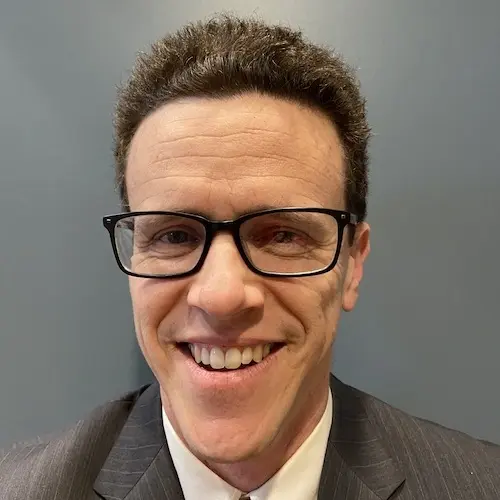 Luke Voytas, MD
Dr. Voytas, a dedicated pediatrician with an passion for nurturing future medical leaders, inspires every student and resident he mentors to reach their fullest potential. Leveraging his rich background in writing, he crafts narrative-driven application essays that uniquely capture each client’s journey and set them apart in the competitive world of medicine.