AI & Med School Admissions: What You Need to Know

AI in Med School Admissions: What Applicants Need to Know

medschoolcoach

Posted in: Applying to Medical School

Table of Contents

The use of artificial intelligence (AI) is rapidly expanding in the medical field and higher education, especially during medical school admissions. I want to cover how you should and shouldn’t use AI when you’re applying to med school.

For instance, you shouldn’t use AI to write your essays, such as your personal statement. However, you can use AI tools to help edit and analyze elements of your application, increasing your chances of acceptance.

"It's truly remarkable to see the level of interest in ChatGPT among 1,600 medical students at a webinar on a Thursday evening. It's important for all students to understand the proper usage of this technology, to avoid any potential pitfalls, and to maximize its benefits. The key question here is not whether they're using it, but rather how they're using it."
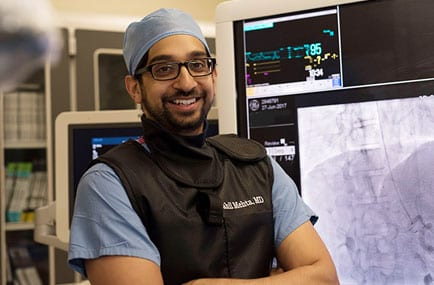
Sahil Mehta MD, MedschoolCoach Founder
Dr. Sahil Mehta
Founder, MedSchoolCoach

How can students use AI ethically to boost their chances of success? How do admissions committees use AI to analyze your application, and how can you use that knowledge to improve your competitiveness? Let’s answer these questions below.

We offer personal statement coaching and editing from actual humans (not AI) to improve your chances of medical school acceptance.

In the roundtable discussion webinar below, medical school admissions deans Dr. Leila Amiri (University of Vermont Larner College of Medicine) and Dr. Ian Hagemann (Washington University School of Medicine in St. Louis) discuss the impact of artificial intelligence (AI) and ChatGPT on the medical school admissions process with interventional radiologist and founder of MedSchoolCoach, Dr. Sahil Mehta.

How Medical School Admissions Are Using AI

Artificial intelligence (AI) has become a hot topic in the field of medical school admissions as institutions continue to look for ways to streamline and enhance the admissions process. It hasn’t replaced the entire human review process, but here are ways that AI is influencing admissions.

Most AdComs are already using AI to filter through applications based on scores and grades, key themes in essays, and to identify a candidate’s fit with a school’s mission. AI tools can quickly screen out students who don’t fit certain criteria, and AI can emphasize stronger candidates faster than a human might single them out.

Since many students are using AI to write their essays for them, AdComs can use artificial intelligence to detect AI writing. Ironic, yes, but perfectly normal and helpful, if inconsistent.

In 2023, NYU came out with a study evaluating whether a machine-learning algorithm (i.e., AI) “could accurately perform the initial screening of medical school applications.” The paper concluded:

The virtual faculty screener algorithm successfully replicated faculty screening of medical school applications and may aid in the consistent and reliable review of medical school applicants.

AI will not replace holistic review. At least one human admissions officer is still evaluating each applicant’s personal essay, letters of recommendation, mission fit, and authenticity.

Plus, AI can’t really help AdComs or students with interviews, whether they be in-person or virtual. Interviews are still a huge final piece of the admissions puzzle, and the human element has not yet been removed from med school interviews.

AI Do’s and Don’ts for Applicants

Here’s a great list for med school applicants on how you should and shouldn’t use AI to enhance your application and increase your odds of acceptance while not compromising ethics.

Do’s

You can use AI responsibly in the following ways:

  • Do use AI for brainstorming ideas on what to write your essays about and how to structure your primary and secondary essays.
  • Do check for grammar and clarity using AI tools. You might not want to take every suggestion, but it’s good to have the feedback. Get creative in asking for suggestions. For instance, you could ask AI if your essay demonstrates the AAMC pre-med competencies.
  • Do mock interview practice with chatbots, even though you should still rely on human feedback as well.
  • Do generate lists of schools where you would be a competitive applicant based on your GPA and MCAT score. Don’t trust this list as an endpoint, but it’s a good jumping-off point.

Look up the school’s mission to see if they have restrictions or encouragements for the use of AI in the application process.

Don’ts

You should avoid doing the following for ethical and legal reasons:

  • Don’t write full personal statements or other application essays with AI. This risks plagiarism, inauthenticity, and policy violations. A tiny number of schools allow generative AI to write essays, but the vast majority do not allow it.
  • Don’t take every suggestion that AI gives you concerning editing. First of all, AI doesn’t fully understand your unique voice and your personal story. Secondly, AI has distinct grammatical quirks that may make your essays sound less human. For instance, AI famously employs more dashes, lists of three, and compound sentences than people do.
  • Don’t have AI make up a “compelling” backstory or extracurriculars that don’t relate to your actual experiences.

Read Next: Med School Interview Questions & Answers

Benefits and Drawbacks

Applicants and admissions committees face advantages and disadvantages when using AI in the medical school application and admissions process.

Benefits

The potential benefits of using AI for medical school admissions include:

  • Improved efficiency in writing and editing standout application essays.
  • Possibility of more secondaries completed.
  • May accelerate the early screening process.
  • Could help AdComs get through application review faster.
  • Less human variability when AI pre-screens all applications.

Reduced bias and increased equity, due to AI’s wide accessibility, which levels the playing field among applicants of different ethnic, social, and economic backgrounds. 

“One reviewer might give more weight to an applicant whose courses and career ambitions lie in research, while another favors someone who is dedicated to community service… Imagine, then, a reviewer who reads every application, each within seconds rather than half an hour, around the clock, and applies the exact same standards to each one. That could be AI.”
Association of American Medical Colleges, January 2025

Drawbacks

Some possible drawbacks when using AI tools in med school admissions include:

  • Risk of plagiarism.
  • Lack of authenticity.
  • School policy violations.
  • Ethical implications.
  • Potential for algorithmic bias.

“If an AI system is built on past human results, it will reflect human biases that produced those results.”
Association of American Medical Colleges, January 2025

If you’re looking for a surefire way to boost your odds of getting an interview invite, consider our in-depth opportunities for application help.

FAQs

Medical school admissions boards cannot directly tell if you used ChatGPT or other AI tools. Of course, there are red flags that might give it away, including these signs of AI writing:

  • Constant use of compound sentences and dependent clauses
  • Excess inclusion of lists, often following “such as” or “including”
  • Em dashes (—) and en dashes (–)
  • Vague descriptions that don’t get specific or personal
  • Too many statistics and metrics

There are several AI plagiarism checker tools, but they are inconsistent. Because of how unreliable they are, it would be unethical for an AdCom to reject your application based on one of these AI checker tools.

Most med schools would remove you from the application process if your application is flagged for AI. There may be penalties that fall short of rejection, or there may be a process during which an admission board may ask you questions to confirm your application wasn’t AI-generated.

Because AI plagiarism checkers are pretty inconsistent, AdComs aren’t likely to reject an applicant because of AI detection unless it’s blatantly obvious. But even if you “get away with it,” it’s still unethical.

Currently, AI does not make medical decisions in hospitals or medical schools. However, there are sophisticated AI models that even today are helping doctors, students, and admissions officers make important decisions about patient care, diagnostics, research, and medical school admissions.

AI Tips to Strengthen Your Application

First of all, check each medical school’s policies on AI use. Most always, you can and should use AI as a brainstormer or editor (don’t just do everything it says), but you should not use AI technology as a ghostwriter.

Balance technology with human advising, such as mentors and admissions coaches. The impact of AI is not yet fully understood, but AI systems are here to stay in med school admissions on both the applicant and AdCom side.

Smart, ethical use of AI can help applicants polish their applications, but authenticity, school fit, and human qualities will always be the deciding factors in acceptance.

Ultimately, admissions boards will always let the human element be the final deciding factor. Though AI tools may improve AdCom efficiency, AI is making recommendations. Decision-making power remains with the human on the admissions committee.

If you’re applying to medical school, consider using AI models to suggest edits to your essays, but only if you responsibly ensure authenticity. Whether or not you’re using AI, it’s always a good idea to get outside, human help.

We have Physician Advisors at the ready to help you boost your chances of acceptance. MedSchoolCoach helps students like you achieve their med school dreams.
Picture of Sahil Mehta MD

Sahil Mehta MD

Dr. Mehta is the founder of MedSchoolCoach and has guided thousands of successful medical school applicants. He is also a practicing physician in Boston where he specializes in vascular and interventional radiology.

Recent Blog Posts

View All Posts
Medical stethoscope on a Canada flag. Canadian health care system, insurance.

The OMSAS Autobiographical Sketch: A Beginner’s Guide to Approaching the ABS

The Ontario Medical School Application Service (OMSAS) Autobiographical Sketch (ABS) is one of the few aspects of your medical school[...]

calendar-icon January 9, 2023
A stack of newspaper articles

16 Trending Topics for Pre-Med Interviews (Fall 2025)

Table of Contents 16 Trending Topics for Pre-Med Interviews (Fall 2025) Getting ready for your medical school interviews? Attractive candidates[...]

calendar-icon September 3, 2025
What is the CASPer exam?

Your Complete Guide to the Casper Test for Medical School

Table of Contents The Casper test is distributed by Acuity Insights (formerly Altus Assessments). Medical schools use it to holistically[...]

calendar-icon February 18, 2025

Guidebooks

View all guidebooks
The Pre-Med Journey

The Pre-Med Journey: What it Takes to Get into Medical School

Thinking about applying to medical school? Discover what high school students need to know about obtaining a career in medicine.

Download
Successfully Planning for the USMLE Step 1 and 2 CK

Successfully Planning for the USMLE Step 1 and 2 CK

Get ready for the USMLE Step 1 and Step 2 with this free guide to study planning and resource utilization.

Download
100 MCAT Study Tips

100 MCAT Study Tips

Taking the MCAT? These 100 tips and tricks will help you ace the MCAT.

Download