How to Fill Out Your TMDSAS Application
Some TMDSAS elements are similar to those in AMCAS or AACOMAS applications, and others are different. Let’s go section by section through what to expect and how to fill out the TMDSAS for the best chance at admission to a Texas medical school.
Updates to AI Usage Policy
The TMDSAS now requires applicants to adhere to certain professionalism standards concerning artificial intelligence (AI). Here are the recent updates:
- No lying or letting AI invent things for you: All submitted materials in your application should represent your real-life experiences.
- Limited use of AI allowed: It’s generally acceptable to use generative AI for brainstorming, organization of thoughts, and editing. Just not writing your actual essays.
- Zero AI during interviews: Any use of AI tools during interviews for med school is strictly prohibited.
Account Setup & Applicant Agreement
Sign up for a TMDSAS account well before applications open. We recommend signing up for convenient text messages in case you need to reset your password.
Your email address will be your username. Create a password. Answer three security questions, and you’ve signed in!
The first page you’ll see after setting your login is the Applicant User Agreement. It’s several sections of items you have to check off before clicking “I agree.”
Section 1: School Selection
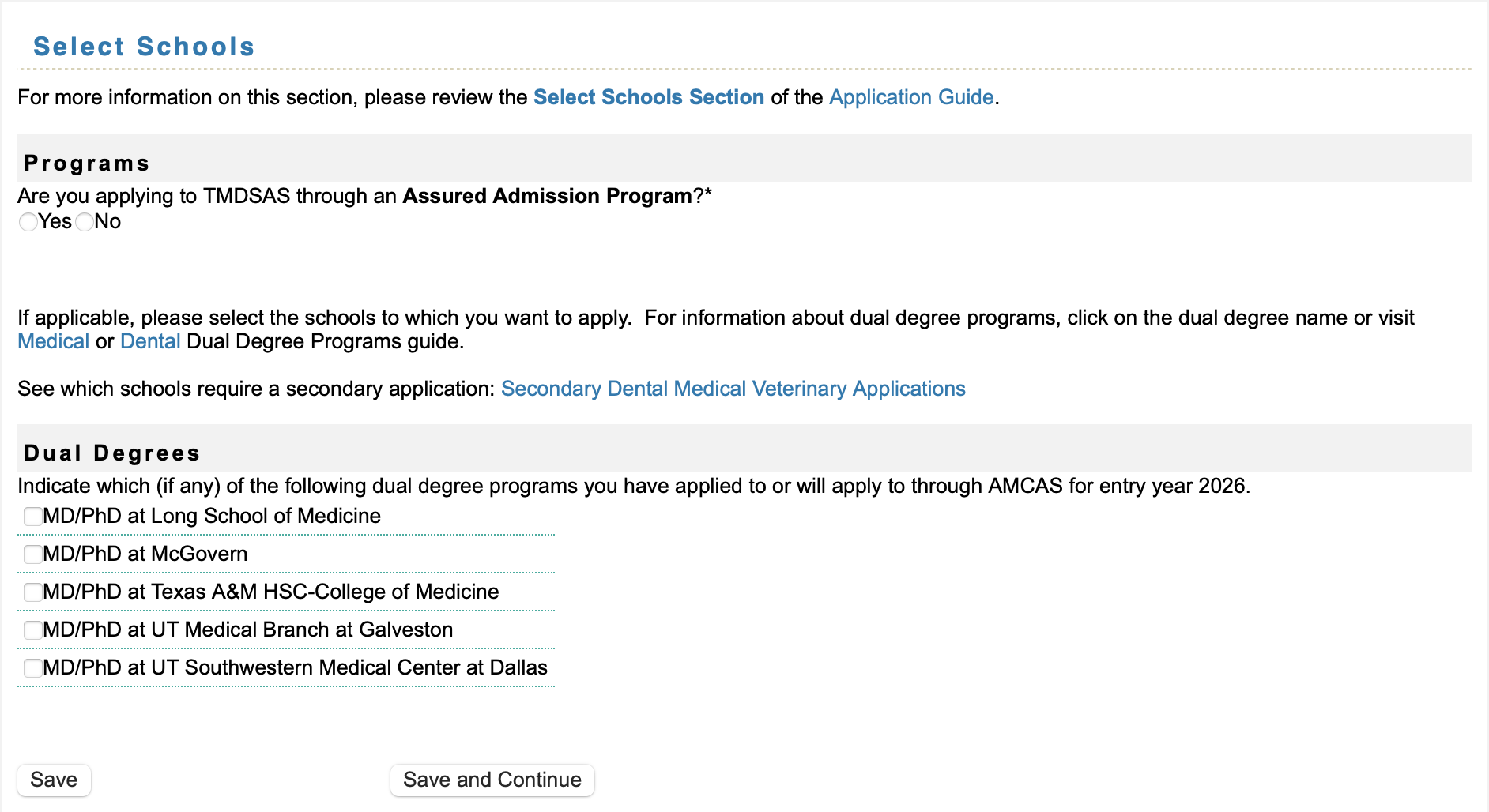
Once the TMDSAS opens, you can fill out the School Selection section. List all the medical schools, special programs, or dual degree programs (MD/PhD) that you’re applying to.
You will indicate whether you’re applying through any special or assured-admission programs, such as JAMP. If you’re not applying through special or assured admissions, you may indicate whether you’re applying to an Early Decision Program, available for about half of the Texas medical schools.
You’ll also indicate whether you’re also applying to schools through the AMCAS application process.
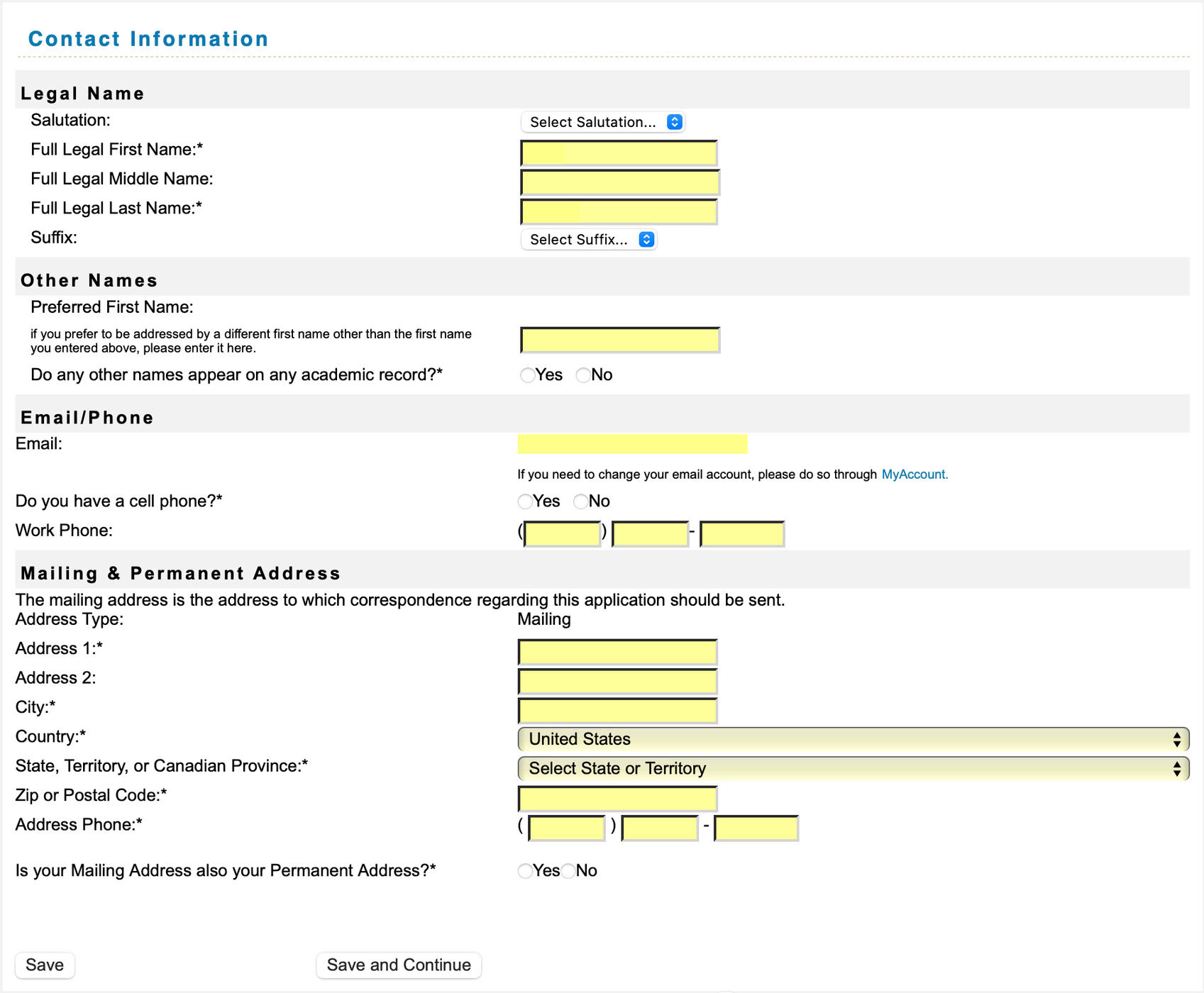
Section 2: Applicant History
Here, you’ll answer the question, “Have you ever applied to a TMDSAS medical school?”
You’ll have to answer some short essay questions. For reapplicants, this is your opportunity to explain how you’ve strengthened your application since you last applied.
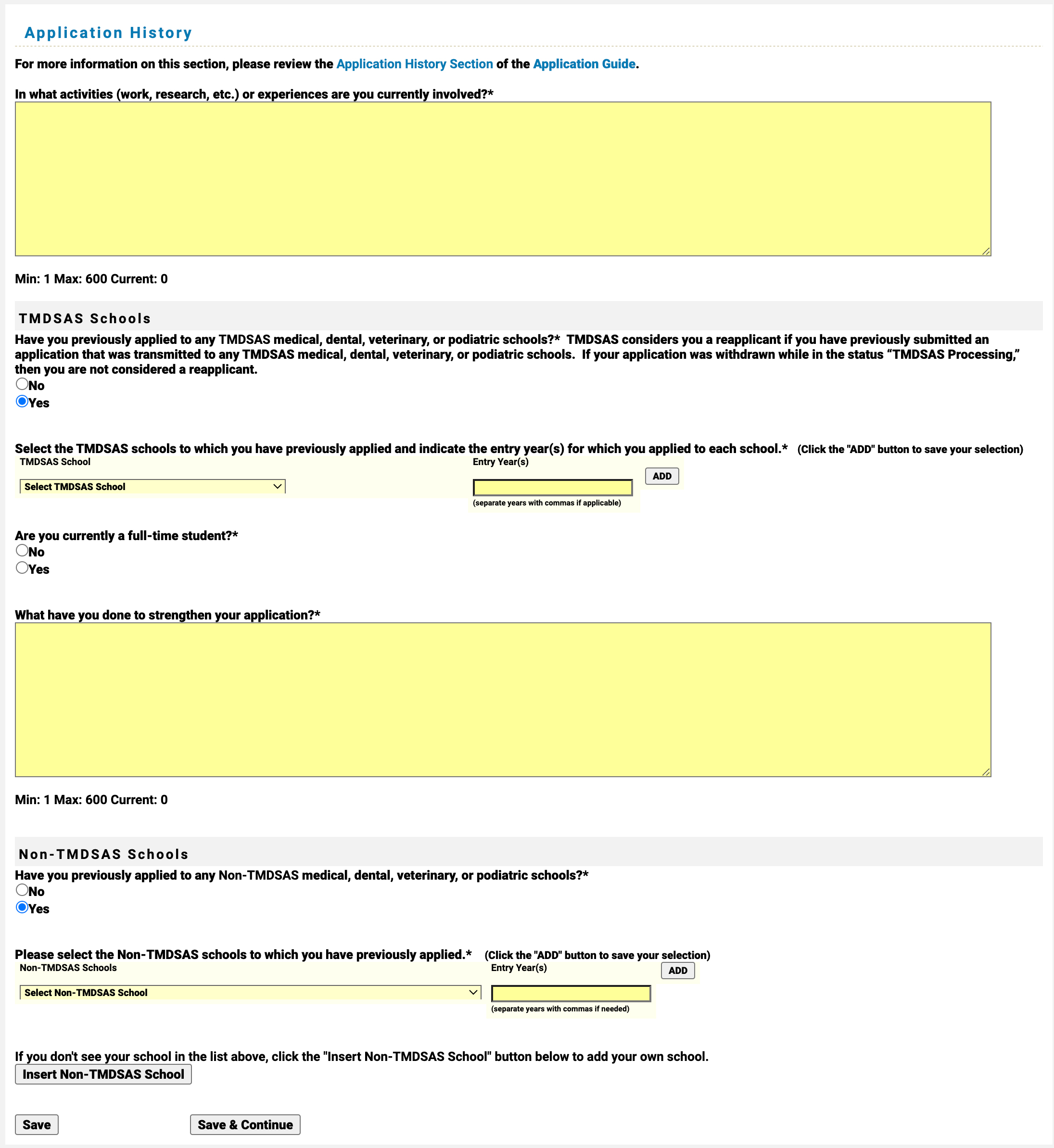
Section 3: Personal Information
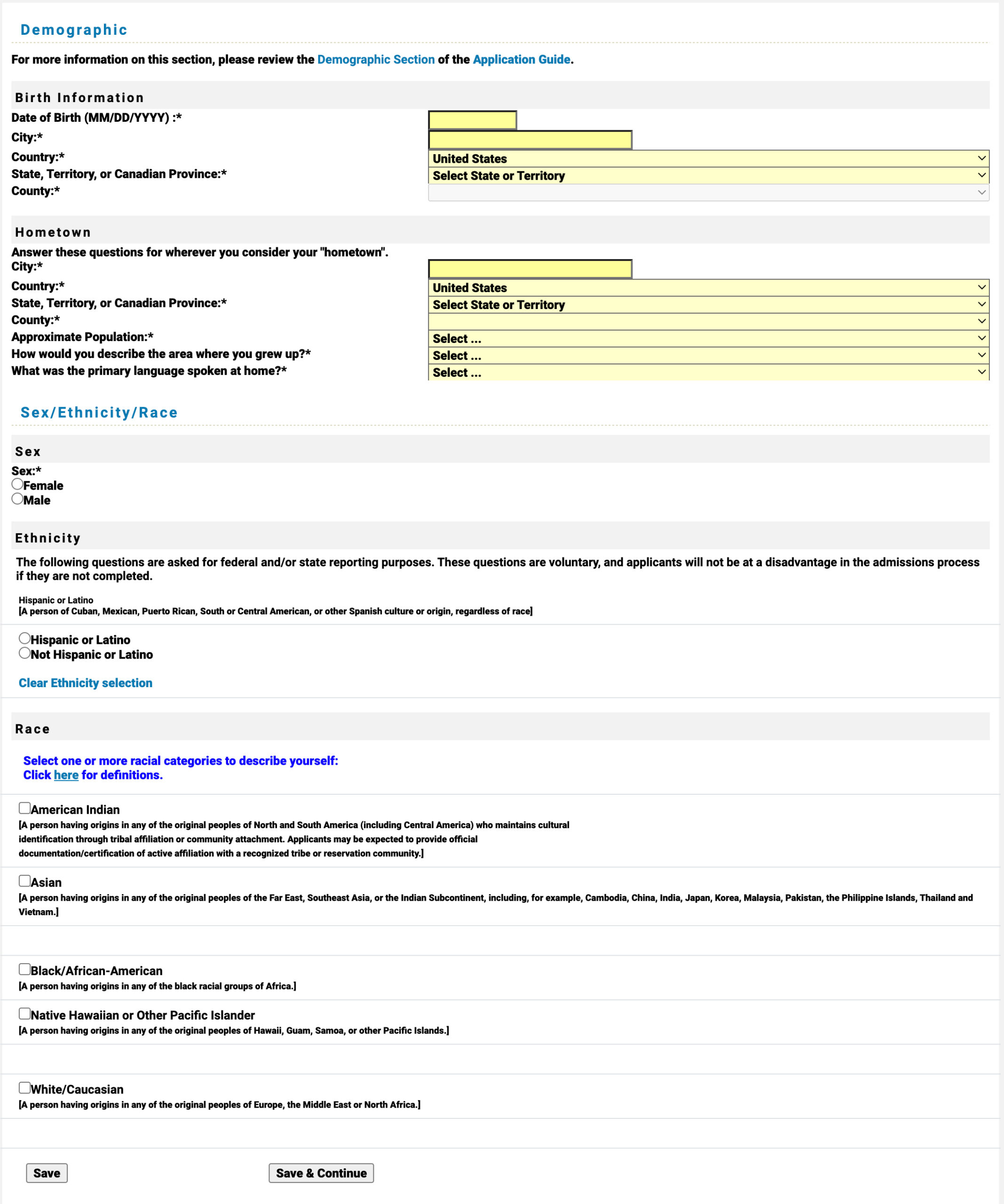
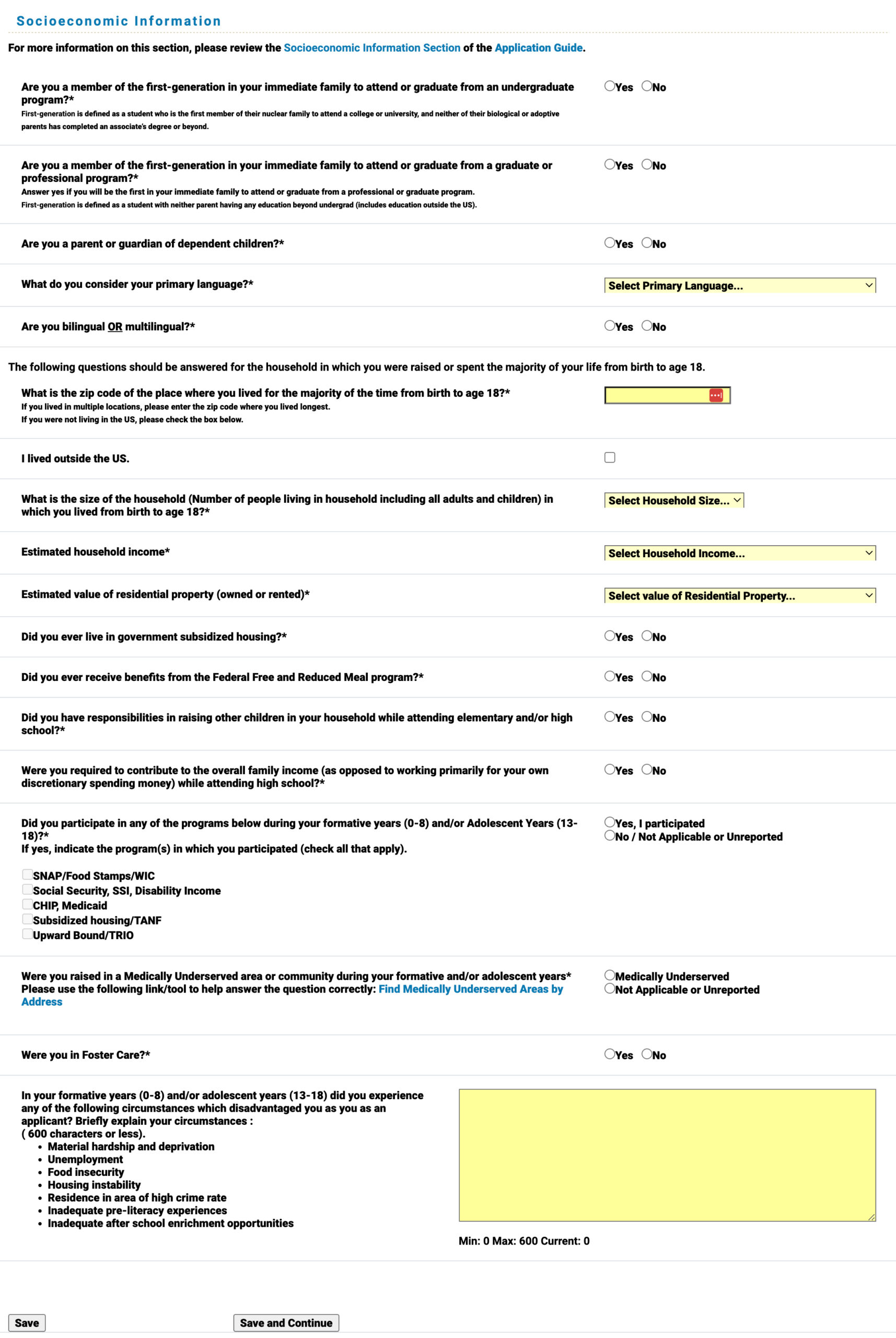
This section requires you to fill in the following personal information:
- Name
- Contact info
- Residency status
- Demographic details
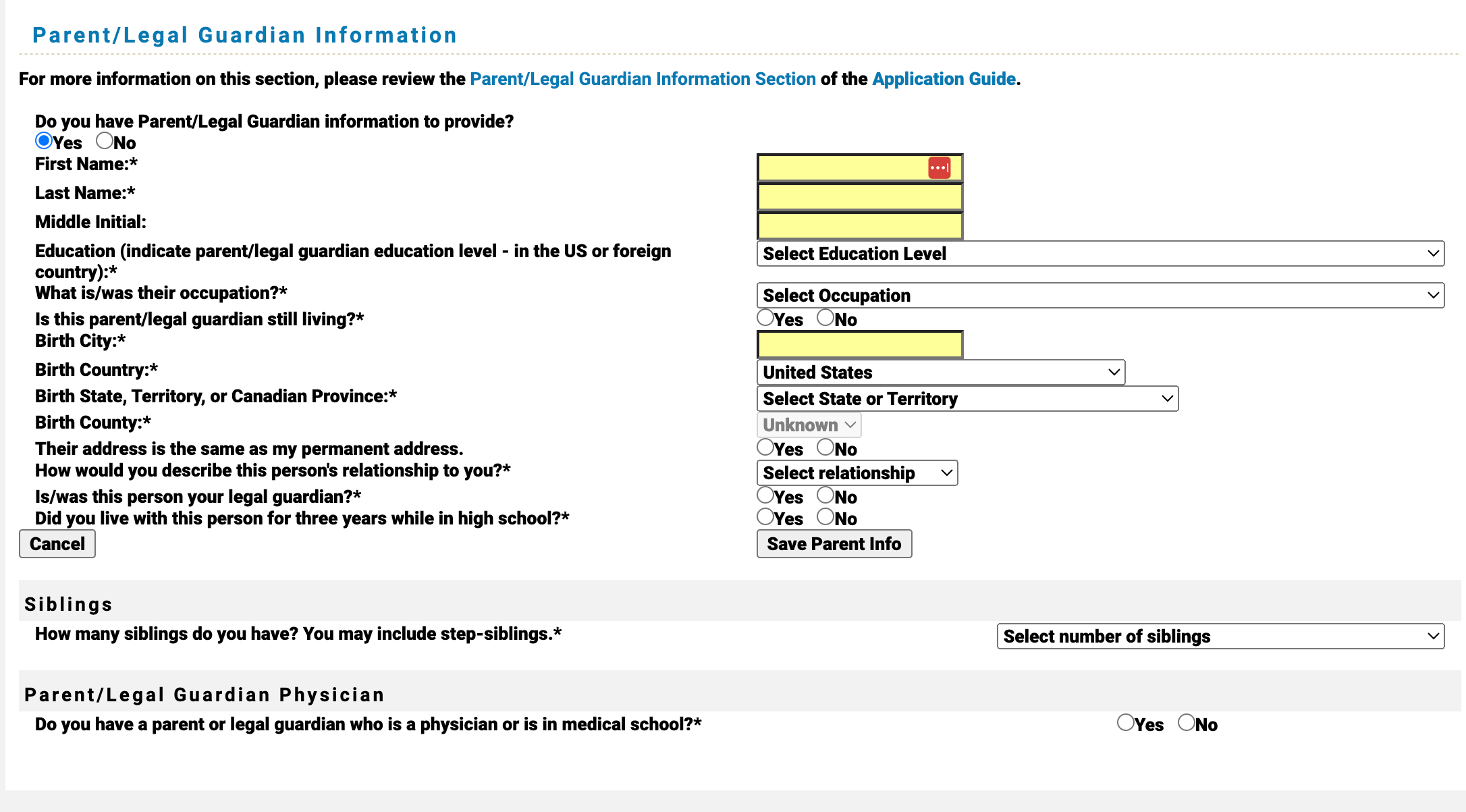
- Parental information
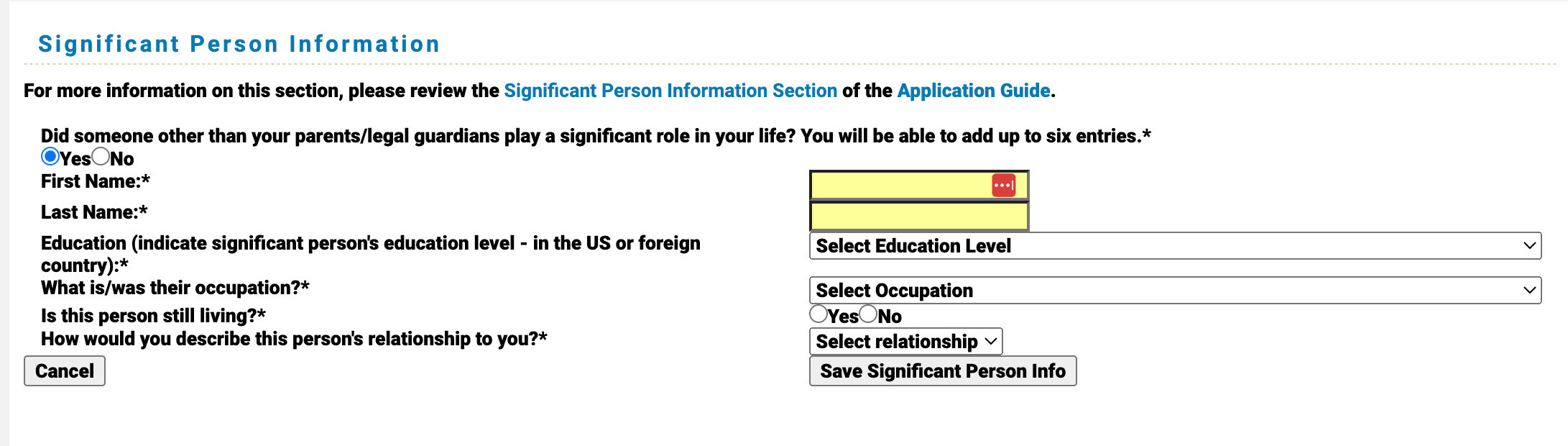
- Family background
- Educational history
Be accurate and consistent, especially with residency information. Texas schools have specific criteria for in-state applicants.

Section 4: Education History
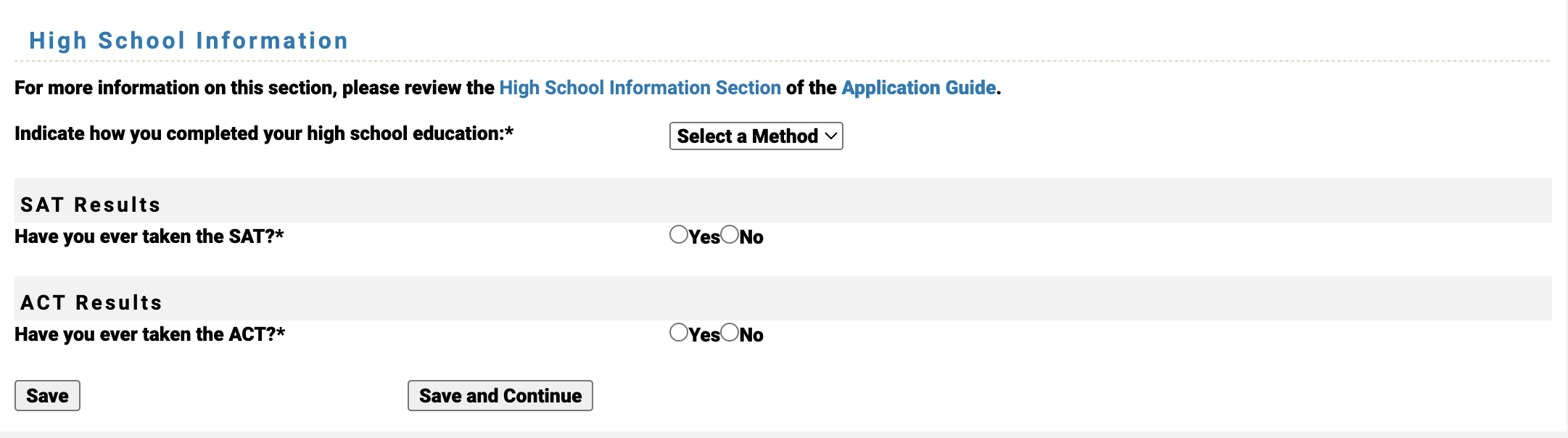
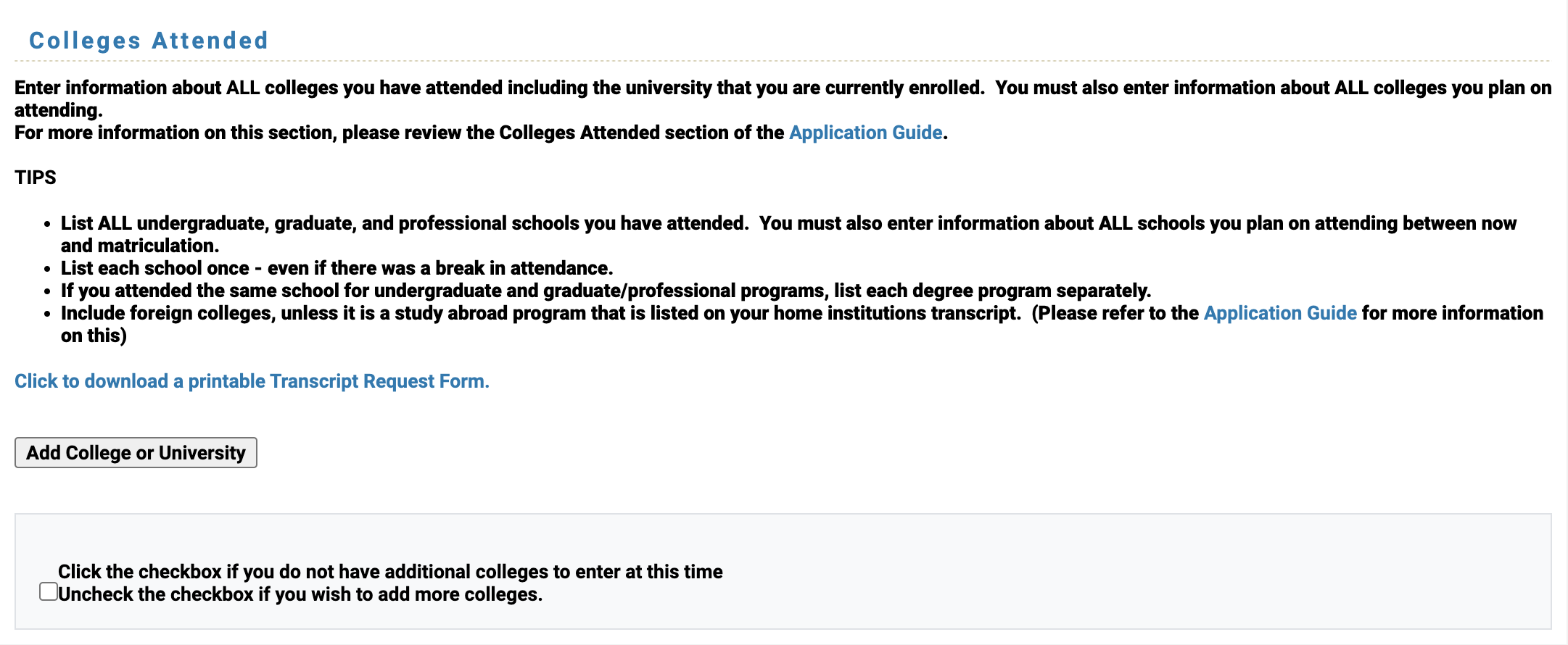
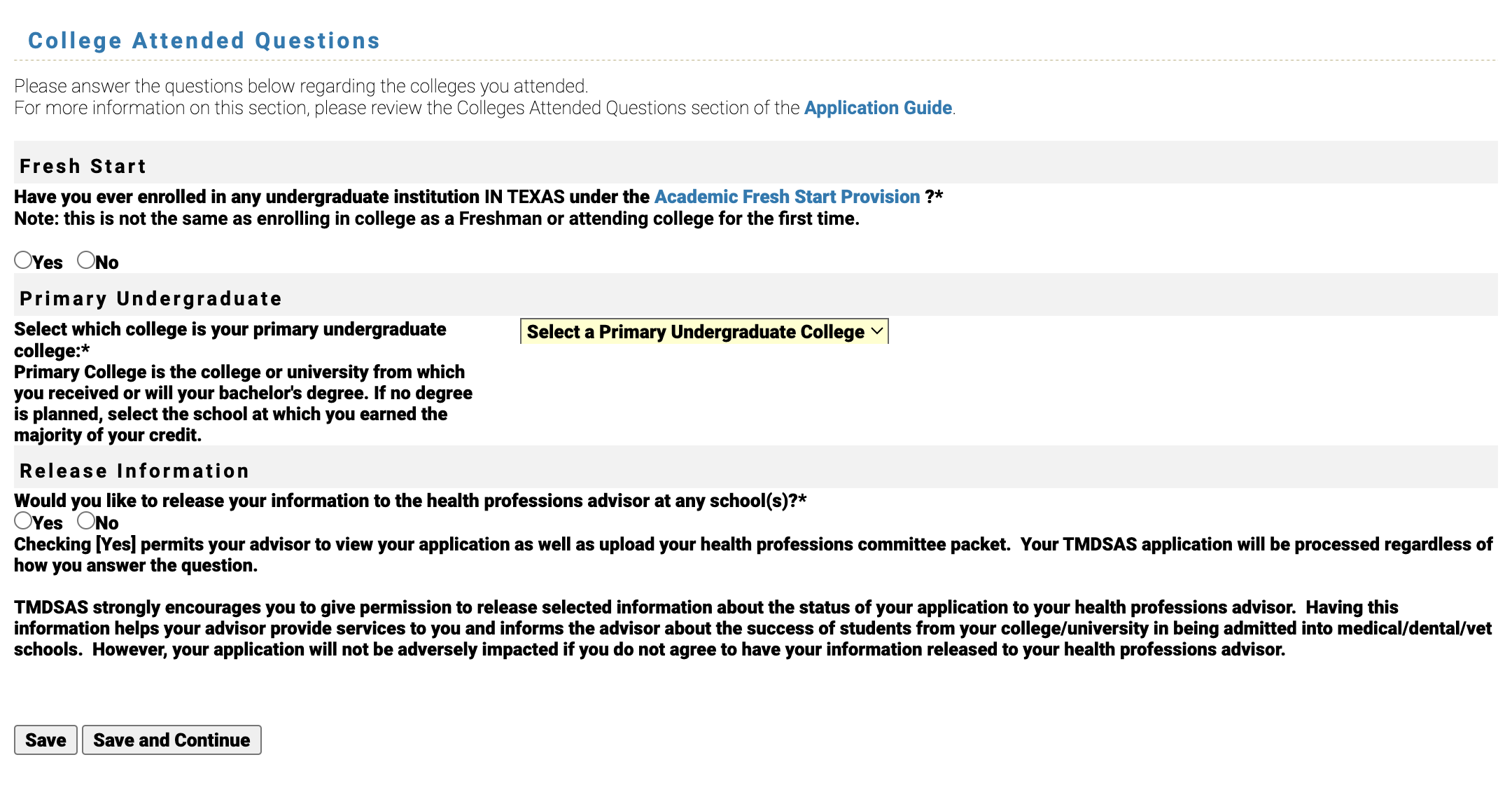
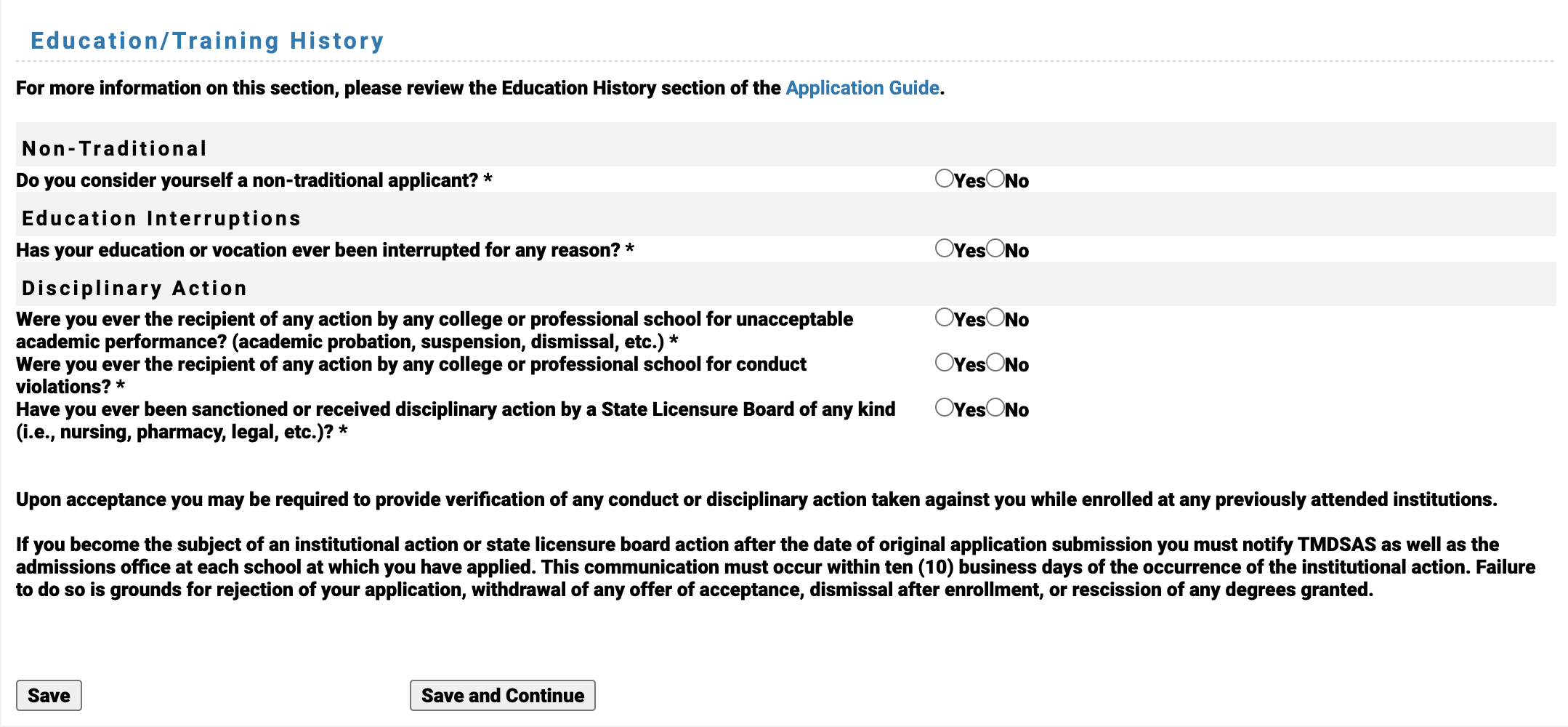
List the high school(s) and college(s) you’ve attended, as well as any nontraditional training you’ve gone through.
In this section, indicate your high school GPA, SAT/ACT scores, how many terms, post-bacc studies, and disciplinary actions.
Read Next: What Counts Towards Your BCPM GPA?
Section 5: Coursework
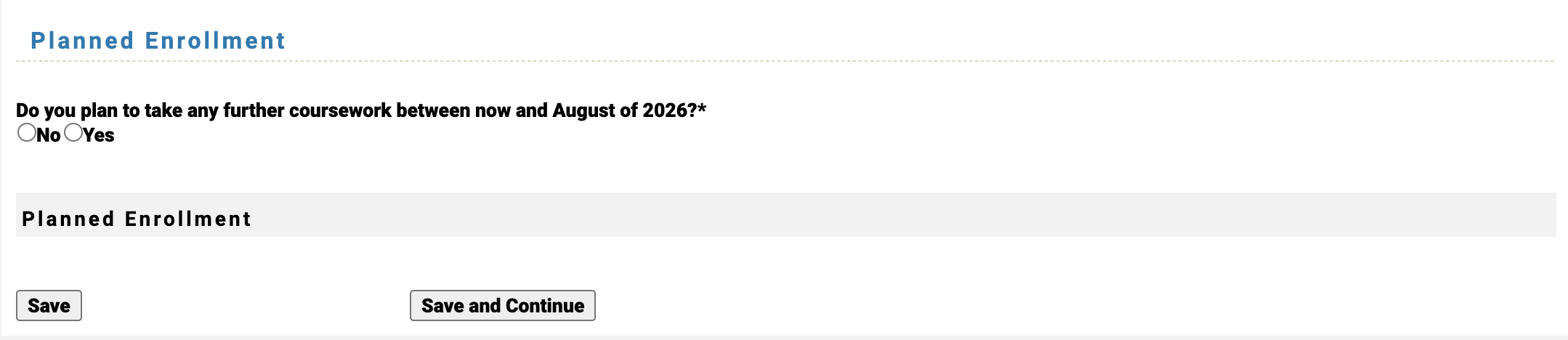
Enter all coursework from each institution attended. Ensure accuracy, as TMDSAS will verify this information against your official transcripts.
The following courses do not need to be included:
- Courses worth zero credit hours
- Continuing Education courses
- Developmental courses
What’s the best undergrad GPA to get into med school? Learn more here.
Section 6: Personal Biography & Activities
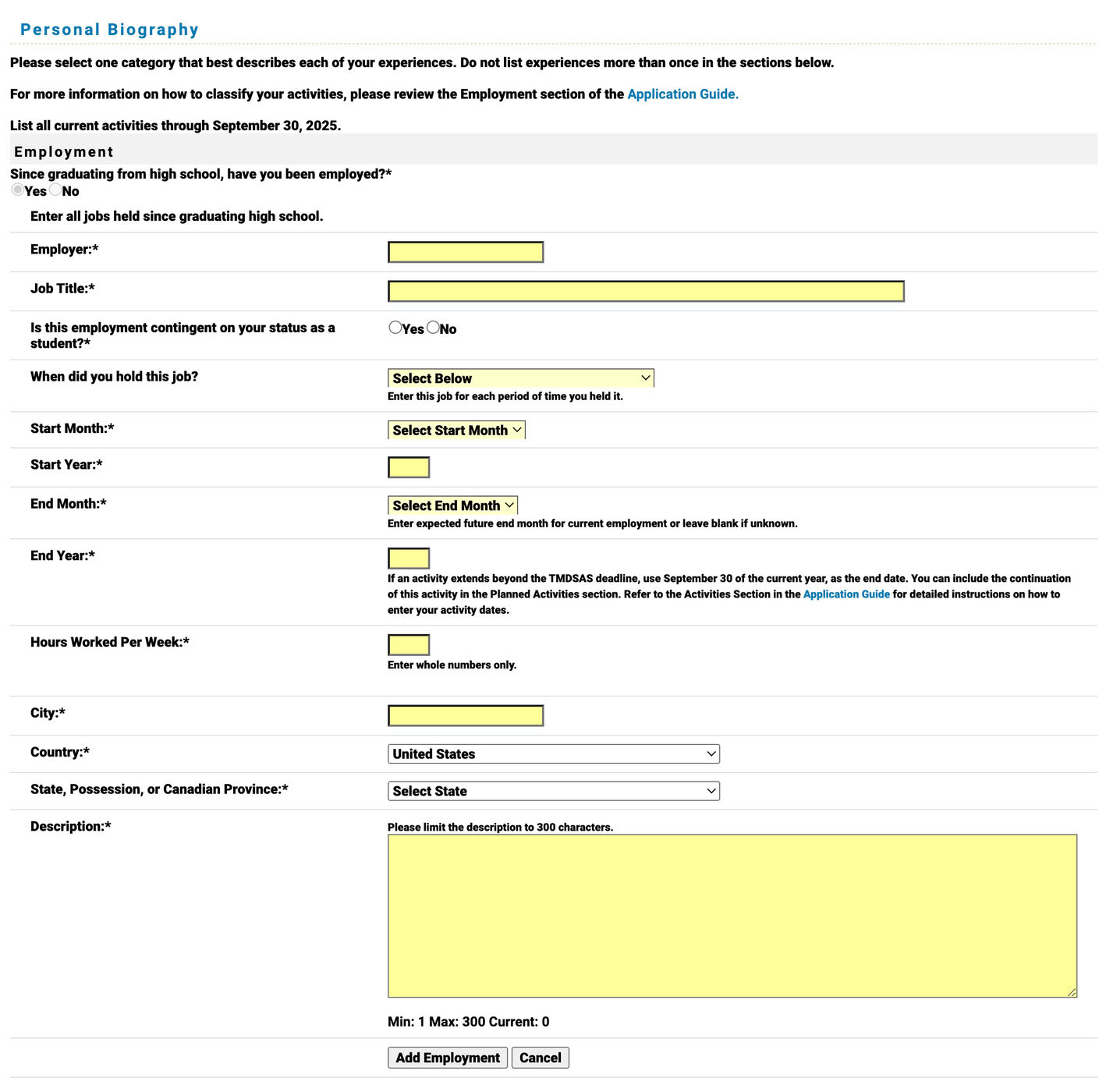
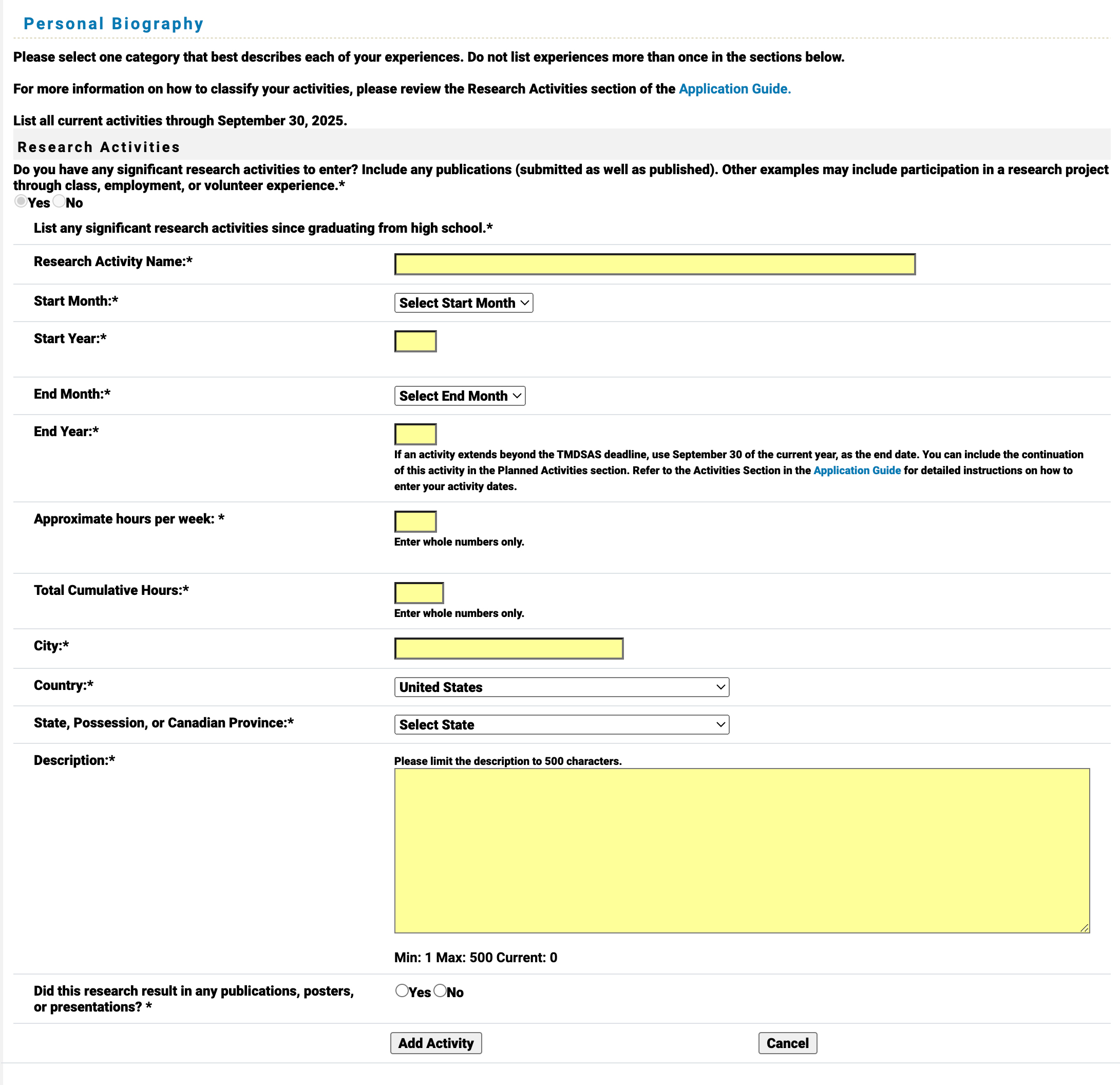
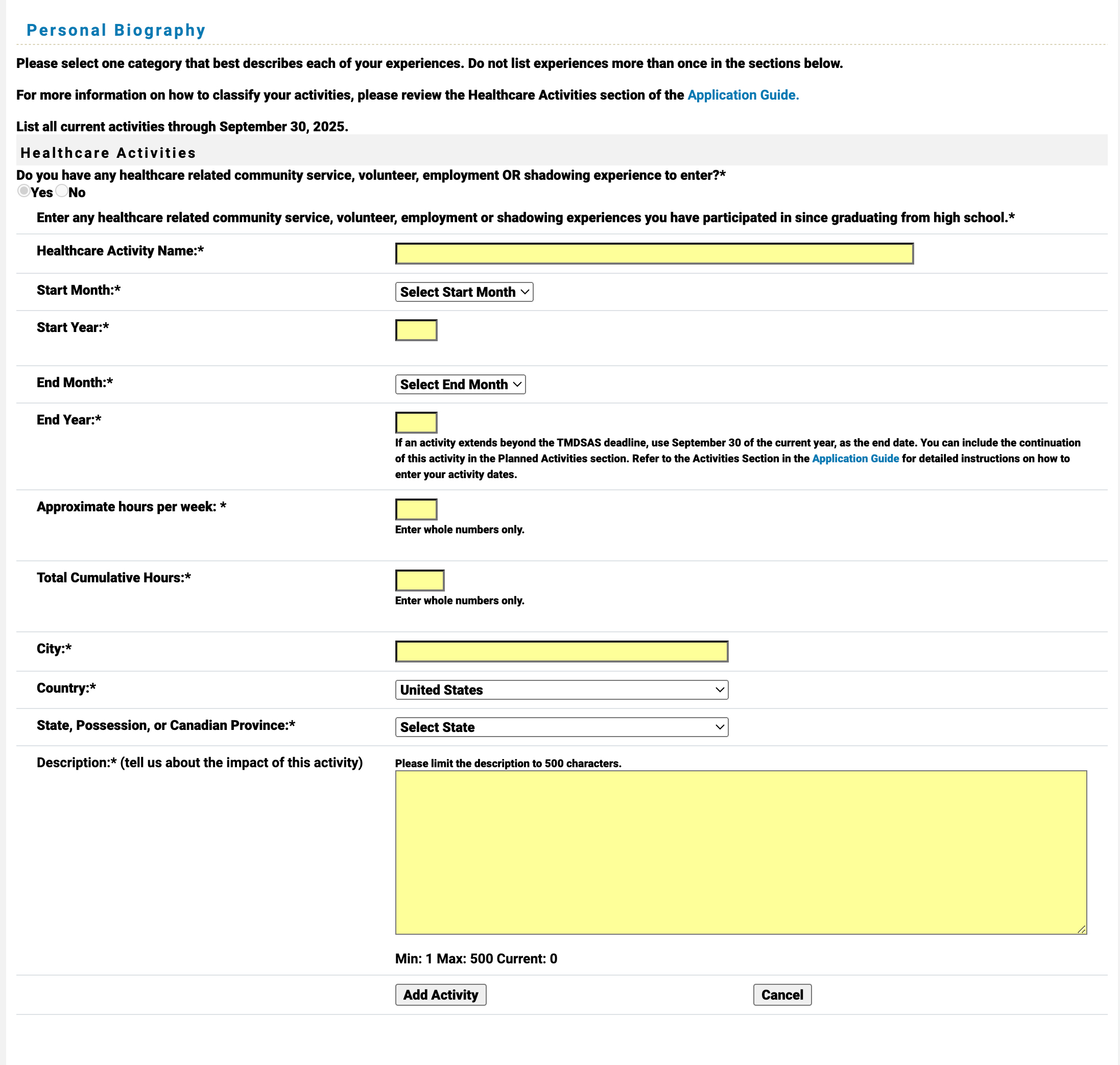
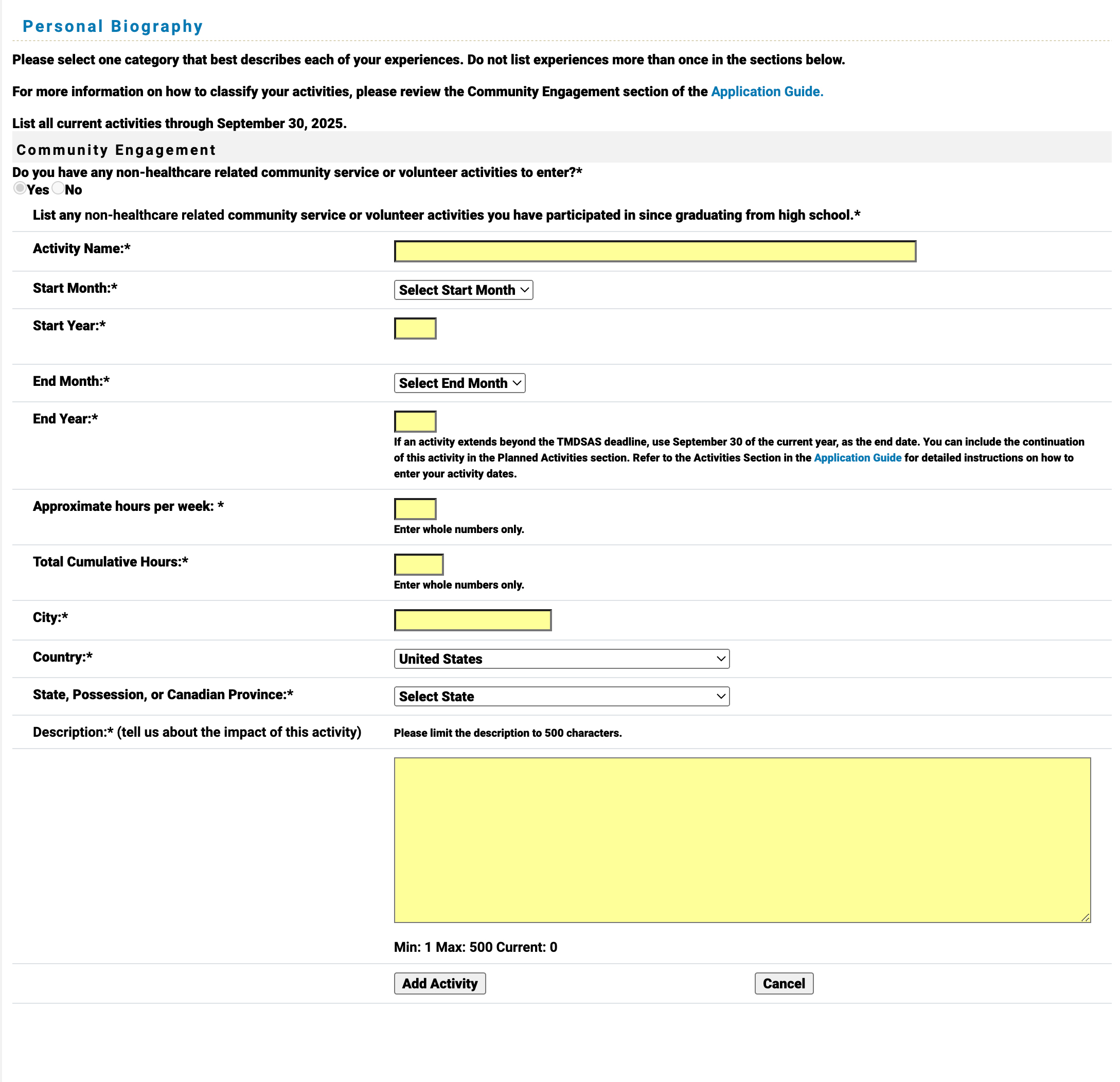
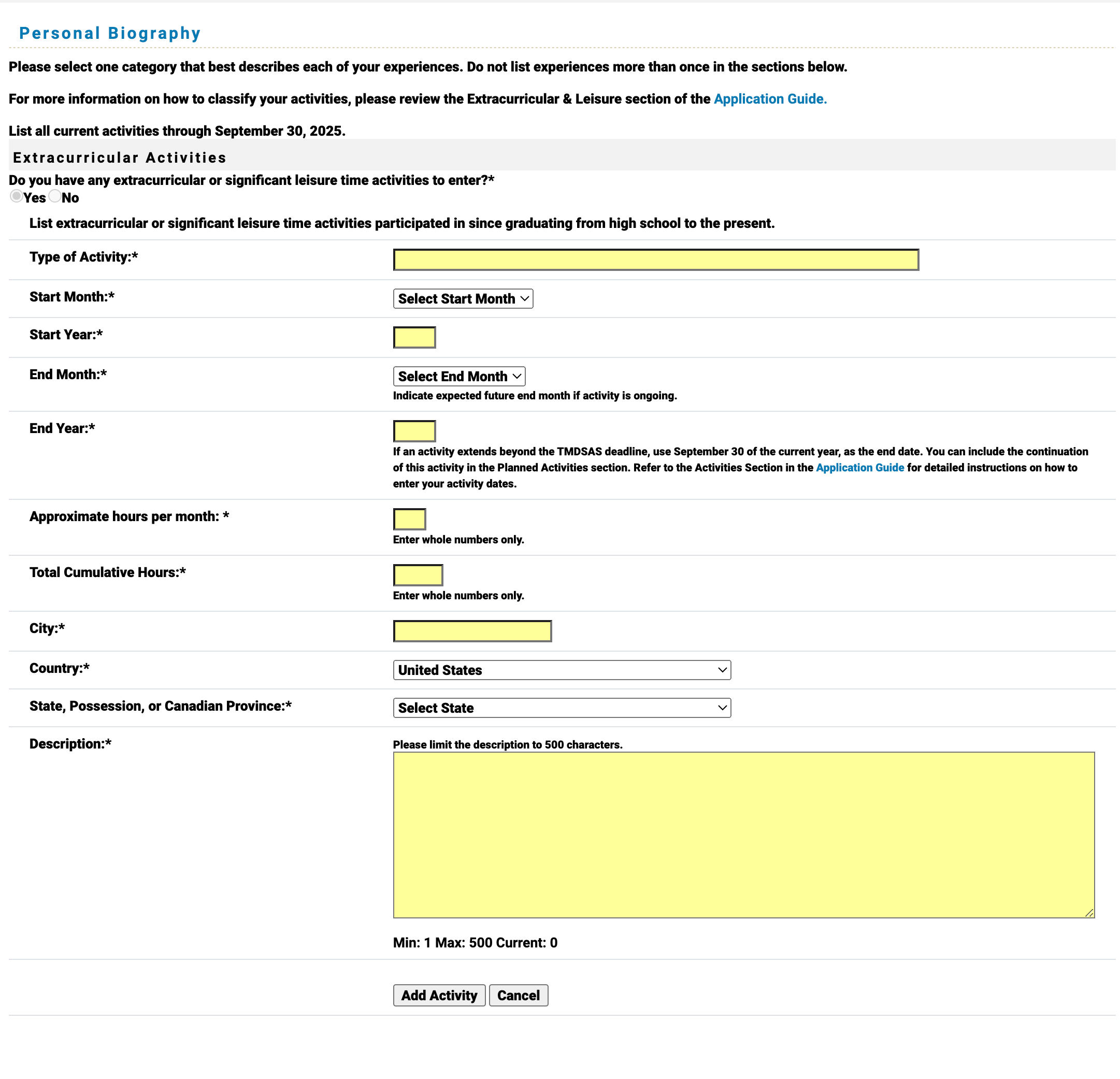
In this critical section, list every relevant healthcare and non-healthcare activity or experience since high school graduation.
You may only enter each activity into one category – except for the Leadership category, which can be combined with any other category.
Uniquely, the same activity can be listed under the categories Healthcare and Employment, but add a different description for each that focuses on the category.
Here are the categories of TMDSAS activities, along with the character limits for their descriptions:
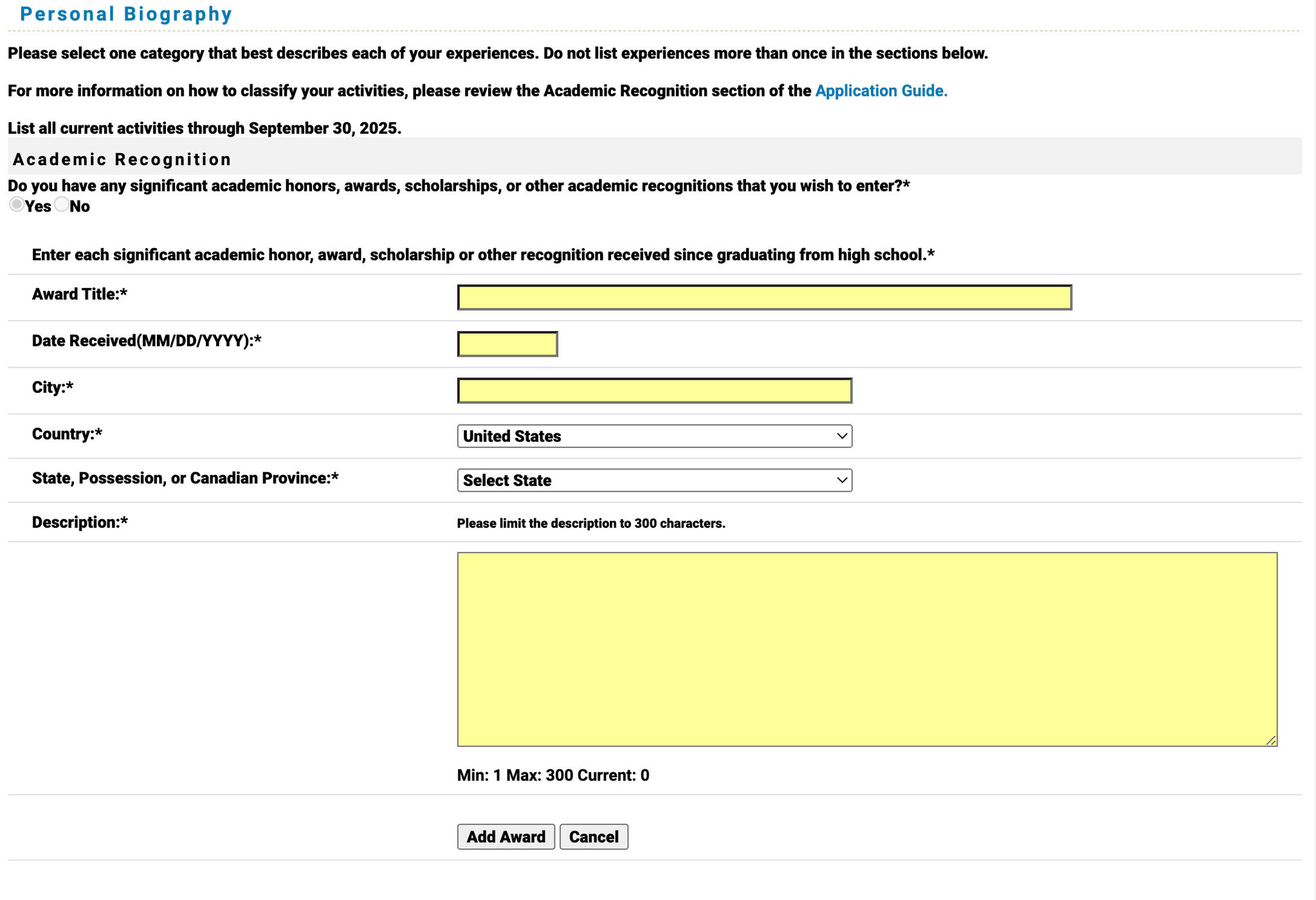
- Academic Recognition — 300 characters
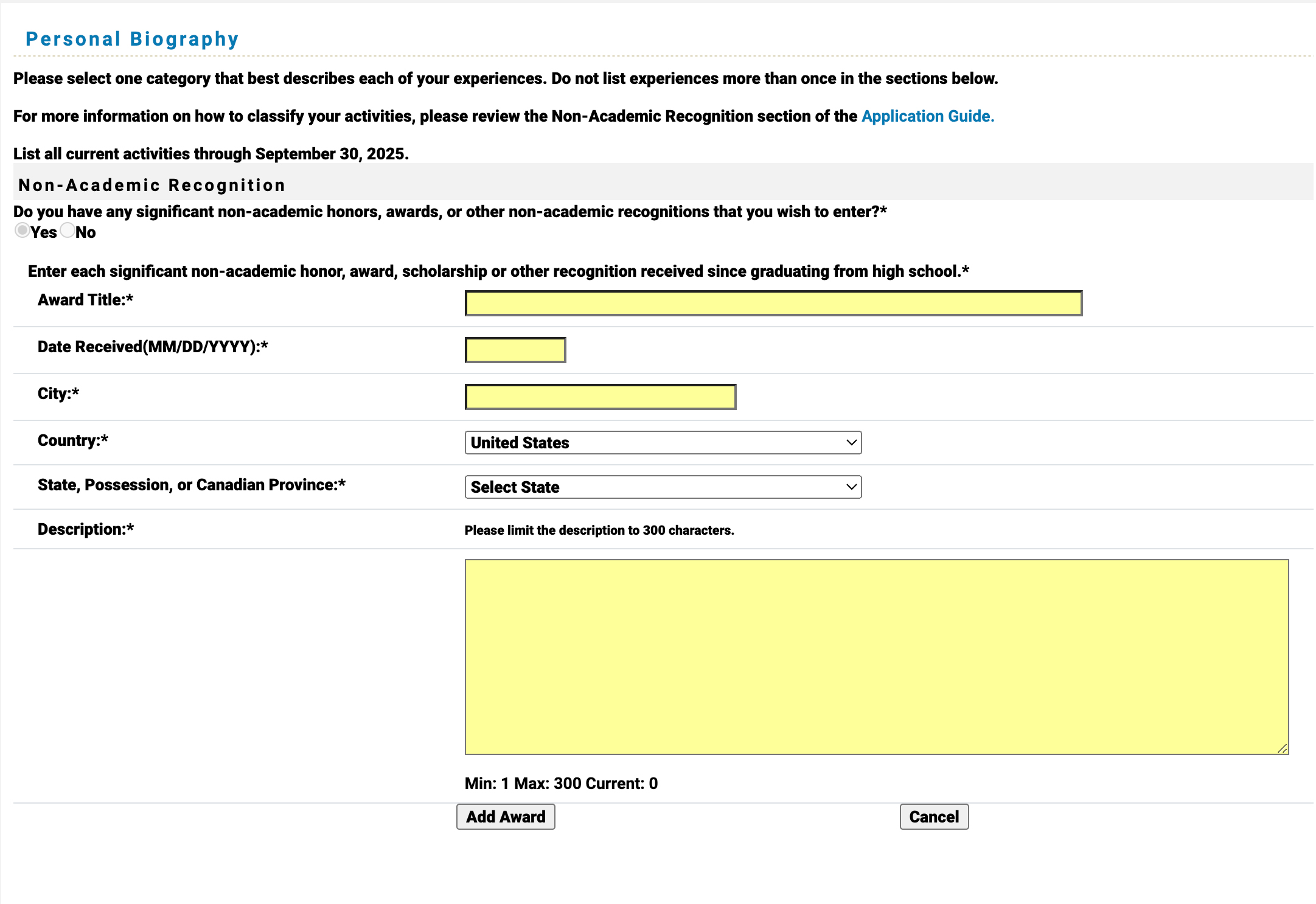
- Non-Academic Recognition — 300 characters
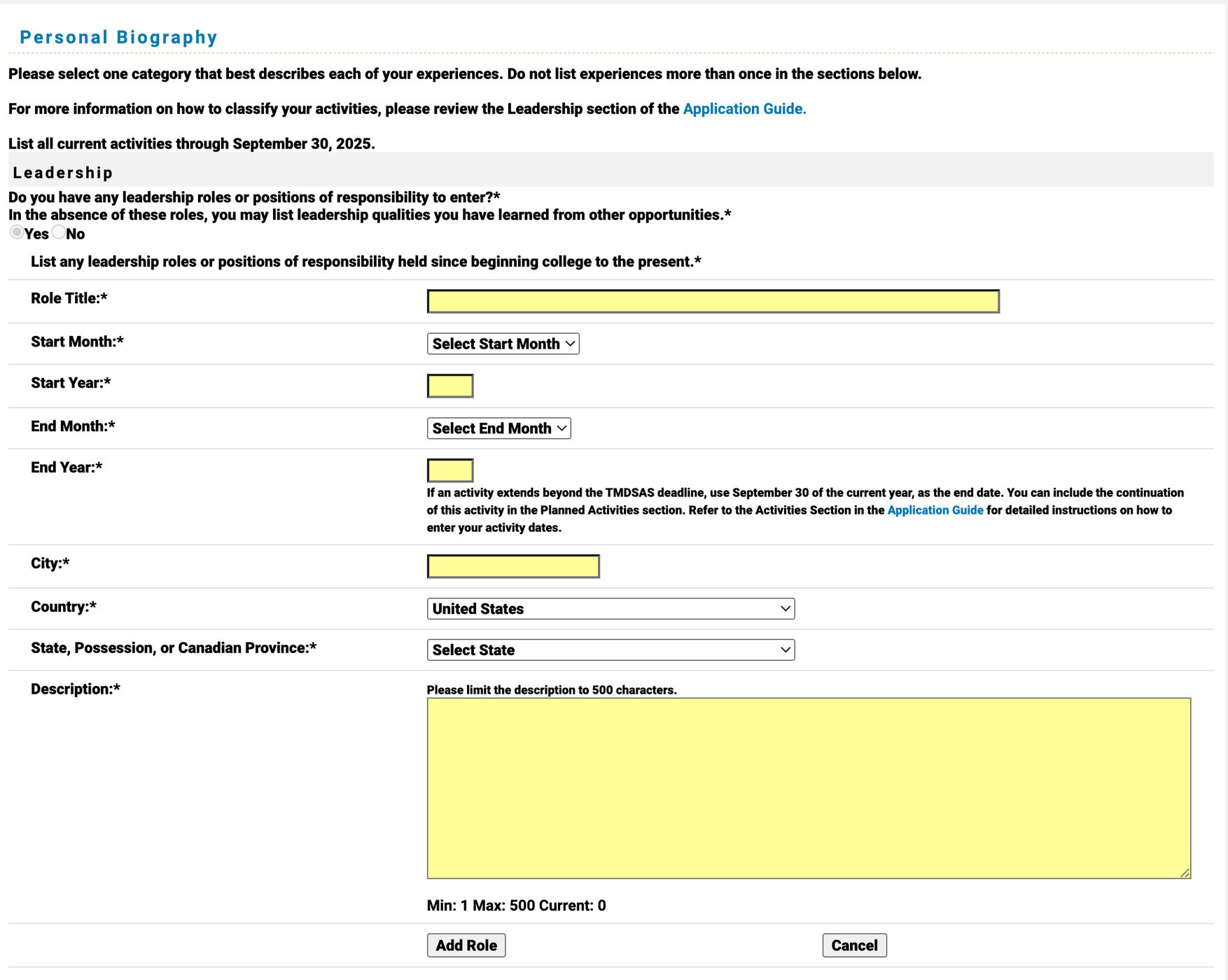
- Leadership — 500 characters
- Employment — 300 characters
- Research — 500 characters
- Healthcare — 500 characters
- Community Service — 500 characters
- Extracurricular — 500 characters
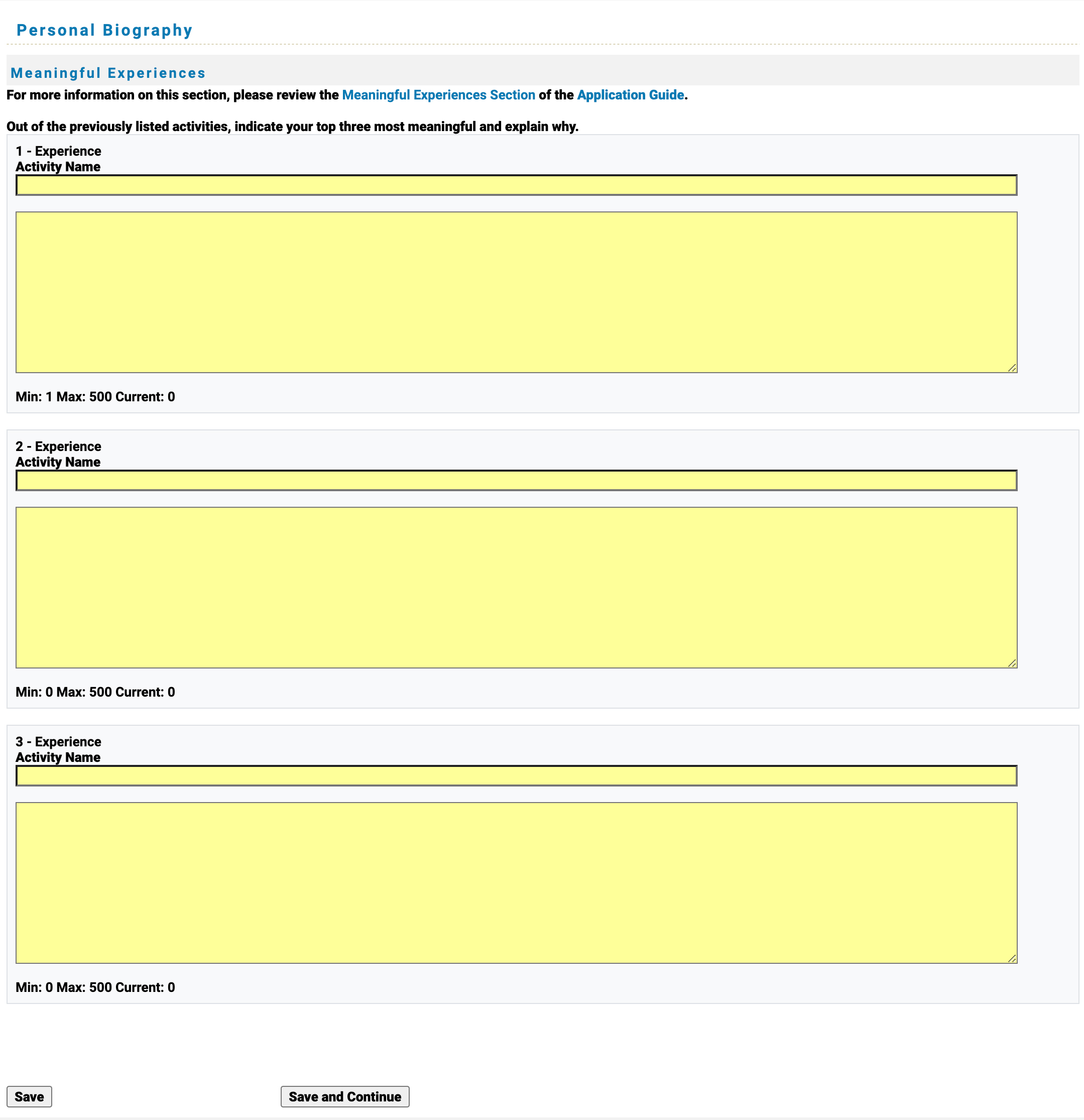
Pick your three “Top Meaningful Activities.” You get an additional 500 characters (on top of the initial activity’s description) to describe how it was a most meaningful experience to you.
You can list “Planned Activities” that have not begun yet. You have 500 characters to describe what your future holds and why it matters. Just to be clear, don’t make up maybes and dreams; only list activities that are definitely set to happen in the near future that are relevant.
Unlike AMCAS, there is no limit to the amount of activities you can include in TMDSAS.
Free Guide: 5 Must-Have Activities for Med School Application
The TMDSAS activities section is one of the most important places to show who you are beyond your grades and test scores. Because you have to make strong impressions in tight character limits, the difference between a flat description and an effective one can be huge. Explore the AMCAS Work and Activities Premium Example Hub to learn how to turn responsibilities, service, research, and leadership into stronger, more reflective activity descriptions. Although this examples are follow AMCAS character limits, the writing principles are still extremely useful for TMDSAS applicants.
Section 7: Residency
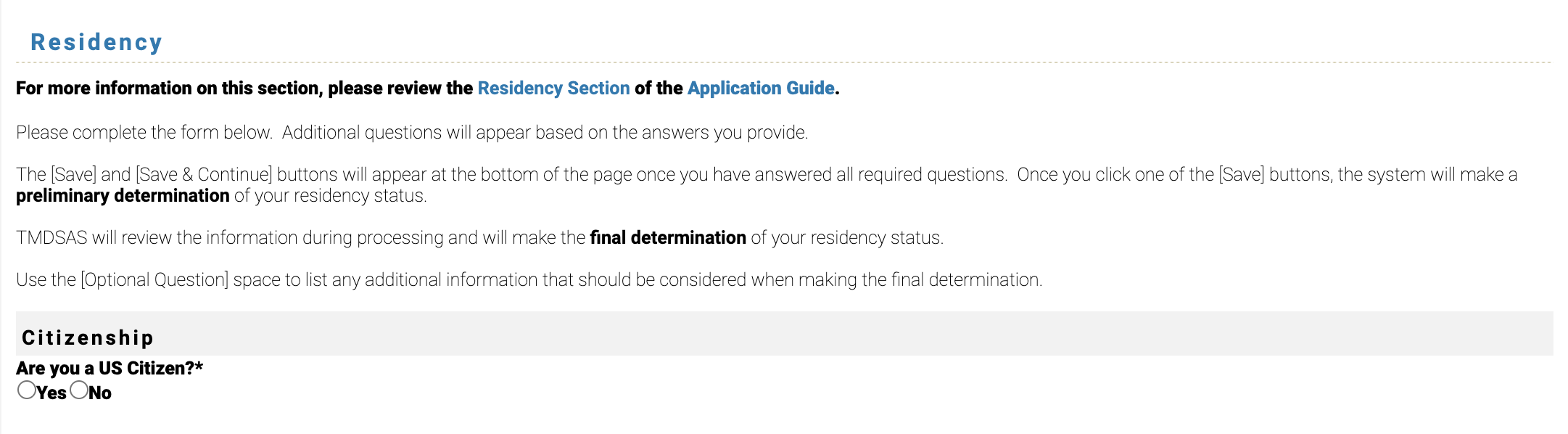
TMDSAS requires a residency affidavit for applicants claiming Texas residency for admissions purposes only. Non-Texas U.S. citizens may still apply, but far fewer non-Texas residents are accepted than people who have lived in Texas for at least 12 months.
Applicants who are not U.S. citizens must directly upload to TMDSAS a copy of their Permanent Resident card or Visa stamp in their passport.
Section 8: Essays
Here, you have an opportunity to represent yourself through expression and perspective, rather than data. Along with the Activities section, this is where you can inject the most personality and narrative. Essays cannot be altered after you submit your application.
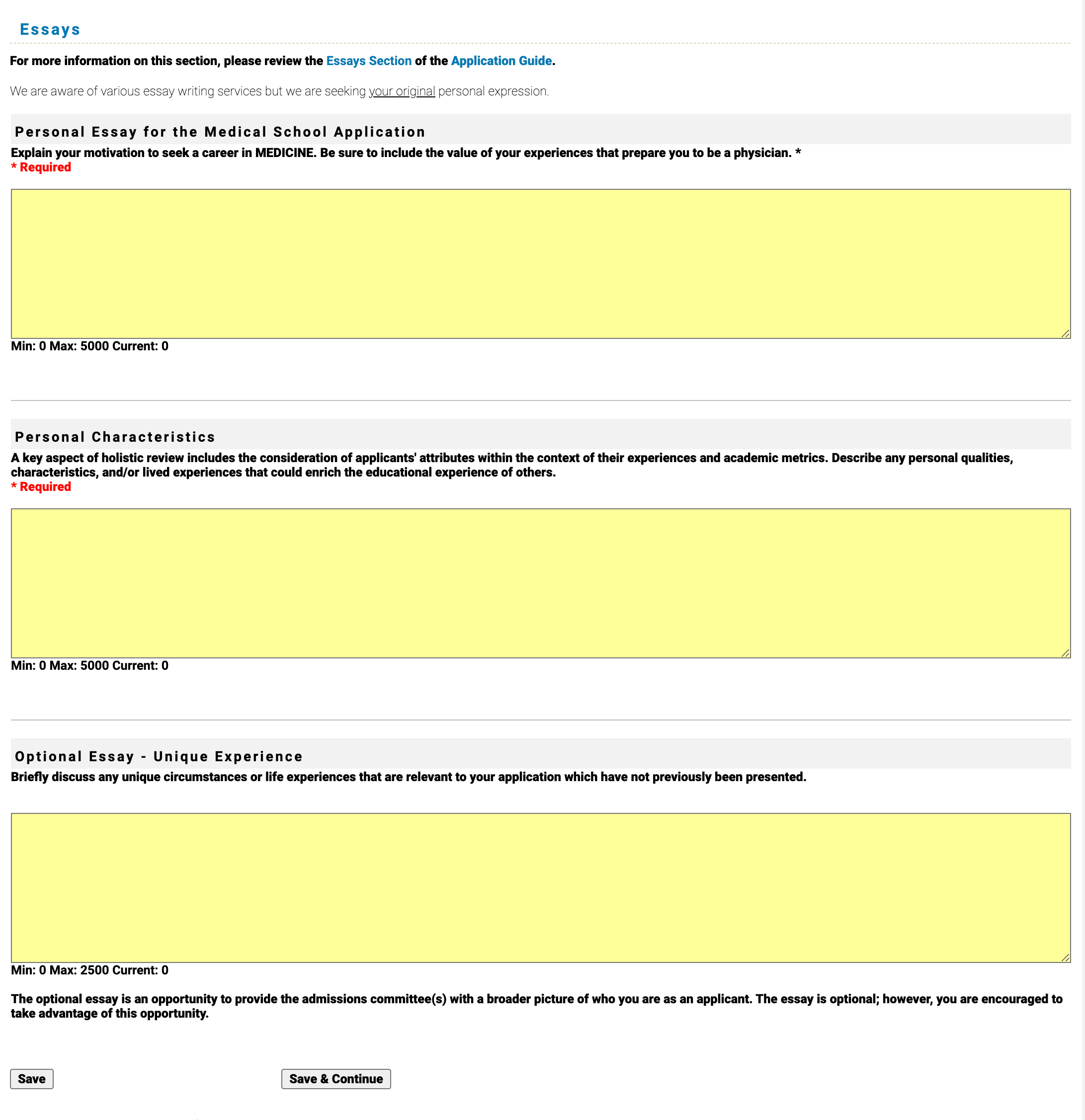
These are the three essays on the TMDSAS:
- Personal Statement: This is your chance to explain your motivation for pursuing a career in medicine. Describe why you’re entering the medical field, what your professional plans are as a physician, how you’re different from others in the applicant pool, and what drives you to succeed. See our writing guide here. TMDSAS imposes a strict 5,000-character limit, including spaces, so concisely focus on impactful experiences that shaped your journey to becoming a physician.
- Personal Characteristics Essay: This newly required essay prompt asks you to describe yourself holistically, not just as a future physician. Detail the characteristics and lived experiences that might enrich the educational experience of others. This essay also has a 5,000-character limit, including spaces.
- Optional Essay: We recommend you take the opportunity to write about the unique circumstances or disadvantages you’ve faced that may not fit into the primary narrative of your personal statement. The optional essay has a 2,500-character limit.
There is an additional essay for dual degree program applicants (MD/PhD and DO/PhD) so that the applicant can describe why they’re pursuing the dual degree. You should discuss research experience and publications in this essay.
This is the part of the TMDSAS where your application becomes much more than a collection of numbers, dates, and categories. Between the personal statement, personal characteristics essay, and optional essay, your writing has to show clarity, maturity, and a strong sense of who you are. Explore the Medical School Personal Statement Premium Example Hub to study how strong essays create focus, depth, and individuality on the page through deliberate structure and reflection, including examples specifically for students applying to Texas medical schools through TMDSAS.
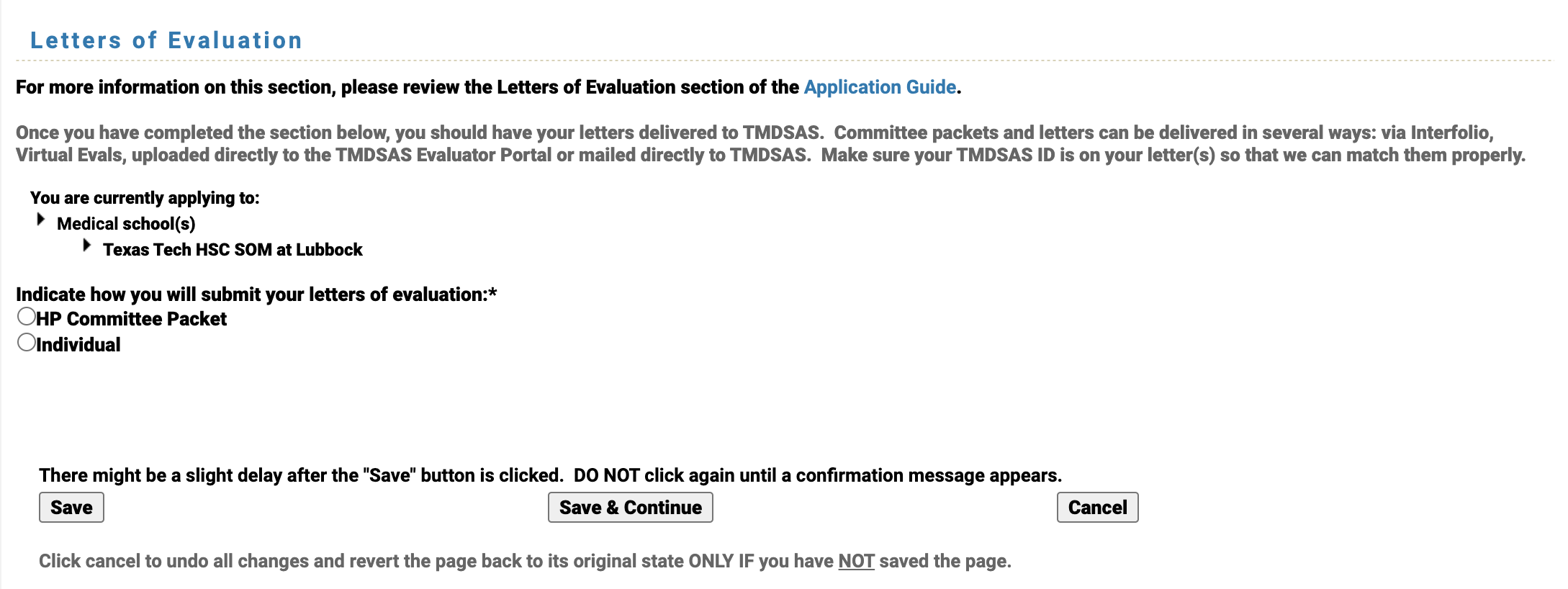
Section 9: Letters of Evaluation
TMDSAS requires three letters of evaluation, or a Health Professions Committee Packet or Letter. With either option, you may submit one additional letter or evaluation form, but you must indicate in the TMDSAS that you’re submitting the additional letter.
Create an entry for each letter, which prompts an email to your letter writers, who directly upload their letters of evaluation. You may also use helpful services like Interfolio to submit letters.
Know that processing can take 10-14 business days for your letters to be processed, approved, and uploaded to your application.
The letters of evaluation (also known as letters of recommendation) should be from individuals who can speak to your academic abilities, character, and suitability for the program.
You can submit your TMDSAS application before individual letters are submitted.
Section 10: Transcripts
Transcripts are actually not due at the time that you submit your TMDSAS application. Transcripts may not be requested until after you’ve been accepted.
Save time and money by sending in transcripts only when requested by TMDSAS. If you send in your transcripts prior to a request, TMDSAS will not keep them on file.
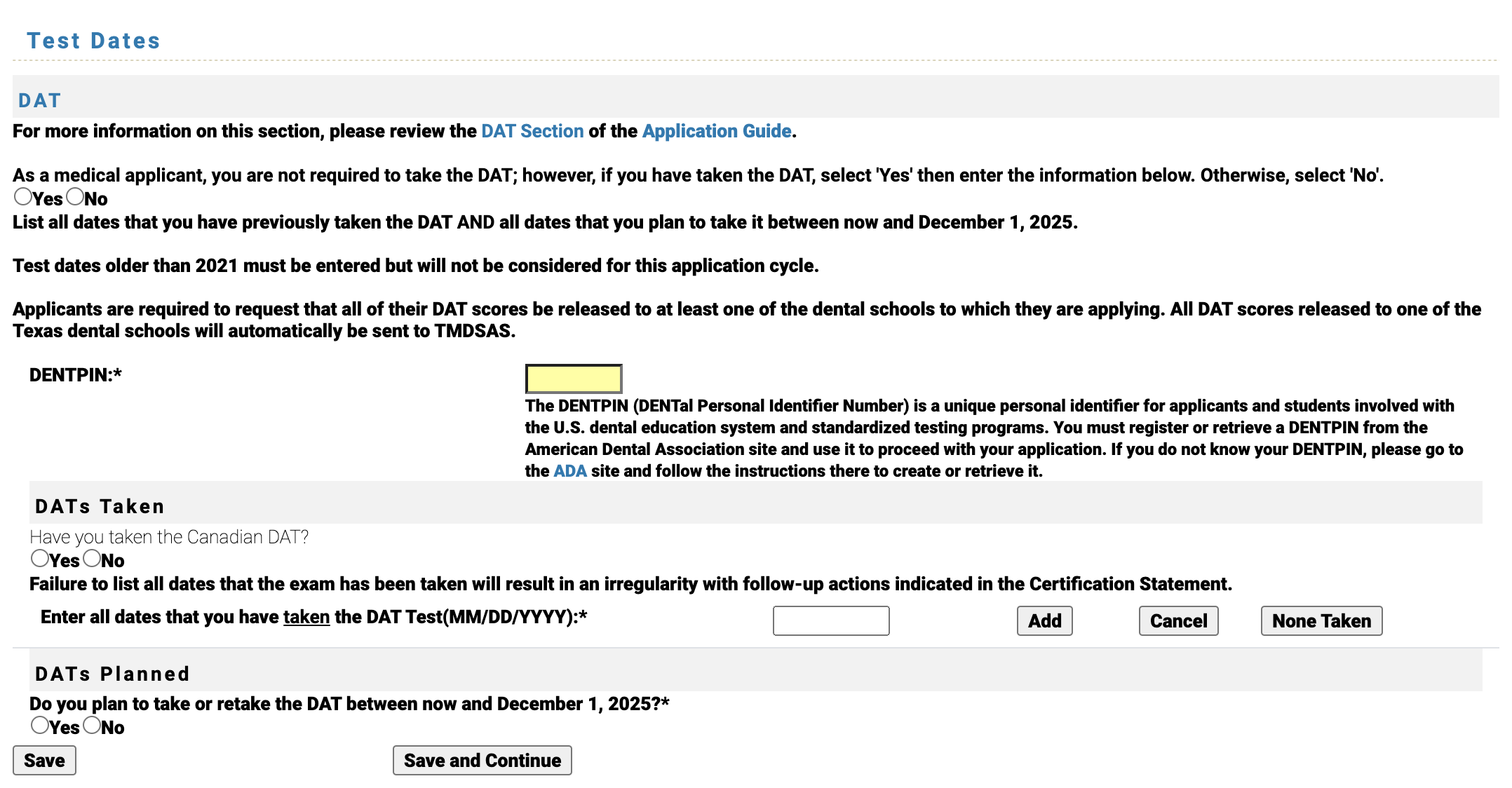
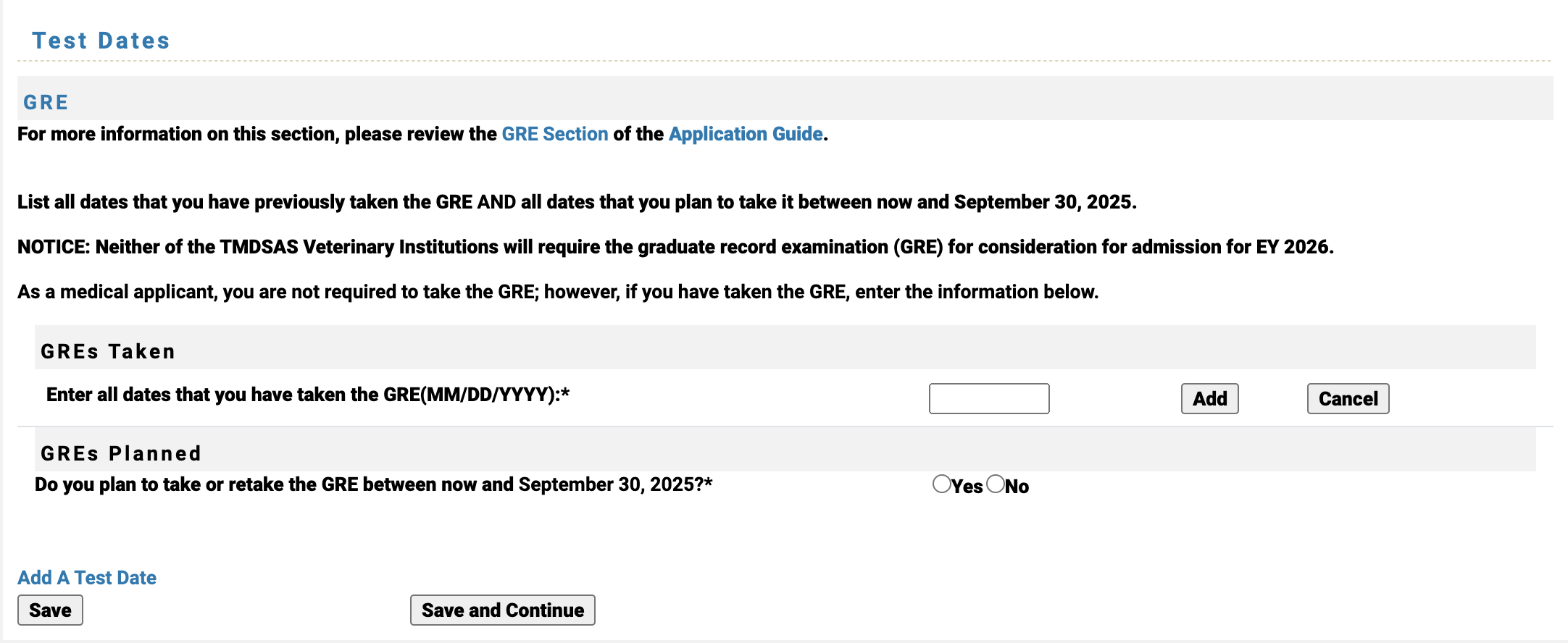
Section 11: Test Scores
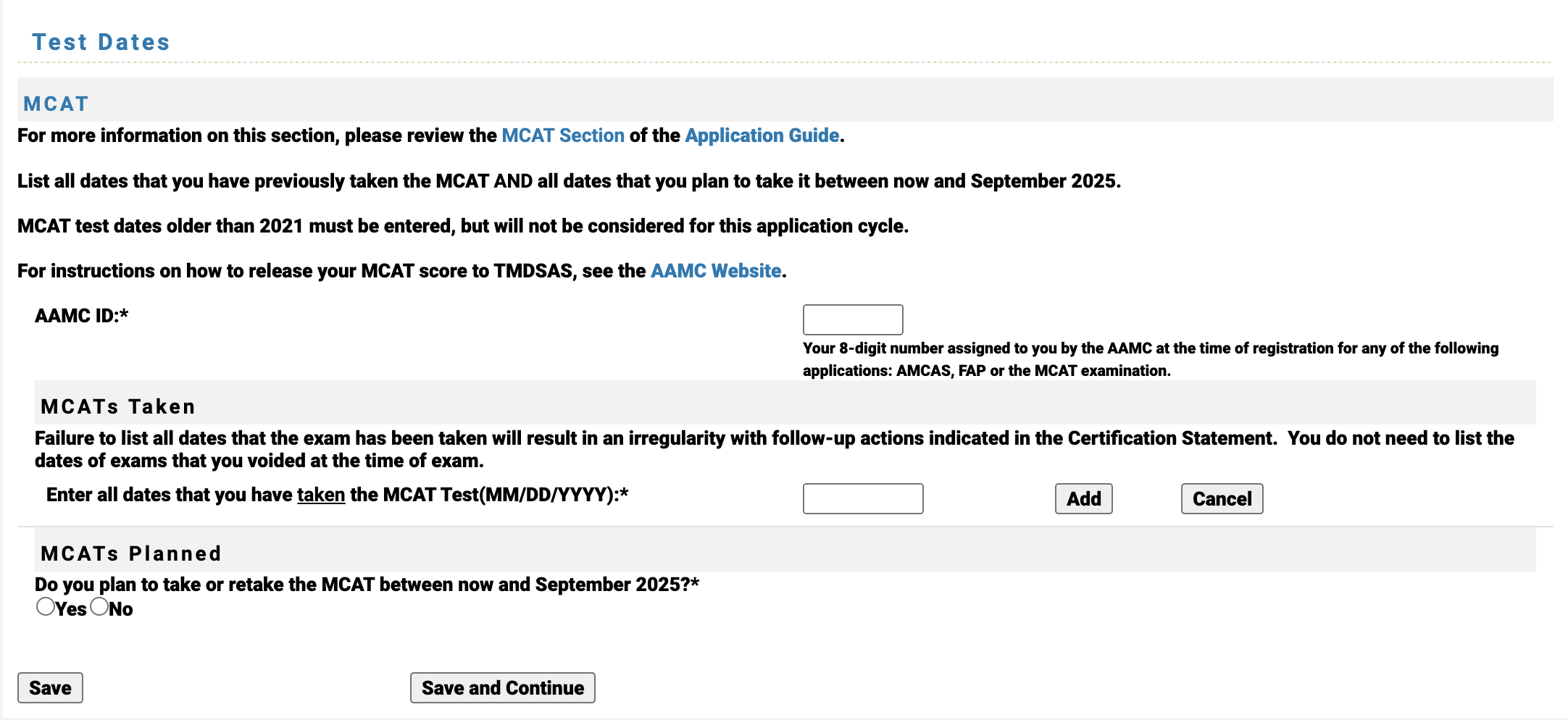
Input your MCAT scores if available. TMDSAS will verify these scores, so ensure that your official scores are sent directly to TMDSAS from AMCAS.
Entering your MCAT info into the application will not automatically release your scores to TMDSAS.
You must intentionally release your MCAT scores to TMDSAS, utilizing the MCAT Score Reporting System. You must request to release your scores to TMDSAS as soon as they’re available to you.
You don’t have to wait till you have your MCAT scores to submit your application. You can release your MCAT scores after submitting, and it won’t affect your spot in the application processing queue.
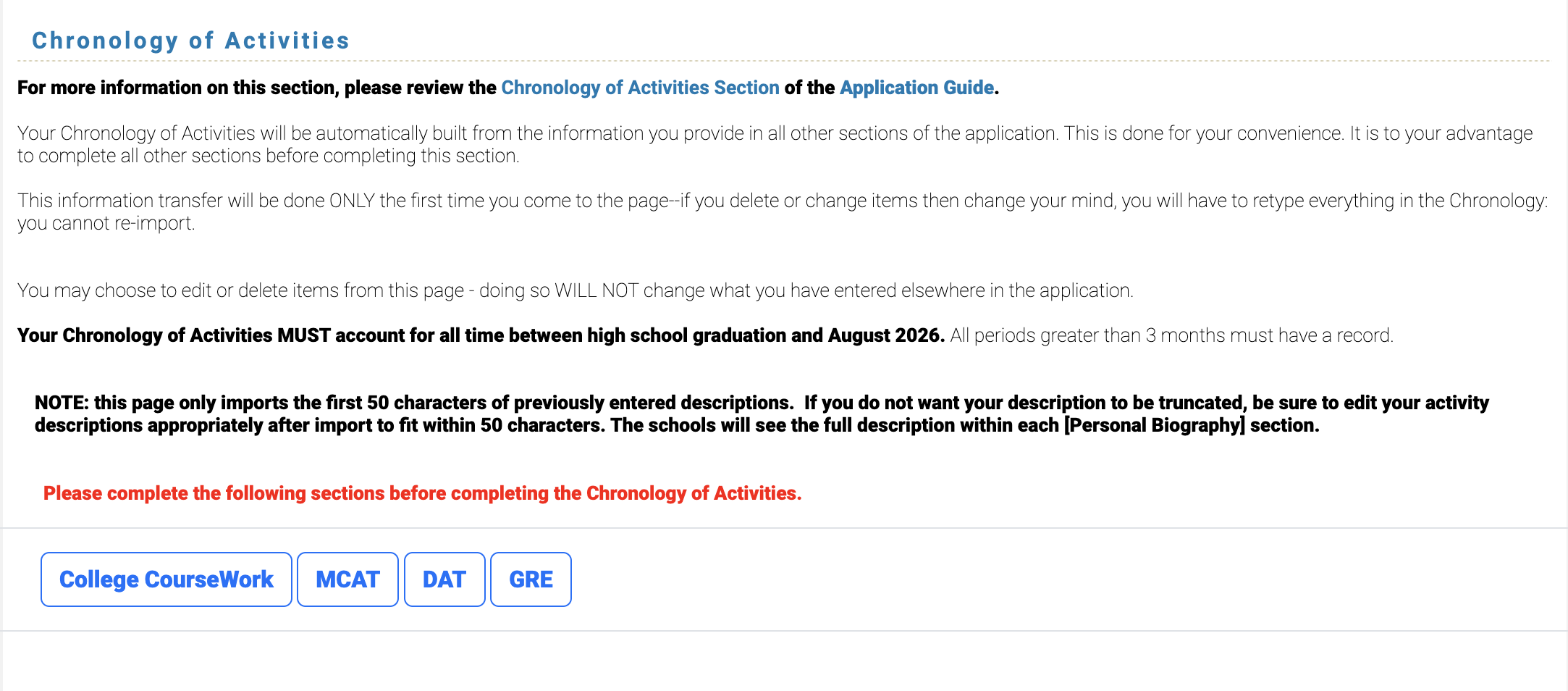
Section 12: Chronology of Activities
The Chronology of Activities serves only as a summary page. It will auto-generate after you’ve completed other sections.
You can edit this chronology, but it won’t edit the origin section of the auto-generated information.
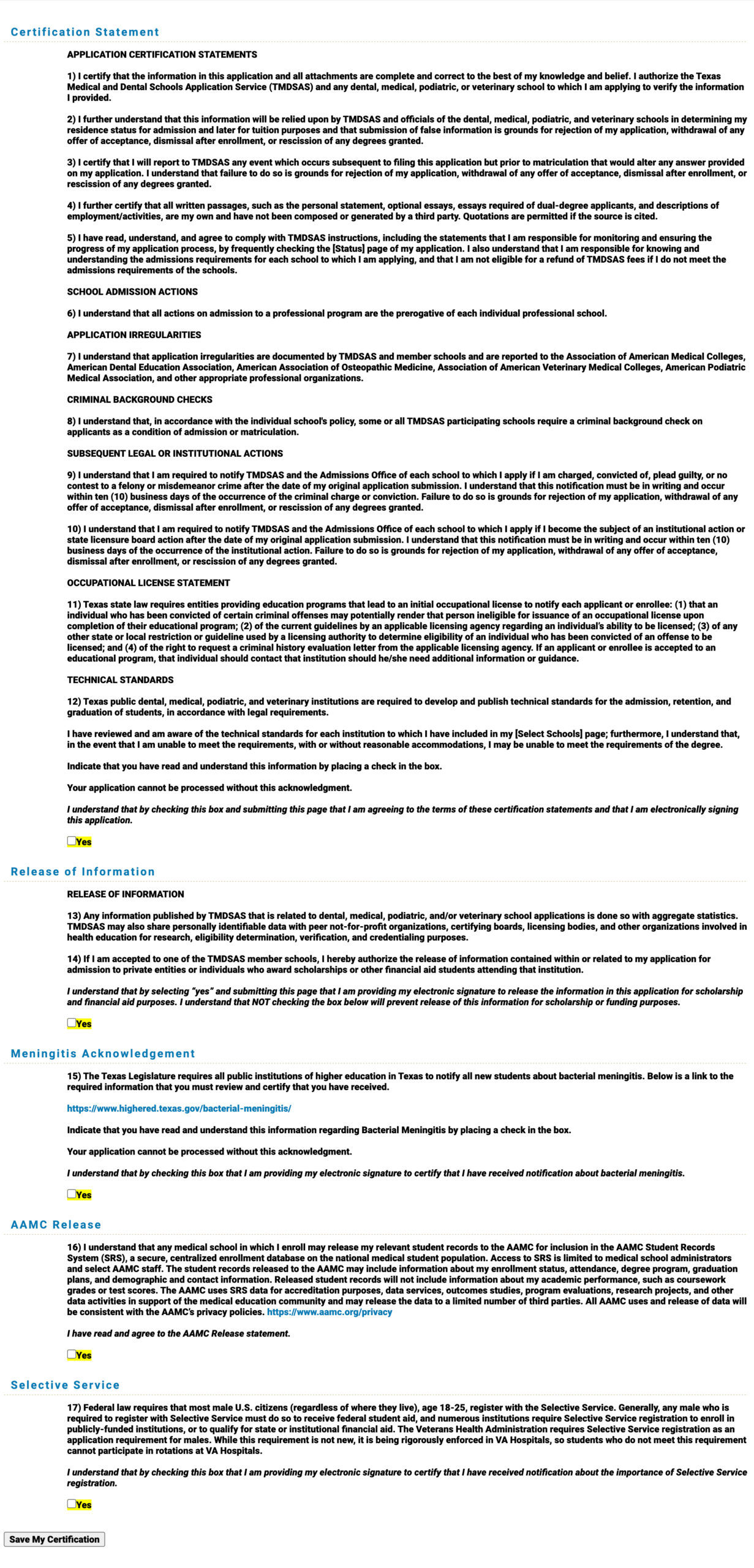
Certification & Submission
Here, you must indicate that everything you’ve included is true and that you’ll inform TMDSAS if anything happens before matriculation that changes your answers on the application. Then, you’ll submit your $230 payment.
Before finishing this final step, we recommend downloading a copy of your application and reviewing it one last time.

Cost & Waivers
TMDSAS has a flat fee of $230 to apply. There is no difference in cost between in-state and out-of-state residents, and you don’t have to pay extra to apply to multiple schools.
The fee is payable only by credit card. This cost is non-refundable.
Unlike AMCAS or AACOMAS, TMDSAS does not grant any application fee waivers, regardless of your personal or financial circumstances.
Can I Add Information After Submitting My Application?
There is limited information you can add or change after submitting your TMDSAS application.
Here is what you can add or update:
- Adding/removing schools to apply to
- Certain aspects of your application history and application status
- Colleges attended
- College coursework
- Contact information
- Demographic info
- Education history
- Letters of evaluation, if not yet received
- Test scores
- Proof of residency
- Residency status
- Test scores
- Transcripts
- Upload photo, if the uploaded photo doesn’t meet TMDSAS standards
You cannot add or edit your essays or activities.
Submitting your primary application early is only part of the battle. Once schools begin inviting you to complete secondaries, you need to be ready to write quickly while still showing strong fit for each program’s mission and priorities. Explore the Medical School Secondary Essay Premium Example Hub for a much deeper bank of school-specific examples that can help you respond with more precision and less guesswork.

See How We Can Help
Search for:
RECENT POSTS
Is a 3-Year Medical School Right for You?
medschoolcoach
What Are the USMLE Pass/Fail Implications for IMGs
medschoolcoach
Do International Electives Look Good to Medical Schools?
medschoolcoach
2026/27 AMCAS Application Guide (With Screenshots)