




The AACOMAS (The American Association of Colleges of Osteopathic Medicine Application Service) is a centralized system used by colleges of osteopathic medicine in the United States. Premeds applying to DO/osteopathic schools must use AACOMAS to submit their primary and secondary applications.
Important AACOMAS dates:
- May 4, 2026 — Estimated date when AACOMAS opens for the 2026/27 application cycle
- June 15, 2026 — Latest date to take the MCAT in 2026 (we recommend a test date in May or earlier, if possible)
- June 21, 2026 — Latest estimated date to take the Casper or AAMC PREview exam, if required by your institution (see the latest Casper schedule here and the PREview schedule here)
- January-March 1, 2027 — Application deadlines for most DO schools fall here (but don’t wait to apply until the deadline is close!)
Are you also applying to MD schools or any medical programs in Texas? Check out our guides to AMCAS (MD/allopathic schools) or TMDSAS (Texas medical programs).
We’ll walk you through what to expect when submitting a primary application through AACOMAS, including a step-by-step guide with screenshots and top tips from the experts.
Build your application alongside a doctor with admissions experience, and join the 95% of clients who get into medical school.
Book Your Admissions Advising Consultation
AACOMAS Application Timeline
To reduce stress and strengthen your application, you can prepare months in advance to submit an application via AACOMAS.
Below is the ideal timeline we recommend for your best chance at getting interview invites and acceptance offers in the 2026-27 application cycle.
Read Next: Guide for Non-Traditional Applicants
September – December 2026
The fall semester before applications open is a great time to put long-term plans in place. You don’t want to get to May, and you don’t have a good MCAT date or enough extracurricular hours!
Here’s what you can do in September through December to prepare for AACOMAS:
- Plan a comprehensive MCAT study schedule to prepare for the exam without having to cram at the last minute.
- Check in with your pre-med advisor to ensure you’re on track to meet all the prerequisites you’ll need.
- Begin contacting evaluators you hope will provide you with letters of recommendation.
- Research the specific DO programs you want to apply to. Use our free MedSchoolExplorer to discover which programs are perfect for you!
- Consider any extracurriculars (including clinical work) that you plan to complete to strengthen your application. Ensure you have plenty of hours under your belt.
- Request your official transcripts from all undergraduate schools you’ve attended.
January – April 2027
As you move closer to the AACOMAS opening up in May, you can start to draft essays and make sure you’re on track to get all your standardized testing in.
Here’s what to aim for between January and April for your AACOMAS:
- Create an account on the AACOMAS website. Log in or create your account here.
- Start drafting your personal statement and experience descriptions. Read more about these in the Supporting Information section below.
- Recruit letter writers who can give you glowing letters of evaluation (AKA letters of recommendation). Focus on mentors, professors, and the like.
- Take the MCAT early enough to get your scores back by the end of June. You don’t need your MCAT scores to submit. Once you’ve taken your MCAT, go to the AAMC MCAT Score Reporting System and select AACOMAS to receive your MCAT scores. This takes about 10-12 days.
- Schedule your Casper or AAMC PREview exam if required by your chosen school(s).
May 2027
AACOMAS opens up in May, and it’s time to start filling out all the sections:
- Complete the Personal Information section of the application.
- Fill out the Academic History section. AACOMAS offers a Professional Transcript Entry (PTE) paid service if you don’t want to enter all of your own coursework.
- Go through the Supporting Information section. You should be able to paste in your Personal Statement and Experience descriptions, but beware of formatting errors. Read through the pasted versions for any weird formatting or typos. Also in this section are the letters of evaluation. Check in with your evaluators to ensure they received the request via email. Schedule times to follow up with them after a period of time has passed if their evaluation hasn’t been submitted.
- Complete the Program Materials section, where you’ll list the schools you’re applying to, and the AACOMAS will tell you if there are more prerequisites that the school is asking for. DO program admission requirements vary, so read school-specific guidelines carefully.
- Request that your schools send your official transcripts directly to AACOMAS. Resolve any holds due to financial or other issues as quickly as possible.
June – August 2027
Don’t wait too long to submit, but don’t stress out about submitting right away. For the best chance at medical school admissions while maintaining mental health, you should submit your application by the middle of June.
Here’s what you can do June through August for AACOMAS:
- Submit your application via AACOMAS after carefully reviewing your full application.
- Download a completed copy of your primary application.
- Keep an eye on your application’s verification status. Verification should take around 10 days to complete. If your application has a significant number of errors, it may be “undelivered” and returned to you for correction.
- When requested, submit secondary applications no later than the beginning of August.
From September 2026 through February 2027, you may receive requests to interview at one or more programs.
Some schools operate on a rolling admissions process, meaning they may immediately send acceptance offers to students who successfully complete interviews. Others may wait until all interviews are complete before sending acceptance letters as late as March 2027.
How to Fill out the AACOMAS (Step-By-Step)
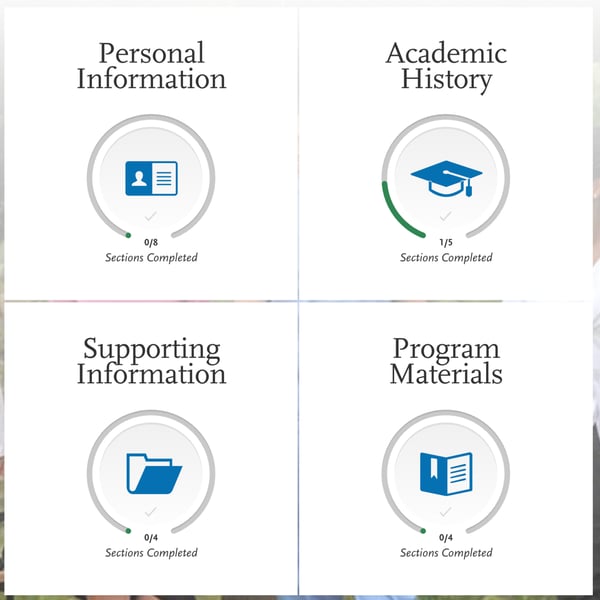
There are four sections on the AACOMAS primary application, each with various sub-sections.
Below, we cover what you can expect when completing each section, step by step, as well as guidance from MedSchoolCoach Physician Advisors who have helped hundreds of applicants like you through the application process.
Note: Do not fill this application out on a mobile device. Use a desktop, laptop, or tablet with a large screen to ensure that webpages display correctly. You must use Google Chrome or Firefox; other browsers may cause problems with the application experience.
Personal Information
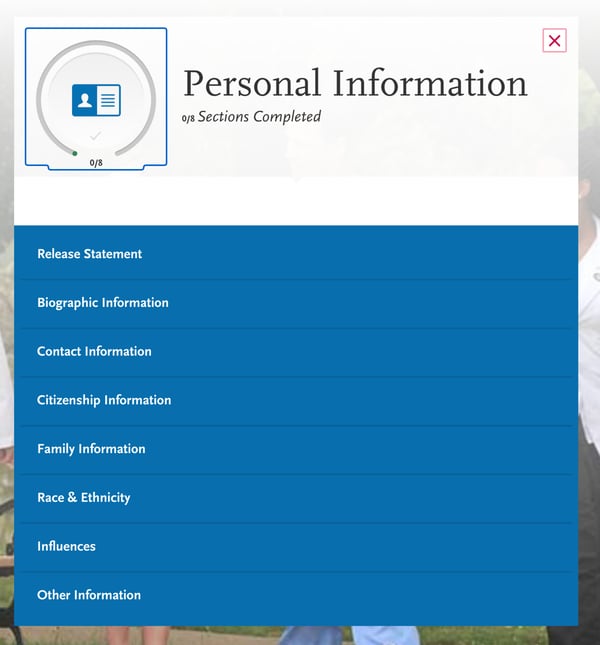
There are eight tabs to complete in the Personal Information section:
- Release Statement
- Biographic Information
- Contact Information
- Citizenship Information
- Family Information
- Race & Ethnicity
- Influences
- Other Information
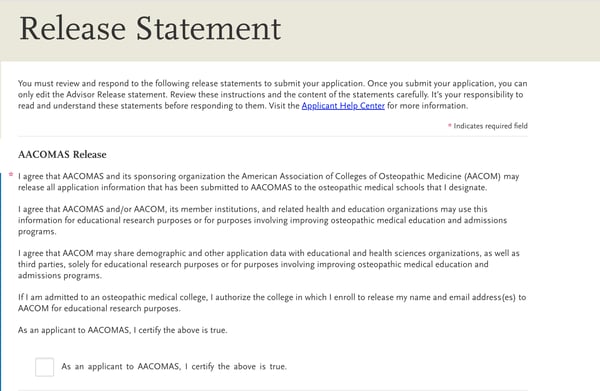
1. Release Statement: You’ll start by signing a contractual agreement, which states that you agree to comply with the AACOMAS Applicant Help Center information. As with any legal form, read it through carefully before agreeing.
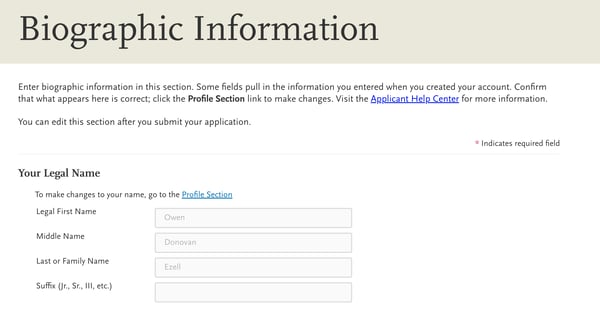
2. Biographic Information: Fill out your legal name, sex, gender identity, and birthdate. You’ll use this section to give any former legal names on any materials used for this application. You may decline to state your sex. Be sure to use the MM/DD/YYYY format when entering your birthdate.
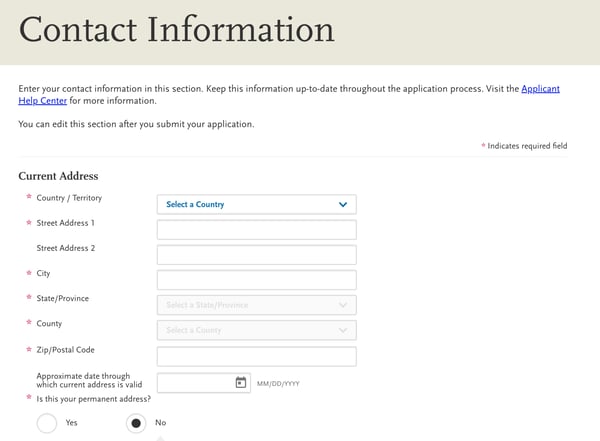
3. Contact Information: Provide your current and permanent address, email address, and phone number.
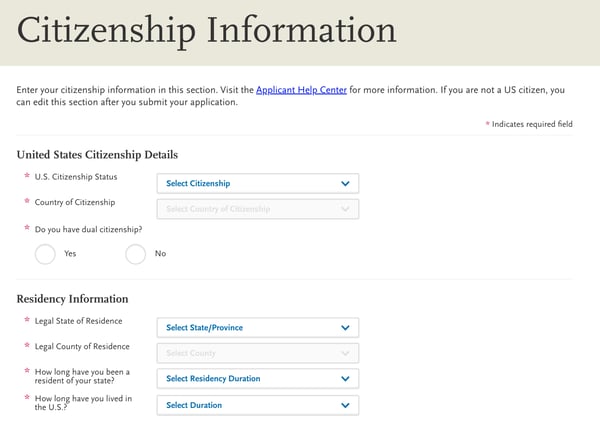
4. Citizenship Information:Select and provide proof of your citizenship status and legal state of residence. Dual citizens should give their additional country of citizenship. Applicants with a visa will provide relevant information about their visa.
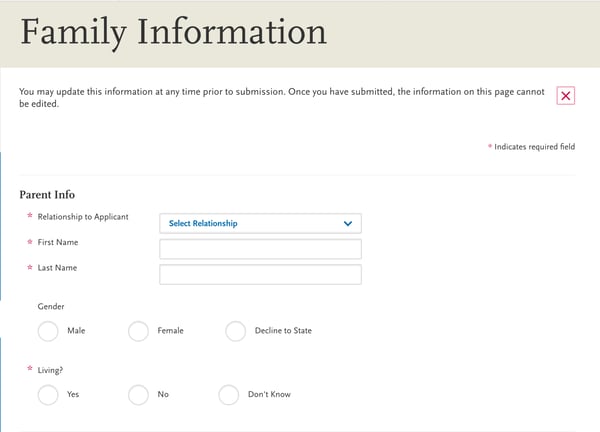
5. Family Information: In this optional section, fill out basic information about your parents or guardians, including residence location, occupation, education level, and household role. You will have the option to select whether a family member is living, deceased, or if you are unsure.
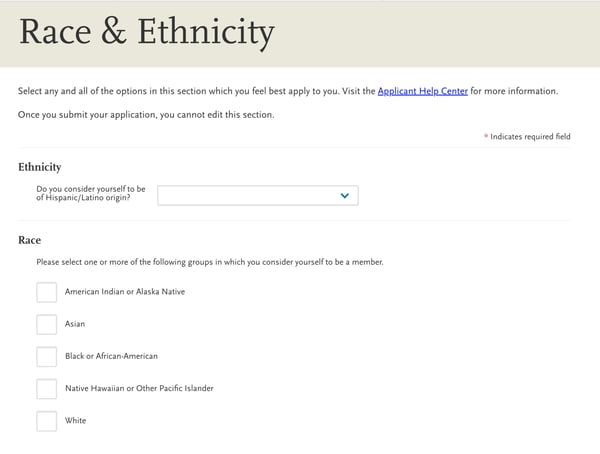
6. Race & Ethnicity: Optionally, select your race and ethnicity.
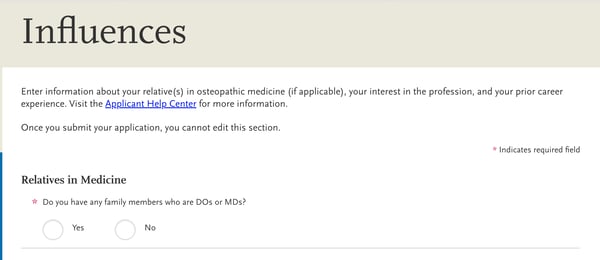
7. Influences: Describe why you’re interested in osteopathic medicine, and list relevant career experience. If you have any MD or DO family members, you’ll provide information about them here, including your relationship, first and last name, school attended, and graduation date.
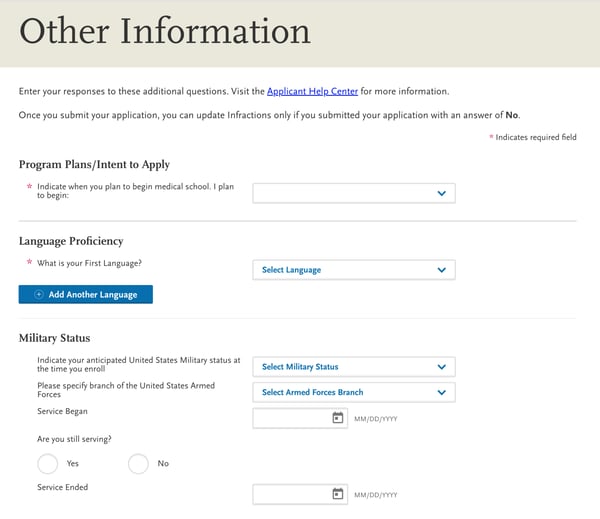
8. Other Information: You’ll fill out miscellaneous information in this section, including when you plan to apply to osteopathic school, your military status, which languages you speak, your social security number, background information about yourself, and any criminal convictions.
You’ll also enter your AAMC ID number in the “MCAT Scores” section of this page so that your scores can be matched with this ID and your date of birth (in Biographic Information).
Academic History
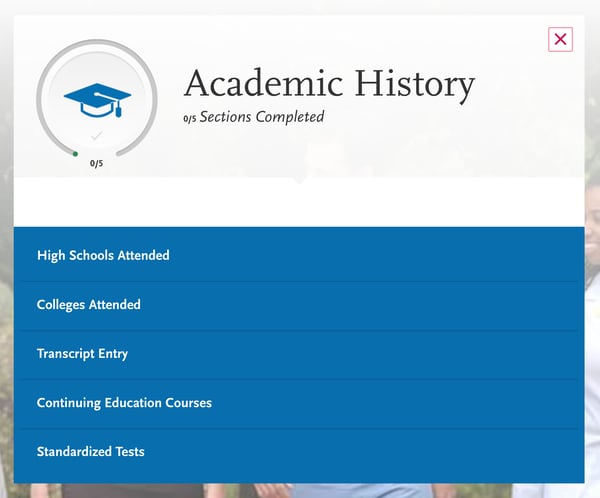
Information about all of your educational experiences will be added to five tabs in this Academic History section:
- High Schools Attended
- Colleges Attended
- Transcript Entry
- Continuing Education Courses (CE)
- Standardized Tests
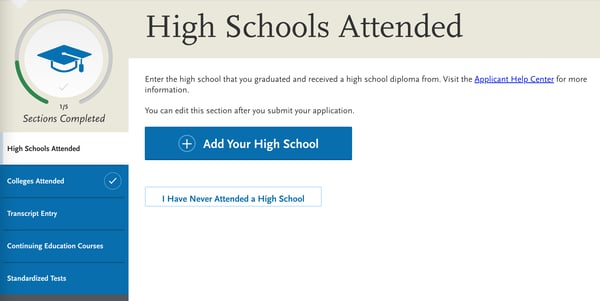
1. High Schools Attended: Enter the details of the high schools(s) you went to, when you graduated, and the location of the school.
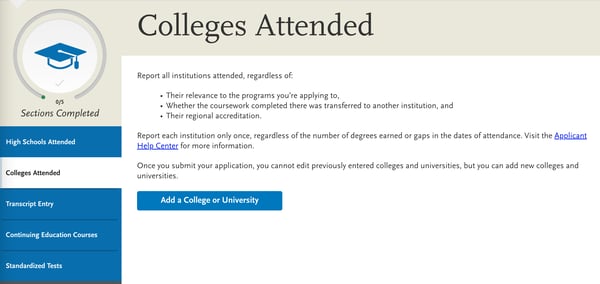
2. Colleges Attended: Name all colleges and institutions you have attended since high school, including summer courses and US military academies (if applicable).
Don’t skip any institutions, even if they seem irrelevant to the program you’re currently enrolled in. Not including every college can cause your application verification to fail. For every program you list, you’ll need to send an official transcript.
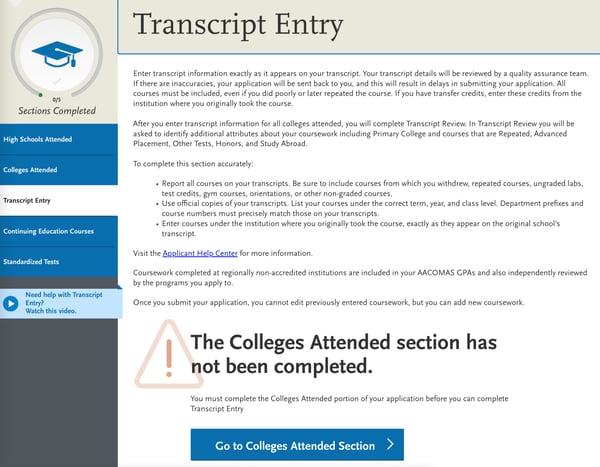
3. Transcript Entry: Enter all coursework you’ve completed at colleges or universities in the US and Canada. This isn’t just for prerequisites; you’ll need to include every single class you’ve taken, including repeats.
Select the appropriate Course Subject for GPA calculation for every class you enter. Ensure the information matches your transcript precisely so that verification will succeed.
You can use the AACOMAS Professional Transcript Entry Service (PTE) for a fee if you don’t want to fill out the information yourself. It can get tedious without PTE, but we recommend giving yourself plenty of time to fill this out.
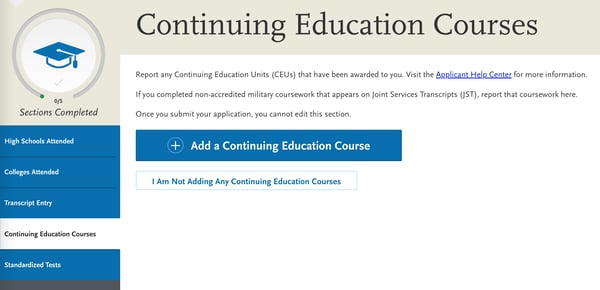
4. Continuing Education Courses (CE): If you’ve completed CE units, you’ll list those here and upload certificates for each course listed.
5. Standardized Tests: Include all standardized test scores you have here, including your ACT, SAT, and MCAT.
Through the AAMC’s MCAT Score Reporting System, request that your MCAT scores be released to AACOMAS. Ensure your AAMC ID number was filled out correctly in the “Other Information” section. You’re responsible for ensuring AAMC sends these scores on or after the date that AACOMAS applications open.
It takes about a month for your MCAT results to be delivered, so we recommend aiming for an MCAT test date no later than the middle of May so you can submit your application by the middle of June.
Supporting Information
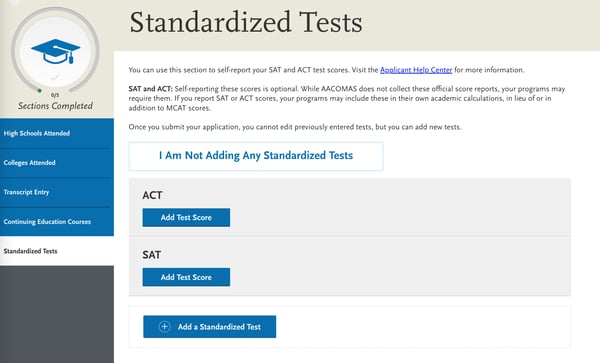
This section is where you get to showcase what makes you a unique and compelling candidate. Here are the four sub-sections you’ll fill out:
- Evaluations
- Experiences
- Achievements
- Personal Statement
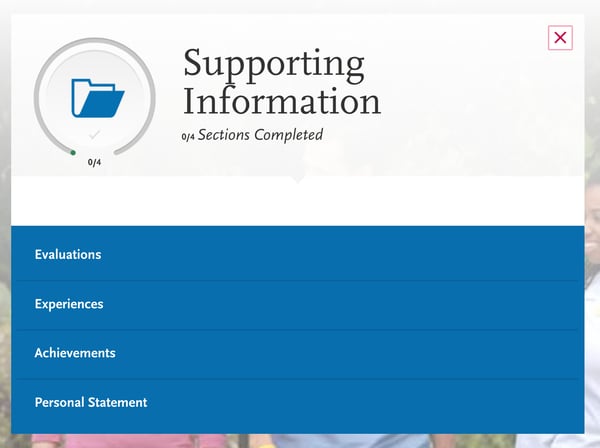
1. Evaluations: Provide up to 6 evaluators, including email addresses. Include a personal message to each person you choose.
Your evaluators will submit letters of recommendation directly through the Letters by Liaison portal. You can’t submit your own LORs, but it’s your responsibility to follow up with letter writers to ensure this process is completed.
Make sure they check their email for a message from aacomasinfo@liaisoncas.com since it may end up in the spam folder. Dossier services like Interfolio can help store and release confidential letters like these — just be sure to submit only evaluations for the current application cycle.
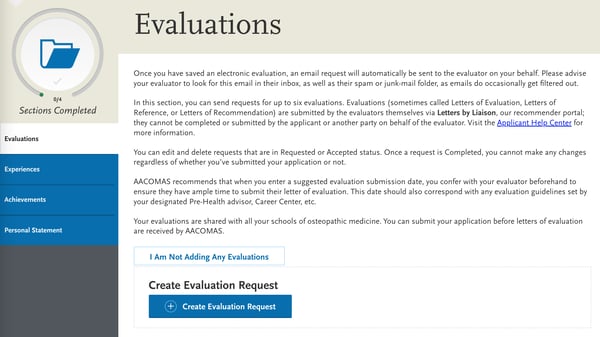
2. Experiences: There’s no limit to how many of these you can add, and each has an entry field of up to 600 characters where you can describe this experience. Select from four categories:
- Extracurricular Activities
- Non-Healthcare Employment
- Non-Healthcare Volunteer
- Healthcare Experience
If you have extensive career experience, we recommend prioritizing experiences from the past 8-10 years.
Unlike what you’ll find on the AMCAS, there’s not a field for “most meaningful activities,” so be thoughtful about what to include; there also isn’t a limit on how many experiences you list.
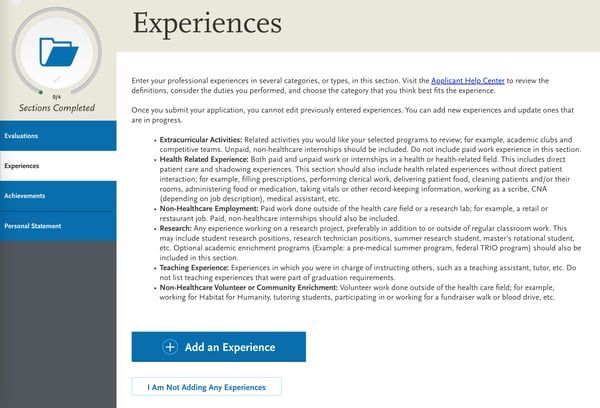
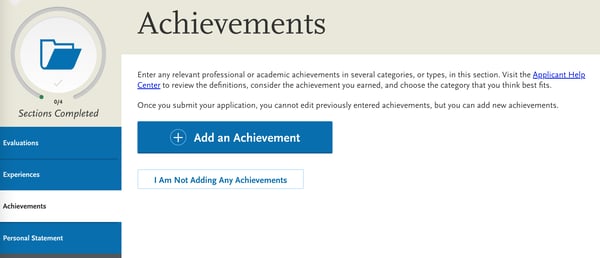
3. Achievements: Include achievements like scholarships, major presentations, awards, and publications here. If you’re unsure if an achievement is appropriate for your med school application, talk to a trusted mentor, your pre-med advisor, or an application counselor.
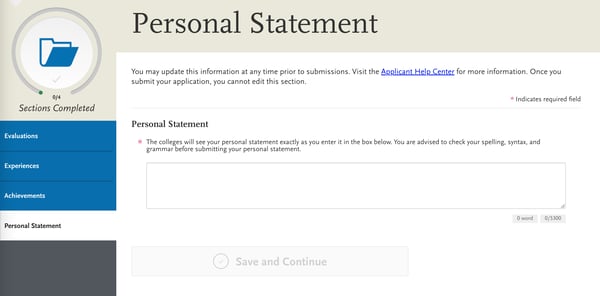
4. Personal Statement: This is one of the most important sections of your primary application, so proceed with care. Write a story-driven essay to showcase who you are as an individual, describe what motivates you, and demonstrate how your values align with the schools where you plan to apply.
Like the AMCAS, the AACOMAS personal statement limits entries to 5,300 characters — about three double-spaced pages in 12-point Times New Roman. You may not use rich text formatting, such as bold, italics, or bullet points.
We recommend drafting your Personal Statement well before AACOMAS opens up, giving you time to seek feedback on the personal essay from mentors, advisors, or professors.
Craft your personal statement with 1-on-1 help from a Physician Advisor and a professional writer. No limits on messaging, hours, or edits.
Get Personal Statement Editing
Program Materials
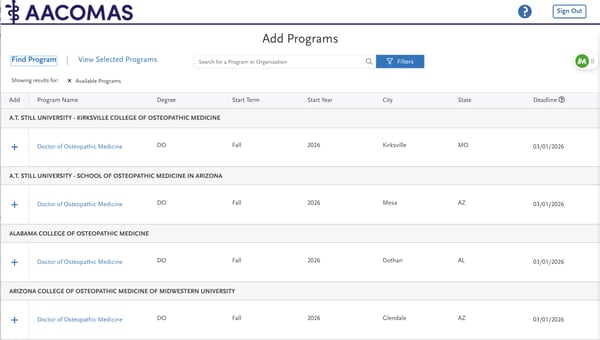
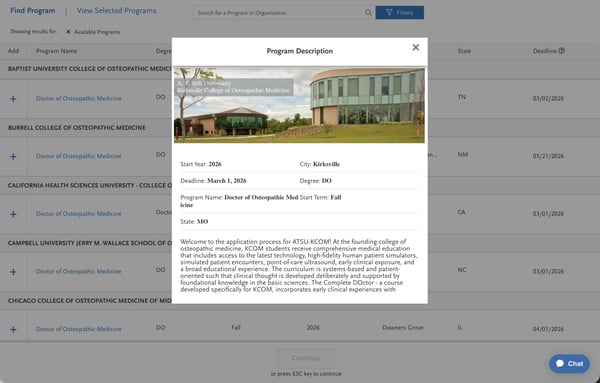
Here, you’ll select the program(s) to which you want to apply. You may also use the “Add Program” tab at the top of the main application page.
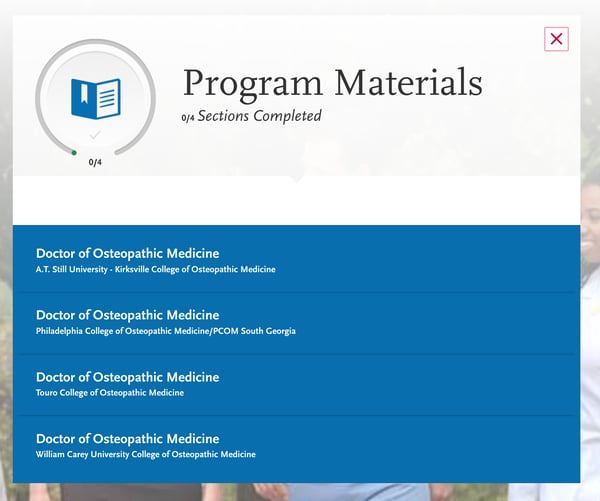
The schools you selected will be shown on the right side of the screen. When you click on the name of the institution, you’ll be able to see what additional prerequisites, requirements, or materials the school requires you to submit before completing your application.
This information differs widely by school. Some of the most common types of information you may need to complete are:
- Questions about yourself (in open-ended text or multiple-choice format)
- PDFs to download (some schools will include secondary essay prompts here)
- Prerequisites
Final Submission & Verification
After you’re confident that each section is complete and you’ve met all of the application requirements, it’s time to submit your application. Congratulations on making it this far!
At this point, certain sections and forms will be locked, and you can’t edit them anymore. The site will ask you a series of certification questions that serve as your official signature.
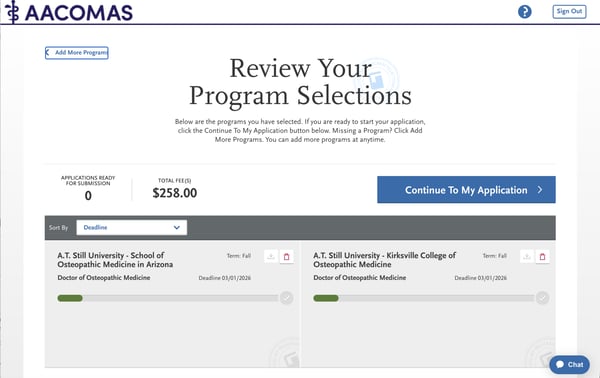
Before submitting, you’ll be able to see what application fees you’re responsible for paying. After the certification process, you can pay the application fees using a credit card or your PayPal account. Your application won’t be processed until payment is made. There are no refunds.
Save the email you get from AACOMAS confirming your application was completed.
Using the application portal, you can monitor the status of your application as it moves from “In-Progress” to “Received” to “Complete.”
Admissions committees won’t receive a copy of your application until the verification process is complete. This usually takes about 10 days. If a significant number of errors are discovered, AACOM will return your application to you to make corrections (status “Undelivered”).
Here’s what happens during this verification period:
- The course subject categories you selected when entering your coursework are checked and corrected, if needed.
- Every course in the Transcript Entry section is converted to an AACOMAS grade value (based on whether it’s considered a science or non-science course).
- These grades are used to calculate your overall GPA and BCPM GPA. These GPA data may not match your official transcript GPA.
- Completed degrees are confirmed as “awarded.” This only applies to prospective medical students who have already completed undergraduate or other degrees beyond high school.
To dispute a course subject category assignment or GPA calculation, email aacomasinfo@liaisoncas.com with a subject line of “Course Subject Correction” or “Verification: GPA Inquiry.” Include your CAS ID # (beneath your name in the right-hand corner of each screen on the AACOMAS portal). These disputes may not be completed via phone.
Can Information Be Added After Submitting My Application?
Yes, you can add or edit certain information after submitting your AACOMAS.
Most of your application will be locked and uneditable after you submit, but here are the areas where new information may be added or edited:
- Contact Information & Biographical Information: You can update your address, phone number, and email address after submission.
- Experiences and Achievements: You can’t alter existing experiences or achievements, but you can add new ones.
- Program Materials: You may add new programs to which you want to apply. You can also remove a program by hovering over the checkmark next to the program name, clicking it when it turns into an “X,” and then confirming the deletion by clicking “Delete.” There must be at least one program selected at all times.
- Evaluations: New evaluators may be added. For instance, if one of your letter writers backed out, you can request a letter from another individual.
- Coursework: You can’t edit existing coursework, but you can add new entries.
- Standardized Test Scores: You can add test scores after submitting.
Application Cost & Fee Waivers
The first program you choose costs an application fee of $198. Each subsequent program costs $60 to apply to.
You can pay by card or with a PayPal account. There are no refunds.
If you can’t afford this fee, you may request one of the limited fee waivers offered by AACOM. This waiver only covers $198 (the cost of applying to a single institution), but you’ll be responsible for paying the $60 per additional school you submit to.
Beware: Fee waivers are only valid for 14 days (including holidays and weekends) from the time you’re approved.
To qualify for a waiver, your Federal Income Tax Return Form 1040 and your parent or guardian’s 1040 must be below the “Low Income Levels” as defined by the AACOMAS Applicant Help Center. These levels are based on family size and calculated as an income at or below 200% of the US Department of Health and Human Services poverty guidelines.
MCAT: Applicants who successfully matriculated to DO programs via AACOMAS had an average MCAT score of 503 in the most recently completed application cycle.
GPA: The average overall GPA for entering DO students was 3.60 in the prior admissions cycle. These matriculants averaged a Science GPA of 3.53 and a Non-Science GPA of 3.70.
Craft a Standout Medical School Application
Our Physician Advisors have spent over 500,000 hours working with students applying to medical school. Make your dream of becoming an osteopathic physician come true with world-class consulting and support from Day 1 of the application process.