Table of Contents
Becoming a doctor is a long but rewarding process. There is a lot of jargon during pre-med, med school, post-grad residency training, and beyond. But you’re in the right place to deepen your understanding of the process of getting your medical degree and working in the healthcare field.
Below, we provide you with explanations for the steps to becoming a physician, definitions of various terms crucial to succeeding during your medical education, and links to valuable resources throughout your medical career.
Get the pre-med guidance you need with 24/7 access to a physician with admissions experience.
Pre-Med Definitions
Below are some of the important terms you may hear as a pre-med student or as a parent of a pre-med.

Pre-Med Major
“Pre-med” is a term college students use to indicate they plan to attend med school and are taking the right classes.
Pre-meds can major in whatever subject they want and just take the required classes needed to apply to med school.
Most pre-med students will major in Biology because the required classes for med school best line up with this major. But you can major in almost anything as long as you get the required coursework done before applying to med school.
Many students start as “premeds” with different motivations. Here’s how to think critically about why you want to be a doctor.
BS/MD Program
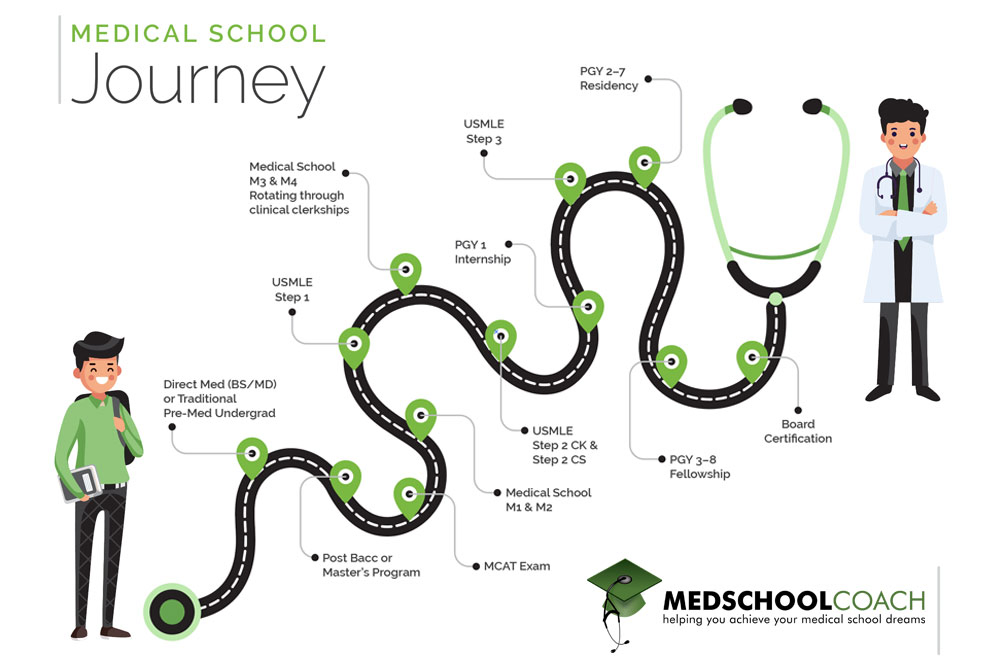
A Bachelor of Science (BS) and Doctor of Medicine (MD) dual degree program is an undergraduate institution and a medical school partner that allows students to gain admission to both straight out of high school. Learn more about BS/MD Programs here.
Many BS/MD programs take eight years, the typical minimum amount of time a student would normally spend getting a BS and MD through separate programs.
The benefit of BS/MD is a near-guarantee of med school admission. Typically, in the standard med school admissions process, more than 50% of medical school applicants don’t get in.
MCAT Exam
The Medical College Admission Test (MCAT) is a standardized test developed and administered by the Association of American Medical Colleges (AAMC). You will likely take it at the end of your junior year or the beginning of your senior year of undergrad.
The MCAT is a multiple-choice exam created to help medical school admissions offices assess your problem-solving skills, critical thinking, and knowledge of natural, behavioral, and social science concepts prerequisite to the study of medicine.
The average MCAT score for all test takers is around 502, but the average score for those who actually get into med school is closer to 512. Consider MCAT Tutoring from 99th percentile tutors.
Casper Test
The Computer-Based Assessment for Sampling Personal Characteristics (Casper) is a situational judgment test that measures traits like professionalism, ethics, communication, and empathy.
It’s a psychological admissions test with realistic hypothetical scenarios that ask what you would do when faced with particular situations — and why. It is only required for some med schools, not all. Check the MSAR for requirements before scheduling a Casper exam.
AAMC PREview Test
The AAMC PREview exam is a situational judgment test that tests your critical thinking and other soft skills by presenting you with realistic hypothetical scenarios and asking what you would do.
More schools have started requiring or recommending the PREview exam. Check each med school’s requirements before scheduling your PREview test date.
Post-Baccalaureate Program
A post-baccalaureate program is completed after graduation from college for a variety of reasons:
- To complete a second BA or BS degree
- To attain a graduate certificate
- To complete med school prerequisite courses
- To raise your GPA and boost a weak med school application
Most post-baccalaureate programs take 1-2 years to complete.
Special Master’s Program
A Special Master’s Program (SMP) with a linkage to medical school is a postgraduate program that you may attend after pre-med but before medical school.
SMPs guarantee you acceptance or at least an interview with a linked medical school if you meet certain prerequisites, such as a minimum MCAT score or maintaining a certain GPA.
Application Definitions
Here are the key organizations and services that manage the medical school admissions application process in different circumstances.
AAMC
The Association of American Medical Colleges (AAMC) administers the MCAT exam and the AMCAS, which most med school applicants use to apply to medical colleges.
The AAMC focuses on transforming healthcare across medical education, patient care, public health, medical research, and diversity, inclusion, and equity in the medical field.
AMCAS
The American Medical College Application Service (AMCAS) is the AAMC’s centralized medical school application processing service for those applying for a Doctor of Medicine (MD) outside Texas.
There are various sections on your application that you’ll fill out within the online AMCAS system. You can draft your personal statement and Work & Activities descriptions before AMCAS opens, then copy and paste your drafts into AMCAS when it opens up in May.
Build your application alongside a physician with AdCom experience.
AACOMAS
The American Association of Colleges of Osteopathic Medicine Application System (AACOMAS) is AACOM’s application system for those applying for a Doctor of Osteopathic Medicine (DO) outside Texas.
The AACOMAS shares many similarities with the AMCAS, including various sections such as the Letters of Evaluation and the fact that it opens in May.
TMDSAS
The Texas Medical & Dental Schools Application Services (TMDAS) is the application service that students use to apply to all public medical, dental, and veterinary schools in the state of Texas.
Why does Texas have its own application process? The state legislature created TMDSAS-related regulations meant to benefit Texas schools and Texas students. Though some out-of-state applicants are admitted into Texas med schools, it is (due to the law) a small number.
ERAS
The Electronic Residency Application Service (ERAS) is the centralized online application service administered by the AAMC that med school students use to fill out and submit their medical residency applications.
Residency programs process ERAS applications similarly to med schools evaluating AMCAS applications, but there are key differences. Learn more about the ERAS timeline here.
Medical School Definitions
Below is the lingo that med students need to know to survive in medical school.

M1, M2, M3, M4
These are just meant to refer to what year of medical school you’re in.
- M1 = First-year medical student
- M2 = Second-year medical student
- M3 = Third-year medical student
- M4 = Fourth-year medical student
MD vs DO
Doctor of Medicine (MD and Doctor of Osteopathy (DO) are becoming more interchangeable as MDs use more integrative and preventive methods and DOs are using more conventional diagnosis and treatment methods. But they are technically different medical degrees.
- MDs practice allopathic medicine: The study of conventional diagnosis and treatment of disease with conventional tests and medicine.
- DOs practice osteopathic medicine: The study of holistic, preventive, patient-centered healthcare. DOs also study osteopathic manipulative treatment, using their hands to naturally diagnose and treat patients.
Both are licensed physicians able to diagnose and prescribe medication. As time goes by, the differences fade away.
It must be said that DO schools are technically easier to get into, compared to MD schools. Average GPA and MCAT scores need to be less competitive to gain acceptance into a DO program.
USMLE
The United States Medical Licensing Examination (USMLE) assesses your ability to apply knowledge, concepts, and principles to demonstrate fundamental patient-centered skills that are important in health and disease.
USMLE is administered in three steps during your med school and residency years:
- Step 1 tests mostly pre-clinical knowledge (basic science) and is typically taken after the sophomore year of medical school, before clinical rotations begin in year three. As of recently, Step 1 is now graded as pass/fail, instead of on a three-digit scale.
- Step 2 CK assesses Clinical Knowledge and is typically taken between the third and fourth years of medical school. It is graded on a three-digit scale and is vital to your residency application.
- Step 3 assesses your application of medical knowledge and comprehension of biomedical and clinical science essential for the unsupervised practice of medicine. It is taken after the intern year of residency (PGY-1).
Step 2 CS was used to assess Clinical Skills as a complement to Step 2 CK, but it was permanently discontinued in 2021.
Learn More: Everything to Know About USMLE Test Day
COMLEX-USA Exams
The Comprehensive Osteopathic Medical Licensing Examination of the United States (COMLEX-USA) is a licensing exam required for DO students in osteopathic medical schools.
COMLEX is the equivalent to USMLE for MDs. It is administered in three steps:
- Level 1 assesses your knowledge of basic biomedical sciences and osteopathic concepts.
- Level 2-CE is a Cognitive Evaluation that measures your application of clinical knowledge and safe, evidence-based decision-making skills in patient care scenarios.
- Level 3 focuses on the advanced clinical competencies required for unsupervised practice of osteopathic medicine.
Level 2-PE (Performance Evaluation) was permanently discontinued in 2022. In response to the discontinuation of Level 2‑PE, the National Board of Osteopathic Medical Examiners (NBOME) developed a new assessment program, the Core Competency Capstone for DOs (C3DO). Starting with the class of 2029, students need to complete the C3DO or a similar competency verification to be eligible for the Level 3 exam.
Comprehensive Osteopathic Medical Self-Assessment Exams (COMSAE) are self-assessment tests designed specifically for DO students preparing for the COMLEX.
Residency & Beyond
Here, you’ll find definitions you’ll need to know concerning residency applications and attendance for after you’ve graduated from med school.

Residency
Medical residency is what most medical students do after graduating med school.
Recently graduated MDs and DOs typically enter a residency program for an additional 2-7 years of education and training. Generally, residencies cover a specific medical specialty, such as Internal Medicine, Pediatrics, Neurology, Family Medicine, or Thoracic Surgery.
For example, a family practice resident could serve 2 years of residency, while a surgery resident may last 5+ years.
Related Reading: Average Residency Salary by Specialty + Job Level
Internship
An internship is the first year of post-graduate residency training after graduating from medical school.
Your internship year is considered a minimum requirement to take USMLE Step 3 and become eligible for a license to practice medicine unsupervised.
PGY-1, PGY-2, PGY-3…
PGY stands for “post-graduate year,” and then you put a number after PGY to describe what year of residency you’re in:
- PGY-1: 1st year of residency (intern year)
- PGY-2: 2nd year of residency
- PGY-3: 3rd year of residency
- PGY-4: 4th year of residency
- PGY-5: 5th year of residency
- PGY-6: 6th year of residency
- PGY-7: 7th year of residency
- PGY-8: 8th year of residency (rare)
Program Signals
Program signals are an opportunity for you to express special interest in specific residency programs while applying to residencies through ERAS. They increase your chances of landing an interview for residency.
It’s free to use signals, and there’s no downside. So you should use the maximum number of program signals per specialty.
The Match
The Match is when you’re paired with a residency program through an algorithm.
When you apply for residency via the ERAS application system (administered by AAMC), and you hopefully go through the interview process at multiple residency programs, you will fill out your rank order list, which arranges the programs you interviewed at in order of your preference.
The programs also fill out a preference rank order list of interviewees. Using both applicants’ and programs’ rank order lists, the National Resident Matching Program (NRMP) uses an algorithm to match candidates with programs in a way that statistically makes the most people happy.
At the beginning of Match Week in March, you will learn whether you’re matched into a program. If you’re not, you have the opportunity to participate in the Supplemental Offer and Acceptance Program (SOAP), where unmatched applicants can quickly apply for unfilled positions.
At the end of the week, you’ll find out what program you matched into (if any).
Learn More: Residency Match for Couples
Fellowship
A fellow is a physician who has completed their residency and elects to complete further training in a given specialty. Fellowships are accredited by the Accreditation Council for Graduate Medical Education (ACGME), which also accredits residency programs.
The fellow is a fully credentialed physician who chooses to pursue additional training. Fellowship is not required to practice medicine, but is necessary for training in a subspecialty.
Attendings
An attending physician has completed their residency training (and fellowship, if applicable) and is practicing independently in their chosen specialty.
The term “attending” is typically used at teaching facilities to differentiate fully credentialed senior-level physicians from junior physicians who are still completing their higher education or practicing medicine under supervision.
In the hierarchy of physicians, the attending is near the top, only under the physicians who run the hospital. Attendings may also be known as staff physicians or a rendering doctor and may have earned an MD or a DO.
Board Certification (Specialty)
Various medical specialties have “boards” that certify physicians as trained in a particular area. These boards are not the same as state medical boards, which license physicians in a given state.
Every specialty has different requirements and formats. Some requirements span multiple years, and some include retesting every few years to maintain certification. These are typically taken after residency and fellowship.
Standardized board tests can be oral, written, or a combination.
Examples include the American Board of Radiology or the American Board of Internal Medicine.

State Board Licensure
State medical boards (not national organizations) license doctors to practice medicine in individual states.
Every state board is slightly different, but most state boards require:
- Graduation from an accredited medical school
- At least 1 year of residency
- Passing the USMLE (or COMLEX-USA for DOs), usually completing Step 3 within 7-10 years of completing Step 1
- Background check
Typically, state board licensure must be renewed periodically. To renew, most state boards require continued medical education and good professional standing.
FAQs
To prepare for medical school before the application season opens up, you can do a few things:
- Keep your GPA above 3.8.
- Study for the MCAT.
- Draft your personal statement and descriptions for the Work & Activities section, and have mentors suggest edits.
- Seek out significant volunteer and leadership opportunities in your community.
- Explore relevant extracurriculars that develop you as a future physician.
Medical school students may struggle to maintain a healthy work-life balance because of the heavy workload required for an MD or DO degree. To keep your work-life balance and prevent burnout, consider the following tips:
- Plan ahead and schedule out your every week — don’t forget to schedule in your meals.
- Make sure you’re leaving room for a social life in your calendar.
- Study smart — don’t over-study inefficiently or wait to cram at the last minute.
- Utilize mental free time, such as during exercise, commuting, or work breaks, to study with flash cards or audio textbooks.
Block out time for non-negotiable self-care to prioritize well-being and reduce stress.
Medical school can be a rewarding process, but there are certainly challenges that you need to prepare for. The biggest challenges include a heavy course load, long work hours, studying for demanding USMLE tests, and applying to residency in the midst of clinical rotations.
Get Guidance From Real Physicians
Knowing these terms and concepts should prepare you to be a better pre-med, medical student, resident, and physician. MedSchoolCoach can help you at every stage to boost your chances of success.
Tutoring and advising can improve your odds of getting into medical school, acing the boards, and becoming the physician you’ve dreamt of.
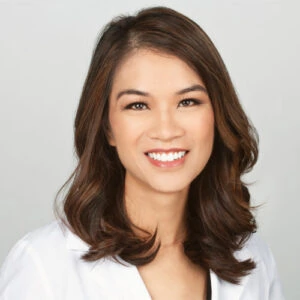
Kachiu Lee, MD
Dr. Lee specializes in BS/MD admissions. She was accepted into seven combined bachelor-medical degree programs. She graduated Summa Cum Laude from Northwestern University and proceeded to Northwestern University’s Feinberg School of Medicine in Chicago, IL. After completing a dermatology residency at Brown University, Dr. Lee pursued a fellowship in Photomedicine, Lasers, and Cosmetics at Massachusetts General Hospital and was a Clinical Fellow at Harvard Medical School. Academically, she has over 100 peer-reviewed publications and lectures internationally.
See How We Can Help
Search for:
RECENT POSTS
2026/27 AACOMAS Application Guide (With Screenshots)
medschoolcoach
After the BS/MD Interview: What to do Next
medschoolcoach
2026 MCAT Test and Score Release Dates
Dr. Ken Tao
SOAP (Supplemental Offer and Acceptance Program) Explained